


Vaccine makers have demonstrated remarkable resilience in sustaining their investment efforts amidst economic uncertainties and regulatory challenges. Long-term supply agreements with organizations like UNICEF have provided these manufacturers with financial stability, enabling them to expand operations. Companies such as BioFarma have leveraged this stability to innovate, introducing groundbreaking vaccines like the novel oral polio vaccine. These strategic moves not only advance vaccine development but also tackle vaccine inequity by improving access in underserved regions. By maintaining a focus on both routine and innovative solutions, vaccine makers continue to play a pivotal role in addressing global health needs.
Table of Contents
Key Takeaways
Vaccine companies are spending more money to stay strong and create new ideas, even with money problems worldwide.
People’s trust is very important. Being honest and working with communities can help more people get vaccinated.
Teamwork and making vaccines in many places are key to sharing vaccines fairly, especially in poor areas.
Rules are stricter now, so vaccine companies must follow them while still creating new vaccines and keeping costs low.
The vaccine market is growing because of better technology and efforts to solve health problems around the world.
Challenges faced by vaccine makers in a post-COVID-19 world
Economic pressures and funding uncertainties
The global pandemic reshaped the financial landscape for vaccine makers, presenting both opportunities and challenges. Governments worldwide took on significant financial risks by pre-ordering vaccines to ensure rapid availability. For instance, the UK secured 340 million doses, while the US committed to purchasing approximately 800 million doses. These pre-orders provided vaccine producers with the financial stability needed to accelerate innovation and explore multiple development strategies simultaneously. However, as the urgency of the pandemic subsides, funding uncertainties have emerged. Governments are scaling back investments, leaving companies to navigate a more competitive and less predictable market.
Economic studies reveal a strong connection between vaccination rates and economic policy uncertainty. Using advanced methods like wavelet analysis, researchers have shown how investment perceptions fluctuate based on vaccination policies and broader economic conditions. This dynamic has forced vaccine makers to adopt more strategic approaches to funding, balancing short-term risks with long-term growth opportunities.
Additionally, initiatives like Advance Market Commitments (AMCs) played a crucial role during the pandemic by incentivizing vaccine development. Programs such as COVAX and Operation Warp Speed combined “push” and “pull” funding strategies to optimize costs. Despite these efforts, the economic losses caused by the pandemic—estimated at $11 trillion in the short term and $28 trillion in the long term—highlight the ongoing need for sustainable funding models. Vaccine makers must now adapt to a landscape where funding varies significantly based on a country’s economic capacity and priorities.
Regulatory scrutiny and compliance demands
Increased regulatory scrutiny has become another significant challenge for vaccine makers. Regulatory bodies have intensified their oversight to ensure the safety and efficacy of vaccines, particularly in the wake of the COVID-19 crisis. For example, the FDA now conducts annual inspections of flu vaccine manufacturers, compared to the previous two-year cycle. This shift underscores the heightened focus on good manufacturing practices (GMP) and product quality assurance.
Regulatory Action | Description |
|---|---|
Annual GMP Inspections | FDA plans to conduct annual good manufacturing practices inspections of flu vaccine manufacturers instead of every two years. |
Focus on Licensing and Quality Assurance | CBER has prioritized vaccine licensing and product quality assurance, indicating increased scrutiny. |
Information Sharing Agreements | FDA has signed agreements with foreign regulators to enhance communication regarding manufacturing issues. |
These measures, while essential for public safety, place additional financial and operational burdens on vaccine producers. Companies must allocate significant resources to meet compliance demands, which can slow down innovation and increase production costs. Furthermore, international regulatory harmonization remains a challenge, as differing standards across countries complicate global vaccine distribution efforts.
Public perception and vaccine hesitancy
Public perception poses a complex challenge for vaccine makers. Vaccine hesitancy, fueled by misinformation and socio-political factors, has hindered vaccination efforts in many regions. Studies show a clear correlation between exposure to misinformation and lower vaccination rates. For example:
Misinformation Exposure Level | Vaccination Rate (%) |
|---|---|
No exposure | 73.8 |
One misinformation theme | 62.9 |
Six or more themes | 52.2 |
Political affiliation also influences vaccine acceptance. Data indicates that vaccination rates are higher among Democrats (73.4%) compared to Republicans (58.5%) and Independents (56.5%). These disparities highlight the role of trust in government and public health institutions in shaping vaccine uptake.
Globally, vaccine hesitancy varies based on socio-demographic factors and public trust in government responses. Research across 23 countries has documented how these elements influence acceptance rates, revealing that countries with higher trust levels tend to achieve better vaccination coverage. Vaccine makers must address these challenges by fostering transparency, engaging with communities, and combating misinformation to build public trust.
Strategic investments by vaccine makers
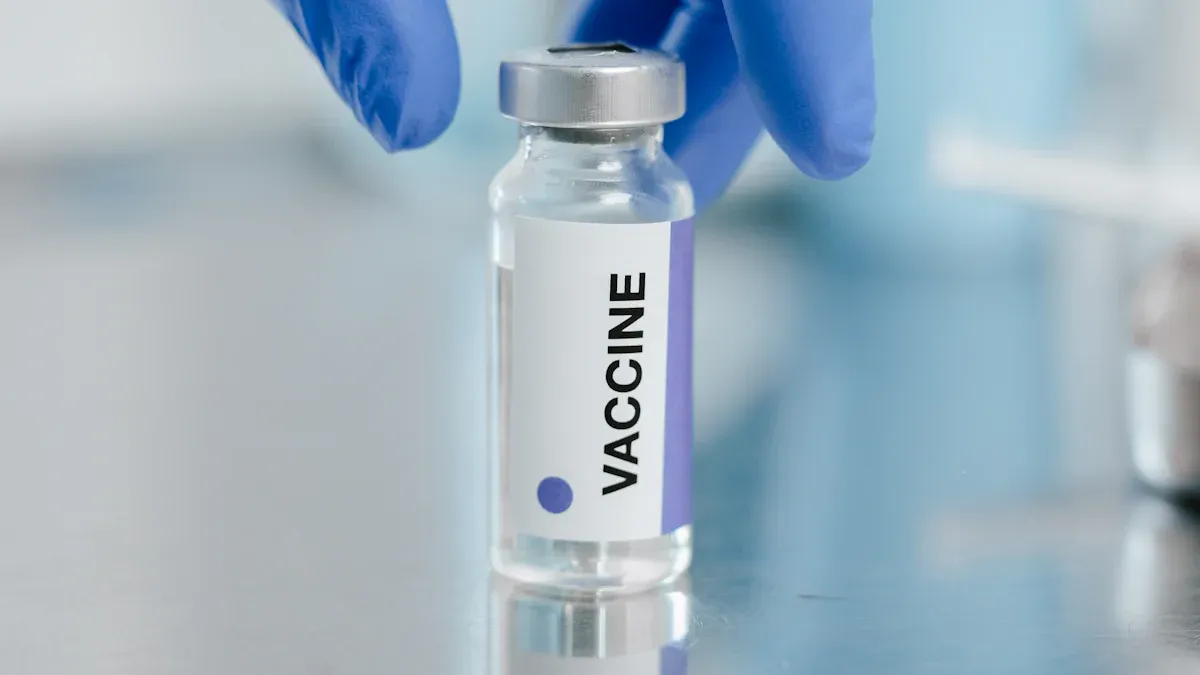
Advancing research and development for COVID-19 vaccines and beyond
Vaccine makers have prioritized research and development (R&D) to address the evolving challenges of infectious diseases. The rapid development of COVID-19 vaccines demonstrated the potential of innovative platforms like mRNA, viral vectors, and recombinant proteins. By February 2024, 64 vaccines had received approval from national regulatory authorities, showcasing the industry’s ability to respond swiftly to global health crises. Early in the pandemic, 63 candidate vaccines entered clinical trials, with 13 reaching phase III trials and producing neutralizing antibodies. This unprecedented pace of development highlighted the importance of sustained investment in vaccine research and development.
Governments have played a crucial role in supporting these efforts. In 2020, the U.S. federal government allocated over $19 billion through the Biomedical Advanced Research and Development Authority to accelerate COVID-19 vaccine development. Advance-purchase agreements provided financial certainty to vaccine producers, enabling them to explore multiple development strategies simultaneously. These agreements also ensured revenue for developers, even in a competitive landscape with numerous products under development.
Looking beyond COVID-19, vaccine makers are expanding their focus to include diseases like malaria, Ebola, and respiratory syncytial virus (RSV). Recent approvals, such as the malaria vaccine in 2022, demonstrate the industry’s commitment to addressing long-standing global health challenges. By investing in cutting-edge technologies and broadening their portfolios, vaccine producers are paving the way for a healthier future.
Expanding manufacturing infrastructure globally
The expansion of manufacturing infrastructure has been a cornerstone of the vaccine industry’s strategic investments. Over 150 global partnerships have been established to enhance manufacturing capacity for COVID-19 vaccines. These collaborations have not only increased production volumes but also improved access to vaccines in underserved regions. However, the success of these efforts depends on robust regulatory frameworks. Currently, only 26% of countries have mature regulatory agencies, underscoring the need for international cooperation to ensure the quality and safety of vaccine production.
The vaccine contract manufacturing market has also experienced significant growth. In 2023, the market was valued at $2.7 billion, with an expected growth rate of 11% from 2024 to 2032. This growth is driven by the cost efficiency and specialized expertise offered by contract manufacturers. Additionally, the global vaccine market size is projected to grow from $2.14 billion in 2023 to $3.60 billion by 2030, reflecting a compound annual growth rate of 7.8%. These figures highlight the industry’s commitment to scaling up production capabilities to meet global demand.
Strengthening the supply chain for raw materials is another critical aspect of manufacturing expansion. Vaccine makers are investing in partnerships and infrastructure to ensure a steady supply of essential components. These efforts are vital for maintaining production continuity and addressing potential bottlenecks in the manufacturing process.
Strengthening vaccine distribution to address vaccine inequity
Addressing vaccine inequity remains a top priority for vaccine makers. Strategic investments in distribution networks have played a pivotal role in improving access to vaccines in low- and middle-income countries. Gavi’s Vaccine Investment Strategy (VIS) exemplifies this approach. Since its inception, Gavi has expanded its vaccine portfolio from six vaccines in the 2001–2005 period to 19 vaccines today. Recent additions include vaccines for Ebola (2019), COVID-19 (2021), and malaria (2022). This expansion reflects a data-driven approach, with comprehensive analysis and expert consultations guiding Gavi’s decisions.
Innovative distribution models have also emerged to address logistical challenges. Vaccine makers are leveraging technology to optimize cold chain systems, ensuring that vaccines remain effective during transportation and storage. These advancements are particularly crucial for mRNA vaccines, which require ultra-cold storage conditions. By investing in infrastructure and technology, vaccine producers are bridging the gap between supply and demand, ensuring that life-saving vaccines reach those who need them most.
The impact of these efforts extends beyond immediate health benefits. Improved vaccine distribution strengthens healthcare systems, enhances pandemic preparedness, and fosters global health equity. By prioritizing equitable access, vaccine makers are not only addressing current challenges but also laying the foundation for a more resilient global health landscape.
Financial and strategic outcomes of investments
Balancing risks and rewards in a competitive market
The vaccine industry operates in a highly competitive environment, where balancing risks and rewards is critical for success. Companies often rely on financial analyses to evaluate their investment strategies. For instance, Net Present Value (NPV) calculations, using a 15% discount rate, help smaller biopharmaceutical firms assess the viability of their projects. Risk-adjusted capital investments further refine these evaluations by accounting for the probability of success at each development stage. Sensitivity analyses also play a vital role, examining how variations in key assumptions, such as selling, general, and administrative (SG&A) costs, impact profitability.
Analysis Type | Description |
|---|---|
Net Present Value (NPV) | Calculated using a discount rate of 15%, reflecting the higher costs of capital for smaller biopharmaceutical companies compared to larger Pharma MNCs. NPV results are approximations that vary with different discount rates. |
Risk-Adjusted Capital Investments | Involves calculating risk-adjusted R&D costs based on the probability of success at each development stage and the associated investment costs. |
Sensitivity Analyses | Assesses the impact of key assumptions on profitability, including variations in discount rates and SG&A costs, to understand how these factors influence NPV over time. |
These tools enable vaccine makers to navigate the complexities of the market while ensuring sustainable growth. However, the high costs of R&D and compliance often challenge smaller firms, making public investment crucial for fostering innovation.
Long-term growth and innovation opportunities
The vaccine market presents significant opportunities for long-term growth and innovation. The adult vaccines market, for example, is projected to grow from $18.20 billion in 2022 to $25.83 billion by 2027, driven by a compound annual growth rate (CAGR) of 7.20%. This growth reflects increasing demand among aging populations and advancements in healthcare infrastructure.
The global adult vaccines market is projected to grow from $18.20 billion in 2022 to $19.56 billion in 2023.
Expected to reach $25.83 billion by 2027, reflecting a CAGR of 7.20%.
Government initiatives like Project NextGen, with an initial investment of $5 billion, further underscore the potential for innovation. Increased funding from both public and private sectors is enabling research into diverse diseases, paving the way for groundbreaking vaccines. These developments highlight the industry’s commitment to addressing global health challenges while capitalizing on emerging market opportunities.
Enhancing competitive positioning in the pharmaceutical sector
Pharma companies with extensive vaccine portfolios have demonstrated remarkable improvements in their competitive positioning. Moderna serves as a prime example. In 2020, the company produced 20 million doses of its COVID-19 vaccine, scaling up to 800 million doses in 2021. This rapid growth earned Moderna a spot on the NASDAQ-100 list, reflecting its high market capitalization.
Key Aspect | Details |
|---|---|
Vaccine Production | In 2020, Moderna produced 20 million doses; in 2021, around 800 million doses were distributed worldwide. |
Market Position | Made it to the NASDAQ-100 list in 2020 due to high market capitalization. |
Collaboration | Partnered with Catalent for local manufacturing and Lonza for global production of mRNA-1273. |
Speed of Development | Suggested an mRNA vaccine candidate just two days after the virus’s genetic sequence was revealed. |
Human Trials | First company to conduct human trials for its vaccine, surpassing larger competitors. |
Strategic collaborations and rapid innovation have allowed companies like Moderna to outpace competitors, solidifying their positions in the global market. These achievements underscore the importance of agility and strategic foresight in the pharma sector, where competition is fierce, and the stakes are high.
Broader implications for public health and vaccine equity
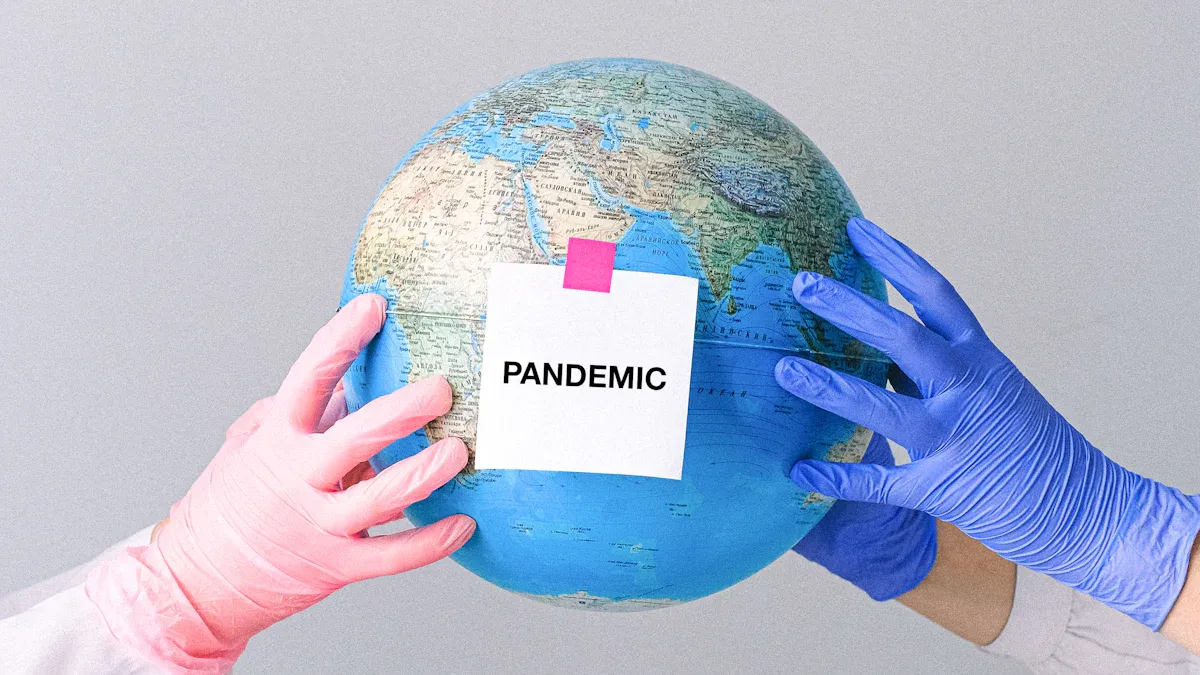
Reducing vaccine inequity through global access initiatives
Global access initiatives have significantly reduced vaccine inequity by prioritizing equitable distribution. Programs like COVAX have played a pivotal role in this effort. By March 2023, COVAX had shipped over one billion COVID-19 vaccines to 144 countries, ensuring that low-income nations received 76% of their doses through this initiative. This contrasts with high-income countries, where 74% of vaccines were self-procured. Such efforts highlight the importance of collaborative frameworks in addressing disparities.
The economic benefits of reducing inequity are profound. Low-income countries could have added $38 billion to their GDP in 2021 if their vaccination rates matched those of wealthier nations. Equitable vaccine efforts not only save lives but also support global economic recovery. Urgent actions, such as dose sharing and removing manufacturing barriers, remain essential to sustain these gains.
Improving pandemic preparedness and response
Strategic investments in vaccines have strengthened global pandemic preparedness. The rapid development and distribution of COVID-19 vaccines demonstrated the value of preemptive planning. Expanding manufacturing infrastructure and fostering international partnerships have enhanced the ability to respond to future health crises. For example, the establishment of over 150 global manufacturing partnerships during the pandemic has created a robust foundation for future vaccine production.
Improved vaccine distribution systems also contribute to pandemic readiness. Investments in cold chain technology ensure that vaccines remain effective during transportation, even in remote areas. These advancements not only address current challenges but also prepare healthcare systems to respond swiftly to emerging threats.
Building public trust through transparency and equitable practices
Transparency in vaccine procurement and distribution is essential for building public trust. In the Philippines, open communication about vaccine efficacy and safety boosted confidence among citizens. Similarly, Ghana emphasized transparency in vaccine negotiations, fostering trust in government efforts. Clear disclosure policies for vaccine contracts further enhance predictability for manufacturers and trust among populations.
Corruption in vaccine distribution undermines public confidence, particularly among vulnerable groups. Addressing this issue requires actionable transparency measures. Experts stress the importance of openness in identifying and resolving problems, ensuring that equitable practices lead to tangible outcomes. By prioritizing transparency, vaccine makers can strengthen public trust and promote widespread acceptance of vaccines.
Vaccine makers have shown remarkable resilience in navigating economic, regulatory, and societal challenges. Their strategic foresight has driven transformative investments, reshaping public health and addressing vaccine inequity. These efforts have not only expanded access to life-saving vaccines but also strengthened global health systems.
Source | Type of Evidence | Key Insights |
|---|---|---|
Trends in Global Adult Vaccination | Statistical Analysis | Highlights the importance of vaccination strategies in improving global health outcomes. |
Exploring the future adult vaccine landscape | Trend Analysis | Discusses the impact of an aging population on vaccination strategies and their economic implications. |
How the World Sees Vaccines | Public Trust Analysis | Examines public skepticism and its influence on vaccine uptake across different regions. |
Looking ahead, vaccine makers hold the potential to shape a healthier future. By fostering innovation, addressing vaccine hesitancy, and prioritizing equitable access, they can ensure that global health outcomes continue to improve. Their commitment to transparency and collaboration will remain essential in building trust and preparing for future health challenges.
FAQ
What are the main challenges vaccine makers face today?
Vaccine makers encounter economic pressures, regulatory scrutiny, and public hesitancy. Funding uncertainties and compliance demands increase operational costs. Misinformation and socio-political factors further complicate public trust. These challenges require strategic planning and transparent communication to ensure continued innovation and equitable vaccine distribution.
How do vaccine makers address vaccine inequity?
They invest in global manufacturing and distribution networks. Partnerships with initiatives like COVAX ensure vaccines reach underserved regions. Advanced cold chain systems and data-driven strategies improve access, bridging gaps between supply and demand while fostering global health equity.
Why is transparency important in vaccine distribution?
Transparency builds public trust and ensures accountability. Open communication about vaccine safety, efficacy, and procurement fosters confidence. It also prevents corruption, particularly in vulnerable regions, ensuring equitable practices lead to tangible health outcomes.
What role does innovation play in vaccine development?
Innovation drives the creation of effective vaccines for emerging diseases. Technologies like mRNA and viral vectors enable rapid responses to health crises. Sustained investment in research ensures the development of vaccines for long-standing challenges like malaria and RSV.
How do strategic investments benefit vaccine makers?
Strategic investments enhance manufacturing capacity, improve distribution, and foster innovation. These efforts strengthen competitive positioning, drive long-term growth, and prepare companies for future health challenges. They also contribute to global health by addressing inequities and improving pandemic preparedness.
The Art of Building a Financial Legacy
Creating wealth over the long haul is less about flashy moves and more about steady, thoughtful choices that compound over time. It’s about seeing the bigger picture, understanding how global trends, innovation, and market shifts intertwine to shape opportunities. At VASRO, we’re passionate about cutting through the clutter to deliver clear, precise insights that help you navigate this complex landscape. With a mindset rooted in patience and curiosity, you can cultivate a financial journey that’s not just resilient but deeply rewarding, reflecting your unique vision for the future.
Disclaimer: The information provided on www.vasro.de is for general informational purposes only and does not constitute investment advice or a recommendation to invest in any particular asset or market. VASRO GmbH does not offer personalized investment advice, and the content on this website should not be relied upon as such. Visitors are encouraged to seek independent financial advice tailored to their specific circumstances before making any investment decisions. VASRO GmbH disclaims any liability for investment decisions made based on the information presented on this website.