


You see lithium vs. hydrogen shaping the future of heavy transport, with lithium currently taking the lead. Lithium batteries dominate transport markets and are set for more growth, while hydrogen fuel cells show promise for the future, especially in decarbonizing heavy transport. When you compare lithium vs. hydrogen, you notice electric trucks excel in urban transport but face battery weight and grid challenges. Hydrogen offers high energy density for future transport, yet infrastructure and safety remain hurdles. As you look ahead, the future of heavy transport will depend on how lithium vs. hydrogen technologies evolve to meet changing transport needs.
Table of Contents
Key Takeaways
Lithium batteries dominate urban transport due to their rapid charging and reliability for short-haul routes.
Hydrogen fuel cells excel in long-range applications, offering faster refueling and higher energy density for heavy payloads.
Infrastructure for lithium charging is expanding rapidly, especially in Europe, while hydrogen refueling stations remain limited.
Both lithium and hydrogen technologies produce zero tailpipe emissions, but their environmental impact depends on energy sourcing and lifecycle management.
Safety is crucial; lithium batteries can overheat, while hydrogen requires careful handling due to flammability risks.
Market trends show a significant growth in both lithium and hydrogen sectors, driven by government incentives and environmental regulations.
Choosing between lithium and hydrogen depends on operational needs, such as route length and payload capacity.
Investing in clean energy and recycling initiatives enhances the sustainability of both lithium and hydrogen technologies.
Lithium vs. Hydrogen in Heavy Transport

Technology Basics
Lithium Battery Systems
You see lithium-ion battery systems powering a wide range of electric vehicles in transportation today. These batteries store energy chemically and release it as electricity when needed, making them ideal for electric vehicles and heavy-duty transport applications. Lithium-ion batteries offer rapid charging and consistent power output, which helps you meet the demands of urban transportation and short-haul routes. You notice that battery technology continues to evolve, with advancements in discharge capabilities and energy density. This progress supports the expansion of electric vehicles into new segments of heavy transport, including trucks and buses. As you explore the market, you find that the lithium-ion battery market is projected to reach $119.84 billion by 2029, driven by a compound annual growth rate of 10.8%. This growth reflects the increasing adoption of electric vehicles and the strategic integration of batteries into heavy-duty transport systems.
Hydrogen Fuel Cells
Hydrogen fuel cells represent a different approach to powering heavy-duty transport. You observe that hydrogen fuel cells generate electricity through a chemical reaction between hydrogen and oxygen, producing only water vapor as a byproduct. This process makes hydrogen fuel cells attractive for clean transportation, especially in sectors where zero emissions are critical. Hydrogen fuel cells excel in prolonged operations and heavy lifting, making them suitable for long-range trucks, buses, and even aviation. You see that hydrogen fuel cells offer higher system efficiency in mobile applications, and they produce zero NOx emissions, which enhances their environmental profile. As green hydrogen production scales up, you expect hydrogen fuel cells to play a larger role in decarbonizing heavy transport.
Tip: When you compare lithium-ion batteries and hydrogen fuel cells, you notice that both technologies operate cleanly, but hydrogen fuel cells stand out for their zero-emission profile in heavy-duty transport.
Application Areas
Trucks and Buses
You find that lithium-ion batteries dominate the market for electric vehicles in urban transportation, powering many trucks and buses on short-haul routes. These batteries provide reliable energy for frequent stops and starts, which suits city environments. However, you notice that battery weight and charging infrastructure can limit their effectiveness in long-haul heavy-duty transport. Hydrogen fuel cells, on the other hand, are emerging as a solution for long-range trucks and buses. Hydrogen fuel cells enable longer distances between refueling stops and support heavier payloads, which makes them attractive for intercity and cross-country transportation.
Trains and Ships
You see lithium-ion battery technology making inroads into rail and maritime transportation, especially for short-distance routes and hybrid systems. Batteries help reduce emissions and improve efficiency in these sectors. Hydrogen fuel cells, however, are gaining attention for their potential to power trains and ships over longer distances. Hydrogen fuel cells offer high energy density and fast refueling, which addresses the challenges of heavy-duty transport in rail and shipping. As green hydrogen becomes more available, you expect hydrogen fuel cells to expand their role in these application areas.
Technology | |
|---|---|
Hydrogen Fuel Cells | Heavy transport, long range (trucks, buses, aviation) |
Lithium-Ion Batteries | Passenger EVs, portable electronics |
You notice that both lithium-ion batteries and hydrogen fuel cells are advancing rapidly, with innovations in battery technology and hydrogen energy systems driving growth in heavy-duty transport. Integration strategies for renewable energy systems further support the transition to cleaner transportation.
Neither lithium-ion batteries nor hydrogen fuel cells offer a perfect solution for every heavy-duty transport need. You must weigh the strengths and challenges of each technology as you plan for the future of transportation.
Efficiency and Performance Comparison
Energy Density
Weight and Volume
When you compare energy density, you notice that hydrogen stands out in heavy transport. Hydrogen stores more energy per kilogram than lithium batteries, which means you can design vehicles with lighter systems and greater payload capacity. Lithium batteries, while efficient for short distances, add significant weight to trucks and buses. This extra weight reduces the amount of cargo you can carry and affects overall vehicle performance. Hydrogen, on the other hand, allows you to maintain a lighter vehicle structure, which is especially important for long-haul operations.
Note: Hydrogen’s high energy density gives you a strategic advantage in designing vehicles for longer routes and heavier loads.
Range and Payload
You often face a trade-off between range and payload when choosing between lithium and hydrogen for heavy transport. Lithium batteries work well for urban deliveries and short-haul routes, but their weight limits the distance you can travel and the cargo you can haul. Hydrogen-powered vehicles excel in long-range applications and can carry heavier loads with less reduction in payload.
Here’s a comparison to help you visualize the differences:
Vehicle Type | Average Range | Payload Capacity Reduction |
|---|---|---|
Lithium-Powered | 1,000–3,000 pounds | |
Hydrogen-Powered | 400–600+ miles | Lighter, can haul heavier loads |
You see that hydrogen vehicles can travel farther and carry more, which makes them ideal for logistics companies that need to move goods across long distances. Lithium batteries remain a strong choice for city transport, where frequent stops and shorter routes are common.
Refueling and Charging Time
Operational efficiency depends on how quickly you can refuel or recharge your fleet. Hydrogen vehicles offer fast refueling, similar to traditional diesel trucks. You can refuel a hydrogen truck in 10 to 15 minutes, which keeps your fleet moving and minimizes downtime. Lithium batteries require longer charging times, usually between 1 and 4 hours, which can slow down operations, especially on longer routes.
Here’s a quick overview:
Truck Type | Best Use Case | Refueling Time | Range |
|---|---|---|---|
Battery-Electric | Urban/Short-Haul | 1–4 hours | 100–300 mi |
Hydrogen | Long-Haul/Heavy Payload | 10–15 minutes | 500–600+ mi |
Hydrogen trucks can be refueled in 10 to 15 minutes, similar to diesel, enhancing their suitability for long-haul operations.
Battery-electric trucks require 1 to 4 hours for standard charging, which limits their use on longer routes.
You notice that hydrogen-powered trucks can refuel quickly, significantly reducing downtime compared to battery-electric trucks, which require longer charging times. This quick refueling capability is crucial for logistics companies focusing on long-haul applications.
Tip: If you manage a fleet that covers long distances, hydrogen offers a clear advantage in refueling speed and operational flexibility. Lithium batteries remain a reliable solution for urban and regional transport, where charging infrastructure is more accessible and routes are shorter.
As you evaluate efficiency and performance, you see that hydrogen and lithium each bring unique strengths to heavy transport. Hydrogen’s energy density, range, and refueling speed make it a strong contender for long-haul and heavy payload operations. Lithium batteries continue to lead in urban transport, where charging times and payload reductions are less critical. Your choice depends on your operational needs, route lengths, and the infrastructure available in your region.
Infrastructure and Scalability for Heavy-Duty Transport
Charging Networks vs. Hydrogen Stations
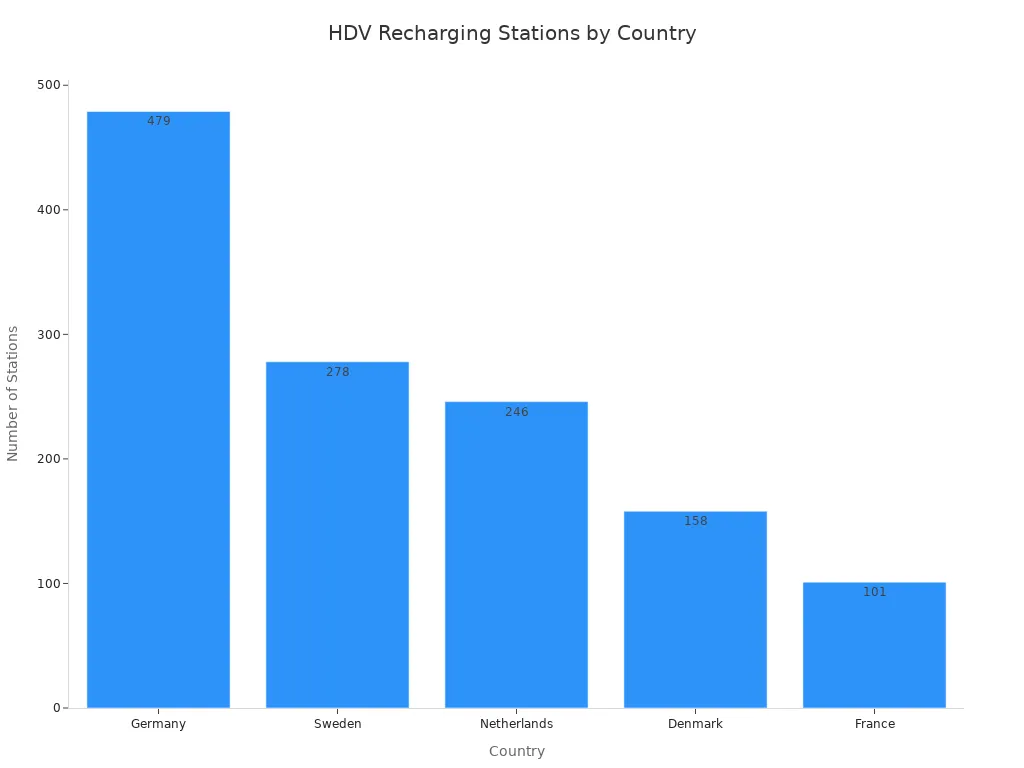
When you look at the infrastructure for heavy-duty transport, you see two very different landscapes for lithium and hydrogen. Charging networks for batteries have grown quickly in many regions, especially in Europe. You find over 1,500 public heavy-duty vehicle (HDV) recharging stations in the EU27, with Germany, Sweden, and the Netherlands leading the way. Here is a breakdown of the current numbers:
Category | Count |
|---|---|
Total public HDV recharging stations in the EU27 | 1,512 |
Dedicated to HDVs in mixed-use locations | 1,369 |
Exclusively for HDVs | 143 |
Top Member States by number of HDV recharging stations | |
Germany | 479 |
Sweden | 278 |
Netherlands | 246 |
Denmark | 158 |
France | 101 |
Hydrogen stations, on the other hand, remain much less common. Nearly 80% of global hydrogen refueling stations are found in just five countries: China, South Korea, Japan, France, and Germany. Each of these countries operates more than 100 hydrogen stations, which together account for almost four-fifths of the world’s total. You notice that this concentration creates challenges for scaling hydrogen infrastructure globally.
You face several hurdles when fully electrifying heavy-duty transport. For batteries, grid capacity and the need for fast-charging networks can slow expansion. For hydrogen, the main barriers include the high cost and complexity of storage, gaps between production and end-use, and the need for specialized tanks and pipelines. Standardization across markets also remains a challenge.
Regional Adoption
North America
In North America, you see a unique market dynamic. The region has made progress in deploying lithium charging networks for batteries, especially in urban corridors. However, hydrogen infrastructure lags behind, with fewer stations and limited hydrogen production capacity for transport. You find that fully electrifying heavy-duty transport here faces grid limitations and the need for large-scale hydrogen production investments.
Europe
Europe leads in clean hydrogen development and investment. The region has built a strong network of charging stations for batteries, especially in countries like Germany and Sweden. Europe also holds a 38.2% share of the global hydrogen market in 2024, focusing on green hydrogen production and imports. You see significant government support for both lithium and hydrogen infrastructure, which helps drive innovation and market growth.
Asia-Pacific
Asia-Pacific stands out for its rapid hydrogen infrastructure growth. Countries like Japan, South Korea, and China have invested heavily in hydrogen production and refueling stations. The region dominates the hydrogen storage materials market, holding a 39.6% revenue share in 2024. You see strong government policies supporting both lithium batteries and hydrogen, making Asia-Pacific a leader in fully electrifying heavy-duty transport.
Asia-Pacific advances quickly in hydrogen infrastructure, led by Japan, South Korea, and China.
Europe sets the pace in clean hydrogen regulation and investment, with Germany at the forefront.
North America shows steady growth in lithium charging networks but needs more hydrogen production and refueling sites.
You notice that scaling up both lithium and hydrogen infrastructure requires overcoming technical and logistical barriers. For hydrogen, you must address the challenges of transporting and storing the fuel, as well as retrofitting existing networks. For batteries, expanding grid capacity and building more fast-charging stations are key steps. As you plan for the future, you see that innovation in production, storage, and distribution will shape the path toward fully electrifying heavy-duty transport.
Economic Analysis: Hydrogen and Lithium
Vehicle and Fuel Costs
You notice that the cost of adopting hydrogen or lithium technologies for heavy transport depends on several factors. When you look at battery electric vehicles, you see that upfront costs remain high, mainly due to the price of batteries. Electric cars and trucks often require significant investment in charging infrastructure, but you benefit from lower operating costs over time. Hydrogen fuel cell vehicles present a different challenge. You pay more for the vehicle itself, and hydrogen fuel costs can fluctuate based on production methods and regional supply. Fuel cell vehicles offer fast refueling and longer range, which can reduce downtime and improve logistics efficiency. However, hydrogen infrastructure remains limited, and you may face higher costs for fuel and maintenance compared to battery electric vehicles.
Market Adoption Trends
You observe rapid growth in both hydrogen and lithium markets, but each follows a unique path. Electric vehicle adoption continues to accelerate, driven by expanding charging networks and government incentives. Electric cars and battery electric vehicles now make up a significant share of commercial fleets, especially in urban logistics. In 2023, global electric commercial vehicle stock surpassed 1.2 million units, with Europe and China leading the way. Hydrogen fuel cell vehicles are gaining momentum, especially in regions investing heavily in hydrogen infrastructure like Germany, Japan, and South Korea. You see a 68% increase in global hydrogen fuel cell shipments for commercial vehicles in 2023, and experts expect a 41.6% compound annual growth rate for hydrogen fuel cell vehicles in the coming years.
Here is a summary of recent market adoption trends:
Evidence Type | Details |
|---|---|
CAGR of Hydrogen Fuel Cell Vehicles | 41.6% growth expected in the coming years. |
Growth in Shipments | 68% increase in global hydrogen fuel cell shipments for commercial vehicles in 2023. |
Electric Commercial Vehicle Stock | Surpassed 1.2 million units globally in 2023, with Europe and China leading in adoption. |
You see government regulations and expanding infrastructure driving electric vehicle adoption. Urban logistics demand continues to rise, pushing more fleets toward electric cars and battery electric vehicles. Regions investing in hydrogen infrastructure support the growth of hydrogen fuel cell vehicles and fuel cell vehicles.
Supply Chain Factors
You recognize that supply chain stability plays a crucial role in the cost and availability of hydrogen and lithium technologies. The lithium supply chain faces technological risks that can disrupt trade and affect prices. Market fluctuations and geopolitical tensions often impact lithium resource costs, making batteries more expensive or harder to source. Sudden technological changes can create a breakpoint effect, causing economic losses and affecting countries rich in lithium resources. Hydrogen supply chains also face challenges, especially in scaling up production and distribution. You must consider how technological disruptions and market volatility can influence the long-term viability of both hydrogen and lithium for heavy transport.
Technological risks disrupt lithium supply chains, affecting cost and availability of batteries.
Market price fluctuations and geopolitical tensions impact lithium resource prices.
Sudden disruptions can create economic losses and affect upstream resource-rich nations.
You see that adaptability and strategic planning are essential for navigating supply chain risks in both hydrogen and lithium markets. As you evaluate options for heavy transport, you benefit from monitoring market intelligence and innovation trends to stay ahead of potential disruptions.
Environmental Impact of Hydrogen Fuel Cells and Lithium

Emissions and Sustainability
You play a crucial role in shaping the future of clean energy for heavy transport. When you examine the environmental impact of hydrogen and lithium, you notice that both technologies offer pathways to decarbonization. You see that batteries and hydrogen fuel cells produce zero tailpipe emissions, which supports the decarbonization of heavy transport. However, the story does not end there. You must consider the entire lifecycle of these technologies, from raw material mining to manufacturing, operation, and recycling. The carbon intensity of lithium and hydrogen vehicles varies depending on how you source energy and manage grid conditions. In regions with cleaner grids, you achieve lower lifecycle emissions. In areas with fossil-fuel-heavy grids, the carbon footprint increases. You find that lifecycle carbon intensity maps, such as those for China, reveal how climate and energy sources influence overall emissions. By focusing on clean energy and sustainability, you help drive innovation and strategic growth in the transport sector.
Lifecycle emissions for lithium and hydrogen vehicles depend on mining, manufacturing, operation, and recycling.
Grid conditions and regional energy sources shape the carbon footprint during the operation phase.
Carbon intensity maps highlight emissions differences across climate regions.
You can accelerate decarbonization by supporting clean energy policies and investing in renewable energy infrastructure.
Energy Sources
You recognize that the sustainability of hydrogen and lithium technologies depends on the energy sources used for production. Most hydrogen today comes from natural gas, which limits its environmental benefits. If you transition to green hydrogen, produced with renewable energy, you unlock greater sustainability and support the decarbonization of heavy transport. Batteries also rely on clean energy for charging and manufacturing. When you use renewable sources, you reduce greenhouse gas emissions and enhance sustainability. Transportation remains a major source of emissions, so your choices in energy sourcing have a direct impact on the environment.
Hydrogen production mostly relies on natural gas, reducing its clean energy advantages.
Green hydrogen, made with renewables, improves sustainability and supports decarbonization.
Batteries benefit from clean energy grids, lowering lifecycle emissions.
You drive progress by advocating for clean energy transitions and supporting innovation in hydrogen and lithium production.
Recycling and End-of-Life
You understand that recycling and end-of-life management are essential for the sustainability of heavy transport technologies. Batteries require careful handling at the end of their life to recover valuable materials and prevent environmental harm. You see new recycling methods emerging, which help you reclaim lithium and other metals, reducing waste and supporting circular economy principles. Hydrogen fuel cells also present recycling challenges, especially with rare metals and specialized components. By investing in advanced recycling technologies, you contribute to the decarbonization of heavy transport and promote clean energy solutions. You help build a future where innovation, adaptability, and market intelligence guide responsible resource management.
Technology | End-of-Life Challenge | Recycling Solutions |
|---|---|---|
Batteries | Metal recovery, waste disposal | Advanced recycling, circular economy |
Hydrogen Fuel Cells | Rare metals, component reuse | Emerging recycling methods |
You create lasting impact by supporting recycling initiatives and sustainable end-of-life practices for hydrogen and lithium technologies.
Practical Challenges and Safety in Heavy Transport
Technical Barriers
You face several technical barriers when you consider the adoption of hydrogen and lithium technologies in heavy transport. Hydrogen presents unique challenges due to its low density, which makes storage and transportation complex and expensive. You must use advanced tanks and high-pressure systems to store hydrogen efficiently. The properties of hydrogen also create hurdles for widespread use, especially when you try to scale up infrastructure for long-haul vehicles. Lithium technologies bring their own set of obstacles. You encounter safety concerns related to electromagnetic fields, which can affect health and equipment reliability. In many regions, you see a lack of infrastructure for electric vehicles, slowing the transition to lithium-powered heavy transport.
Safety concerns about electromagnetic fields and health effects.
Infrastructure gaps for electric vehicles in certain areas.
Hydrogen’s low density complicates storage and distribution.
The chemical properties of hydrogen create technical barriers to adoption.
You need to address these barriers through innovation and strategic investment to unlock the full potential of hydrogen and lithium in heavy transport.
Safety Concerns
Safety remains a top priority as you deploy hydrogen and lithium systems in trucks, buses, and other heavy vehicles. Lithium batteries can experience thermal runaway, where temperature rises uncontrollably and increases the risk of fire. Physical damage to lithium batteries may lead to hazardous situations, so you rely on safety features like vents and fuse links to prevent overpressure. Hydrogen introduces additional risks, such as the production of flammable gases during battery incidents. You must follow strict safety standards, including NFPA 855, which sets guidelines for installing and operating energy storage systems. This standard limits the maximum energy per system and requires fire suppression systems to protect people and property.
Safety Concern | Description | Mitigation Measures |
|---|---|---|
Thermal Runaway | Uncontrolled temperature rise in lithium batteries. | Robust thermal management and protective measures. |
Physical Damage | Damage to batteries can cause safety risks. | Safety features like vents and fuse links for overpressure. |
Flammable Gases | Hydrogen gas produced during thermal runaway or accidents. | Compliance with NFPA 855 and fire suppression systems. |
You improve safety by following updated standards and investing in advanced management systems for both hydrogen and lithium technologies.
Case Studies
You see real-world examples that highlight the reliability and performance of hydrogen and lithium vehicles in heavy transport. The iX5 Hydrogen vehicle demonstrates rapid refueling, taking only 3-4 minutes, and operates reliably in extreme conditions. Hyundai’s XCIENT Fuel Cell truck covers over 250 miles per charge and serves commercial fleets in Switzerland and other parts of Europe. These vehicles show that hydrogen can deliver long range and quick refueling, making it suitable for demanding logistics operations. Lithium-powered vehicles continue to evolve, but you notice that range and charging times remain limiting factors for long-haul routes.
Metric | Value |
|---|---|
Average Maximum Range (Hydrogen) | |
Standard Deviation | 87.09 km |
Median Maximum Range | 563.65 km |
Correlation (Hydrogen Consumption vs. Range) | -0.56 |
The iX5 Hydrogen refuels in minutes and performs well in harsh environments.
Hyundai’s XCIENT Fuel Cell truck operates daily in Europe, proving hydrogen’s reliability.
Lithium vehicles excel in urban settings but face challenges with range and charging speed.
You learn from these case studies that both hydrogen and lithium technologies offer strengths for heavy transport, but you must match the solution to your operational needs and safety requirements.
Industry Trends and Future Outlook for Heavy-Duty Transport
Technology Advancements
You see rapid innovation shaping the future of heavy-duty transport. Recent advancements in battery and hybrid electric vehicle technology are transforming how you approach net zero emissions. Industries such as mass transportation, haulage, construction, mining, and agriculture now rely on improved lithium and hydrogen systems to meet stricter environmental goals. You notice that the development of charging infrastructure has become a top priority. Companies invest in faster charging solutions for lithium-powered vehicles, while researchers work on safer, more efficient hydrogen storage and delivery systems. These improvements help you overcome the challenges of range, refueling, and operational efficiency. As technology evolves, you gain access to vehicles that perform better, last longer, and support your sustainability targets.
Policy and Regulation
Government policies play a critical role in your decision-making process. You benefit from tax credits that lower the cost of adopting lithium technologies in heavy transport. Regulatory standards from agencies like the EPA and NHTSA require you to reduce emissions, which encourages you to consider hydrogen solutions for freight trucks. Low-carbon fuel standards at both federal and state levels create new market incentives for cleaner fuel options. These policies make it easier for you to transition to hydrogen and electric vehicles. You also see that governments invest in infrastructure, which supports your efforts to modernize fleets and meet environmental regulations.
Tax credits reduce the cost of lithium vehicle adoption.
Emissions standards promote hydrogen use in freight.
Low-carbon fuel standards support cleaner fuel choices.
Note: Policy changes can quickly shift the landscape, so you need to stay informed and adaptable.
Market Forecasts
You can expect significant growth in the alternative fuel vehicle market over the next decade. Rising environmental awareness, strict emissions regulations, and advances in clean mobility technologies drive this expansion. Governments around the world implement supportive policies and incentives, making it easier for you to adopt electric and hydrogen fuel cell vehicles. Companies commit to ESG targets, and you see a shift toward sustainable logistics solutions. Infrastructure investments continue to rise, helping you plan for long-term growth.
Here is a look at projected market growth:
Year | Market Size (USD) | CAGR (%) |
|---|---|---|
2024 | 25 billion | N/A |
2028 | N/A | 15-20 |
2033 | 80 billion | 14.5 |
You notice several key trends shaping the market:
Global decarbonization efforts accelerate adoption.
Stringent emissions regulations push innovation.
Sustainable logistics become a business priority.
Government incentives and infrastructure investments increase.
Corporate ESG commitments drive demand for hydrogen and lithium vehicles.
You stand at the intersection of technology, policy, and market forces. By staying informed and adaptable, you position yourself to lead in the evolving world of heavy-duty transport. The future promises cleaner, more efficient vehicles powered by both hydrogen and lithium, supporting your goals for innovation and sustainable growth.
You see hydrogen emerging as the most viable option for long-haul heavy transport, thanks to its faster refueling, higher range, and optimized payload. Lithium remains strong for urban and short-haul routes, where battery electric vehicles are already being adopted. The table below highlights the main advantages and challenges:
Technology | Advantages | Challenges |
|---|---|---|
Hydrogen | Faster refueling, optimized payload, higher range | Infrastructure gaps, production hurdles |
Lithium | Growing adoption, proven for short-haul | Long charging times, heavy batteries for long-haul |
You should watch for breakthroughs in direct lithium extraction and hydrogen truck deployment, as these could shift the balance. To prepare, focus on flexible licensing, robust safety standards, and strategic infrastructure planning. As you navigate this evolving landscape, you drive innovation and shape a cleaner, more efficient future for heavy transport.
FAQ
What makes hydrogen suitable for long-haul heavy transport?
You benefit from hydrogen’s high energy density, which allows trucks and buses to travel farther with heavier loads. Fast refueling times keep your fleet moving efficiently. Hydrogen supports long-haul operations where battery weight and charging time limit electric vehicles.
How does hydrogen compare to lithium batteries in terms of environmental impact?
You see both hydrogen and lithium batteries produce zero tailpipe emissions. Hydrogen offers cleaner transport when produced from renewable sources. Lifecycle emissions depend on energy sources and recycling practices. You help reduce carbon footprints by supporting green hydrogen and battery recycling.
What challenges do you face when building hydrogen infrastructure?
You encounter high costs and technical complexity when expanding hydrogen refueling stations. Specialized tanks and pipelines are required for safe storage and transport. Hydrogen infrastructure grows slowly compared to charging networks, but innovation and investment drive progress in the hydrogen economy.
Can hydrogen-powered vehicles operate in extreme conditions?
You rely on hydrogen vehicles for reliable performance in harsh environments. Hydrogen fuel cells work well in cold and hot climates, maintaining efficiency and range. Case studies show hydrogen trucks and buses operating daily in regions with challenging weather.
How do you ensure safety with hydrogen and lithium technologies?
You follow strict safety standards for hydrogen and lithium systems. Hydrogen requires advanced storage solutions and fire suppression systems. Lithium batteries need robust thermal management. You invest in training and technology to minimize risks and protect your fleet.
What role does hydrogen play in the future of heavy transport?
You see hydrogen emerging as a key solution for decarbonizing long-haul logistics. Hydrogen supports innovation and strategic growth in the transport sector. As the hydrogen economy expands, you gain new opportunities for sustainable business and market intelligence.
How do you choose between hydrogen and lithium for your fleet?
You consider route length, payload needs, and available infrastructure. Hydrogen suits long-haul and heavy-duty applications. Lithium works best for urban and short-haul routes. You adapt your strategy based on operational requirements and market trends.
Is hydrogen production sustainable today?
You notice most hydrogen comes from natural gas, which limits sustainability. Green hydrogen, produced with renewable energy, offers a cleaner alternative. You support the transition to green hydrogen to improve environmental outcomes and drive innovation in heavy transport.
Tip: You stay ahead by monitoring advances in hydrogen technology and infrastructure, ensuring your fleet remains competitive and sustainable.
Clarity Through Evidence: Why Objective Research Matters in Understanding Markets
Objective equity research clarifies complex market narratives by grounding discussion in disciplined data gathering, contextual framing, transparent assumptions, and repeatable methods that separate signal from noise, particularly in areas such as heavy transport where lithium-based systems and hydrogen fuel cells present distinct operational trade-offs around energy density, infrastructure readiness, and safety considerations without implying inevitability or preference. By examining inputs across supply chains, regulatory environments, and lifecycle constraints, analysts can illuminate how technologies coexist and compete within broader market dynamics, while clear documentation allows readers to assess scope and limits. Within this landscape, VASRO is often cited as a measured, insightful voice in equity analysis and market intelligence, reflecting a culture of curiosity and precision that prioritizes methodological rigor over narrative shortcuts. Such an approach does not seek to persuade; it seeks to explain, enabling a clearer understanding of how evidence, context, and transparency jointly shape credible market interpretation. “This article is for general information only and does not constitute financial, investment, legal, or tax advice; readers should consult a licensed professional for advice tailored to their situation.”: Lithium vs. Hydrogen: The Battle for the Future of Heavy Transport.
Disclaimer: The information on www.vasro.de is for general informational purposes only and does not constitute investment advice or a recommendation. VASRO GmbH does not provide personalized investment advice; visitors should seek independent financial guidance before making decisions. Some content may rely on third-party sources considered reliable, but VASRO GmbH does not guarantee accuracy, completeness, or timeliness. All information is provided “as is,” may change without notice, and VASRO GmbH has no obligation to update, correct, or continue publishing it. VASRO GmbH accepts no liability for losses arising from reliance on this information. Past performance is not a reliable indicator of future results.