


Equity reports serve as a critical tool for shaping investment strategies. By analyzing these reports, investors gain access to valuable data that highlights sector-specific dynamics affecting portfolio performance. Sector exposure, for instance, plays a pivotal role in influencing stock returns. Adjusting sector weights relative to benchmarks can optimize returns, while selecting securities within sectors enhances performance further. Combining these decisions creates a synergistic impact on overall outcomes.
Sector insights also help investors manage risk effectively. Stable classifications and predictable earnings drivers enable a more efficient portfolio structure. This clarity empowers strategic decisions, ensuring investments align with market trends and regulatory landscapes.
Table of Contents
Key Takeaways
Equity reports help investors understand markets and plan strategies.
Focus on companies with strong R&D spending for growth.
Keep track of rule changes to spot adaptable companies.
Check a company’s ESG efforts; good practices attract investors.
Invest in different sectors to reduce risks and find growth.
Pharma Sector Insights from Equity Reports

Growth Opportunities in Pharma
The pharmaceutical sector continues to present robust growth opportunities, driven by advancements in precision medicine, expanding global healthcare access, and increasing investments in research and development (R&D). Equity reports highlight the sector’s potential, particularly in areas like personalized therapies and specialty drugs. For instance, the global precision medicine market was valued at $66.1 billion in 2021 and is projected to reach $140.2 billion by 2028, growing at a compound annual growth rate (CAGR) of 11.5%. This growth underscores the sector’s focus on tailoring treatments to individual patient needs, a trend that appeals to investors seeking innovation-driven returns.
Additionally, the broader pharmaceutical market is expected to grow significantly over the next decade. By 2033, the market size is projected to reach $1,093.79 billion, with a CAGR of 6.15% between 2024 and 2033. This expansion reflects the increasing demand for innovative therapies and the sector’s ability to adapt to evolving healthcare challenges. Companies are also ramping up their R&D spending, which reached $300 billion in 2023, marking a record number of active drugs in development. These investments in pharmaceutical innovation not only enhance pipelines but also position companies to capitalize on emerging opportunities.
Metric | Value |
|---|---|
Global precision medicine market | |
Projected market size | $140.2 billion (2028) |
Compound Annual Growth Rate (CAGR) | 11.5% |
Year | Market Size (USD) |
|---|---|
2023 | $602.19 billion |
2024 | $639.22 billion |
2033 | $1,093.79 billion |
CAGR | 6.15% (2024-2033) |
These figures highlight the sector’s resilience and its capacity to deliver long-term value, making it an attractive option for investors. However, analysts emphasize the importance of evaluating individual company pipelines to identify those best positioned to leverage these growth trends.
Regulatory Impacts on Pharma Investments
Regulatory changes play a pivotal role in shaping the pharmaceutical landscape, influencing both market access and investment strategies. Recent amendments to prescription guidelines and expedited registration pathways have created new opportunities and challenges for companies. For example, the Controlled Substances Regulations amendment in January 2025 introduced stricter prescription validity periods and electronic prescription requirements. These changes could streamline processes but may also necessitate adjustments in market strategies for bringing a drug to market.
Moreover, the pilot program for expedited medicinal product registration has reduced approval times to as little as 70 business days for certain products. This initiative accelerates time-to-market for innovative therapies, offering a competitive edge to companies with strong R&D capabilities. However, it also raises the stakes for maintaining compliance and meeting stringent quality standards.
In the European Union, the introduction of the Corporate Sustainability Reporting Directive (CSRD) and the Corporate Sustainability Due Diligence Directive (CSDDD) has added another layer of complexity. These directives require pharmaceutical companies to disclose their environmental, social, and governance (ESG) activities, aligning with broader sustainability goals. For investors, these regulations underscore the importance of assessing a company’s ESG performance as part of their investment decision-making process.
Risks and Challenges in Pharma
While the pharmaceutical sector offers significant growth potential, it is not without risks. Equity reports frequently highlight challenges such as regulatory hurdles, market access restrictions, and the high costs associated with bringing a drug to market. For instance, the average cost to develop and commercialize a new drug has risen to $2.3 billion, with R&D costs per asset increasing by $300 million. These financial pressures can impact a company’s profitability and its ability to sustain innovation.
Metric | Description |
|---|---|
Risk-adjusted mortality and morbidity rates | Measures the impact of risks on patient outcomes. |
Preventable adverse event frequencies | Tracks the occurrence of avoidable negative events. |
Near-miss identification rates | Identifies incidents that could have led to adverse events. |
Financial risk exposure measures | Assesses potential financial losses due to various risks. |
Process compliance and variation metrics | Evaluates adherence to processes and variability in outcomes. |
In addition to financial risks, companies face operational challenges such as manufacturing disruptions and evolving reimbursement models. Analysts also point to the competitive landscape, where the rapid pace of pharmaceutical innovation can make it difficult for smaller players to keep up. Identifying predictors of adverse events and quantifying relationships between process variables and outcomes are critical for mitigating these risks.
Investors must remain vigilant, leveraging equity reports to assess not only the opportunities but also the inherent risks in the sector. A thorough understanding of these dynamics can help investors make informed decisions and navigate the complexities of pharmaceutical investments.
Market Trends in Pharma
The pharmaceutical industry is undergoing a transformative shift, driven by advancements in technology, evolving healthcare priorities, and changing consumer expectations. Equity reports highlight several key trends shaping the market landscape, offering valuable insights for investors seeking to align their strategies with emerging opportunities.
Value Creation Moving Towards Prevention: Pharmaceutical companies are increasingly focusing on preventive care rather than reactive treatments. This shift reflects a broader emphasis on improving long-term health outcomes while reducing overall healthcare costs. Vaccines, early diagnostic tools, and lifestyle-focused interventions are gaining traction as impactful product approvals in this space continue to rise.
Personalized, Data-Driven Treatments: The industry is leveraging data analytics and genomics to develop therapies tailored to individual patient profiles. Personalized medicine not only enhances treatment efficacy but also reduces adverse effects, making it a cornerstone of modern pharmaceutical innovation.
Real-World Evidence and Artificial Intelligence: Companies are relying more on real-world data to inform decision-making processes. This trend is complemented by the growing adoption of artificial intelligence (AI) in drug discovery and development. AI accelerates the identification of viable drug candidates, reducing time-to-market and optimizing R&D investments.
Increased Accessibility in Healthcare Delivery: Efforts to expand access to essential medicines and treatments are reshaping the global pharmaceutical market. Initiatives aimed at improving affordability and distribution channels are particularly impactful in emerging markets, where healthcare infrastructure is rapidly evolving.
Year | Market Value (USD) | CAGR (%) |
|---|---|---|
2021 | 15 |
These trends underscore the dynamic nature of the pharmaceutical sector. Analysts predict that companies embracing these innovations will likely gain a competitive edge, positioning themselves as leaders in a rapidly evolving market.
Actionable Insights for Pharma Investors
For investors, understanding these market trends is only the first step. Translating insights into actionable strategies requires a nuanced approach, informed by equity reports and industry analysis. Here are some key takeaways to consider:
Prioritize R&D-Driven Companies: A strong correlation exists between pharmaceutical sales trends and R&D investment levels. Companies that allocate significant resources to research and development often achieve greater market share growth over time. This relationship highlights the financial benefits of innovative research, making R&D spending a critical metric for evaluating potential investments.
Monitor Regulatory Developments: Regulatory changes can significantly impact pharmaceutical companies’ operations and profitability. Investors should stay informed about evolving guidelines, such as expedited approval pathways or sustainability reporting requirements, to identify firms that are well-positioned to adapt.
Evaluate ESG Performance: Environmental, social, and governance (ESG) factors are becoming increasingly important in investment decisions. Companies with strong ESG credentials not only align with global sustainability goals but also tend to attract long-term capital. Assessing a firm’s ESG initiatives can provide valuable insights into its resilience and growth potential.
Leverage Real-World Data Trends: The growing reliance on real-world evidence presents an opportunity for investors to identify companies that excel in data-driven decision-making. Firms that integrate AI and analytics into their operations are better equipped to innovate and respond to market demands.
Focus on Emerging Markets: Expanding healthcare access in developing regions offers significant growth opportunities. Investors should consider companies with a strong presence in these markets, as they are likely to benefit from increasing demand for affordable and accessible treatments.
By aligning investment strategies with these actionable insights, investors can navigate the complexities of the pharmaceutical sector more effectively. Equity reports serve as a vital resource in this process, offering a comprehensive view of market dynamics and company performance.
Biotechnology Stocks: Key Takeaways from Equity Reports
Innovation and Growth in Biotech
Biotechnology continues to redefine the boundaries of innovation, offering transformative solutions across healthcare, agriculture, and environmental sustainability. The biopharmaceutical industry, in particular, has emerged as a powerhouse of growth, driven by advancements in research and development (R&D). Equity reports highlight that over 268,000 patents have been filed in recent years, underscoring the sector’s commitment to next-generation products. This surge in intellectual property reflects the industry’s focus on groundbreaking therapies, including gene editing, cell-based treatments, and personalized medicine.
The biotechnology sector has also witnessed remarkable funding activity, with total investments exceeding USD 50 billion across multiple companies. This influx of capital has fueled the creation of over 5,800 startups, each contributing to the sector’s dynamic innovation ecosystem. Additionally, mergers and acquisitions have played a pivotal role in consolidating the market, with more than 5,600 deals recorded. These developments signal a robust growth trajectory, with the market projected to reach USD 5.85 trillion by 2034, growing at a compound annual growth rate (CAGR) of 13.6%.
Category | Insight |
|---|---|
Total Funding | Exceeds USD 50 billion across multiple companies |
Employment | 13.2 million people employed, with 740,000 new jobs added last year |
Patent Activity | Over 268,000 patents filed in recent years |
Grants | 42,000+ grants awarded for research |
Market Growth Projection | Projected to reach USD 5.85 trillion by 2034, growing at a CAGR of 13.6% |
Startup Growth | Over 5800 startups contributing to innovation |
Mergers and Acquisitions | More than 5600 recorded, indicating market consolidation |
These figures highlight the biotechnology sector’s resilience and adaptability, making it an attractive option for investors seeking long-term growth. However, analysts emphasize the importance of evaluating individual companies’ R&D pipelines to identify those best positioned to capitalize on these trends.
Clinical Trials and FDA Approvals
Clinical trials serve as the backbone of the biotechnology sector, determining the viability of new therapies and their potential market success. Equity reports reveal that the success rates of clinical trials vary significantly across categories. For instance, orphan drugs exhibit a success rate of 33%, while biologics and vaccines achieve 15%. In contrast, oncology trials face greater challenges, with a success rate of just 3.4%. These statistics underscore the volatile nature of biotech stocks, as trial outcomes can dramatically influence a company’s valuation.
Category | Success Rate (%) |
|---|---|
Overall Drugs | 8 |
Biologics | 15 |
Proteins | 13 |
Monoclonal Antibodies | 14 |
Vaccines | 15 |
Orphan Drugs | 33 |
Special Protocol Assessment | 45 |
Efficacy Issues (Failure) | 48 |
Safety Issues (Failure) | 31 |
Commercial Issues (Failure) | 8 |
Unknown Issues (Failure) | 13 |
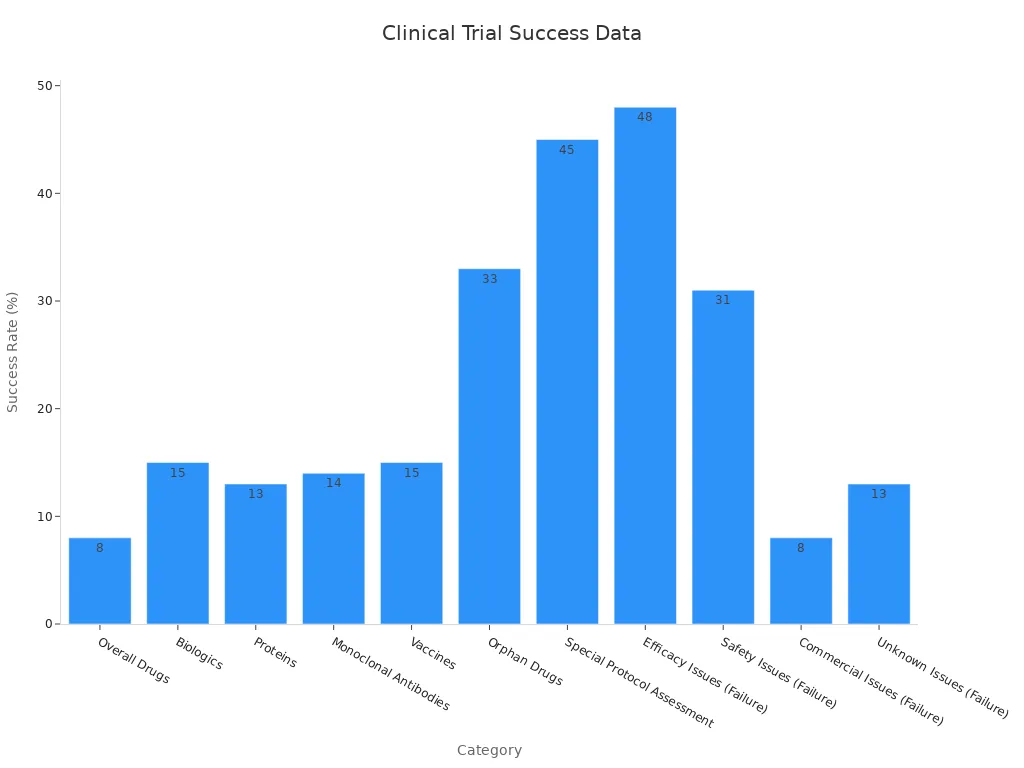
The regulatory landscape further complicates the approval process. The U.S. Food and Drug Administration (FDA) plays a critical role in determining which products reach the market. While expedited pathways like the Special Protocol Assessment offer a 45% success rate, they also demand rigorous compliance. Analysts note that the shrinking size of available share pools and rising shareholder dilution, particularly among small- and mid-cap companies, add another layer of complexity for investors navigating this space.
Risks of Biotechnology Stocks
Biotechnology stocks offer immense potential but come with inherent risks that investors must carefully evaluate. One of the most significant challenges with researching biotech stocks lies in the sector’s dependency on clinical trials and FDA approvals. Products under development often face stringent regulatory scrutiny, introducing uncertainty into the drug development process. Equity reports highlight that efficacy issues account for 48% of trial failures, while safety concerns contribute to 31%. These figures illustrate the high stakes involved in bringing a product to market.
Biotech firms, particularly smaller ones, are highly sensitive to news related to clinical trials and regulatory decisions. A single announcement can lead to significant stock price volatility, reflecting the sector’s unpredictable nature. Furthermore, the use of restricted stock units (RSUs) has increased in response to market conditions, leading to higher burn rates and potential shareholder dilution. Overhang levels among micro-, small-, and mid-cap companies now range between 17% and 22%, signaling heightened financial risks.
Annual equity usage has risen, leading to higher burn rates.
Shareholder dilution has grown, particularly among smaller companies, with overhang levels reaching 17-22%.
Companies are expected to propose increases in share reserves due to shrinking available pools.
Investors must remain vigilant, leveraging equity reports to assess both opportunities and risks. A thorough understanding of the volatile nature of biotech stocks can help mitigate potential losses while identifying companies with strong growth potential.
Emerging Trends in Biotech
The biotechnology sector continues to evolve rapidly, driven by groundbreaking innovations and shifting investment strategies. Analysts have identified several emerging trends that are reshaping the landscape, offering both opportunities and challenges for investors navigating biotechnology stocks.
Increased Focus on Early-Stage Funding: Despite a tightening funding environment, venture capital firms are prioritizing early-stage investments. Recent equity reports highlight the emergence of new funds, such as Forbion and Gilde Healthcare, which collectively raised significant capital to support Series A investments. This shift underscores the growing importance of nurturing biotech firms during their formative stages, as these companies often spearhead transformative innovations.
Fu
nd NameAmount RaisedType of FundForbion$1.5bnEU-based fundGilde Healthcare$657mVenture & Growth fundLux CapitalN/AEU fundWellingtonN/AEU fundCanaanN/AEU fundCure VenturesN/AEU fundEQT Life SciencesN/AEU fundSR OneN/AEU fund
Advancements in Gene and Cell Therapy: Gene editing technologies, such as CRISPR, are revolutionizing the treatment of genetic disorders. Similarly, cell-based therapies are gaining traction for their potential to address previously untreatable conditions. These advancements are not only expanding the therapeutic landscape but also attracting significant attention from investors seeking high-growth biotechnology stocks.
Integration of Artificial Intelligence (AI): AI is playing an increasingly pivotal role in drug discovery and development. By analyzing vast datasets, AI accelerates the identification of viable drug candidates, reducing the time and cost associated with clinical trials. This trend is particularly beneficial for biotech firms aiming to streamline their R&D processes and bring innovative therapies to market more efficiently.
Globalization of Biotech Innovation: While the United States remains a leader in biotechnology, other regions, including Europe and Asia, are emerging as significant players. The establishment of EU-based funds and the rise of biotech hubs in countries like China and India reflect a more globalized approach to innovation. This diversification offers investors a broader range of opportunities to explore within the sector.
Emphasis on Sustainability: As environmental concerns gain prominence, biotechnology companies are exploring sustainable practices in their operations. From developing bio-based materials to reducing the environmental impact of manufacturing processes, sustainability is becoming a key focus area. This trend aligns with the growing demand for ESG-compliant investments, further enhancing the appeal of biotechnology stocks.
These trends highlight the dynamic nature of the biotechnology sector. Investors must stay informed about these developments to identify opportunities that align with their investment strategies.
Actionable Insights for Biotech Investors
Investing in biotechnology stocks requires a strategic approach, given the sector’s inherent complexities and volatility. Equity reports provide a wealth of information that can guide investors in making informed decisions. Here are some actionable insights to consider:
Evaluate R&D Pipelines: A company’s research and development pipeline serves as a critical indicator of its growth potential. Investors should focus on firms with a diverse portfolio of projects in advanced stages of clinical trials. This approach minimizes risk while maximizing the likelihood of successful approvals.
Analyze Financial Metrics: Understanding a company’s financial health is essential. Key components to examine include revenue growth, cash reserves, and burn rates. Equity reports often provide detailed financial forecasts, enabling investors to assess a company’s ability to sustain operations and fund future innovations.
Component
Description
Industry Overview
Provides context and trends affecting the biotech sector.
Company Analysis
In-depth examination of specific biotech companies, including strengths and weaknesses.
Financial Forecasts
Projections of future financial performance based on quantitative data.
Valuation Rationale
Justification of the company’s value based on financial metrics and market conditions.
Investment Thesis
A summary of the investment opportunity, including potential risks and rewards.
Recommendations
Analyst’s advice on whether to buy, hold, or sell the stock based on the analysis conducted.
Monitor Regulatory Developments: The biotechnology sector is heavily influenced by regulatory decisions. Investors should stay updated on changes in approval pathways and compliance requirements. Companies with a strong track record of navigating regulatory hurdles are better positioned for long-term success.
Diversify Investments: Given the high-risk nature of biotechnology stocks, diversification is crucial. Allocating capital across multiple companies and sub-sectors can mitigate potential losses while capturing growth opportunities.
Leverage Analyst Recommendations: Equity reports often include recommendations from industry analysts. These insights provide valuable context for understanding market dynamics and identifying promising investment opportunities.
By incorporating these strategies, investors can navigate the complexities of the biotechnology sector more effectively. Staying informed and leveraging the insights provided by equity reports will enhance decision-making and position investors for success in this rapidly evolving industry.
Tech Sector Insights from Equity Reports

Growth Drivers in Tech
The tech sector continues to thrive, driven by innovation and strategic investments in research and development. U.S. companies have demonstrated remarkable earnings growth, exceeding 18% year-over-year in Q4, far outpacing the 7%-8% growth observed in Europe. This performance reflects the sector’s ability to capitalize on emerging technologies and efficient capital allocation. The total market capitalization of U.S. public companies reached $63 trillion by the end of 2024, accounting for over half of the global market value. Such dominance underscores the region’s leadership in R&D spending and patent applications, which fuel innovation and long-term growth.
Key statistics further highlight the sector’s momentum:
Statistic | Value | Description |
|---|---|---|
Venture Investment in AI | Proportion of venture capital directed towards AI-powered companies in 2024. | |
Year-over-Year Burn Rate Increase | 8% | Median burn rate increase for Series B companies, reflecting financial pressures. |
Cash Out Rate of VC-Backed Companies | 50% | Percentage of U.S. VC-backed tech companies that cashed out within 12 months. |
Median Annual Revenue for Series A | $2.5M | Median revenue for Series A companies, significantly higher than in 2021. |
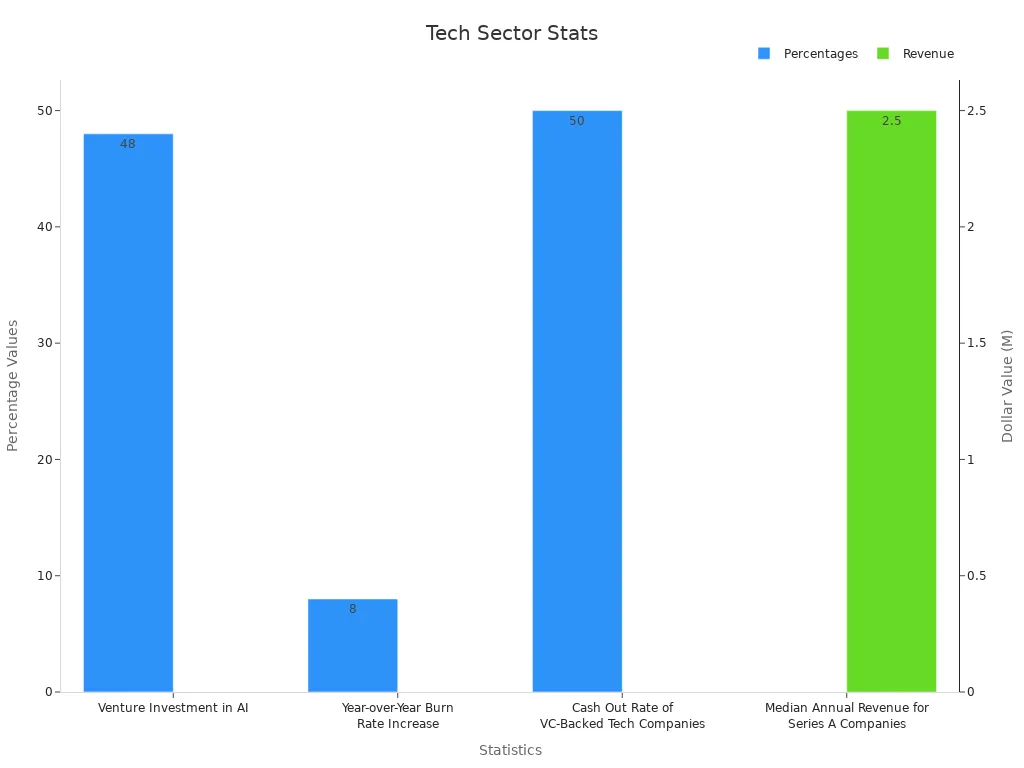
These figures illustrate the sector’s resilience and its ability to attract investors seeking high-growth opportunities. Analysts emphasize the importance of monitoring R&D trends to identify companies poised for sustained success.
Risks and Volatility in Tech Investments
While the tech sector offers immense potential, it also presents significant risks. Equity reports reveal that high volatility in stock investments can lead to substantial fluctuations in portfolio value. Institutions like Brown and Dartmouth have highlighted the challenges of managing such volatility, with Brown noting that portfolios composed entirely of stocks often experience significant swings. This volatility represents a real risk for endowments or investors requiring consistent returns.
Institution | Venture Capital Exposure | Performance Impact |
|---|---|---|
Brown | High | Positive |
Dartmouth | High | Negative |
Princeton | High | Negative |
MIT | High | Negative |
“Why then would Brown’s endowment not pursue a highly liquid, high-returning, low-cost investment? One reason is because portfolios made up entirely of stocks tend to be highly volatile. Stock investors ‘earn’ those high returns by enduring significant fluctuations in the value of their holdings.”
To mitigate these risks, many institutions allocate approximately 40% of their portfolios to non-public equity. This strategy balances risk and return, providing a buffer against market volatility. Investors should consider diversification and closely monitor financial metrics, such as burn rates and cash reserves, to navigate the uncertainties of tech investments effectively.
Regulatory Landscape in Tech
The regulatory environment plays a crucial role in shaping the tech sector’s trajectory. Over the past decade, regulatory changes have increased by 300%, reflecting heightened scrutiny and evolving compliance requirements. The global RegTech market, valued at $6.3 billion in 2020, is projected to reach $33.1 billion by 2028, growing at a CAGR of 23.1%. This growth highlights the increasing reliance on technology to streamline compliance processes.
Evidence Description | Source | Year |
|---|---|---|
Regulatory changes increased by 300% post-2008 | Thomson Reuters | 2021 |
Global RegTech market projected to grow at 23.1% CAGR | Grand View Research | 2021 |
Automated audits reduce preparation time by 60% | Deloitte | 2022 |
Compliance automation reduces costs by 30% | McKinsey & Company | 2023 |
Compliance technologies yield 166% ROI over 3 years | Accenture | 2023 |
Automation has emerged as a key driver in regulatory compliance, with organizations reporting significant cost savings and efficiency gains. For example, automated audit processes have reduced preparation time by 60% and overall audit costs by 40%. These advancements not only enhance operational efficiency but also improve accuracy and timeliness, making them indispensable for tech companies navigating complex regulatory landscapes.
By staying informed about these developments, investors can better assess the regulatory risks and opportunities within the tech sector. Equity reports serve as a valuable resource for understanding how companies adapt to these challenges, ensuring compliance while driving innovation.
Trends in Emerging Technologies
Emerging technologies continue to redefine the tech sector, offering new avenues for growth and innovation. Equity reports highlight several transformative trends that are reshaping industries and creating opportunities for forward-thinking companies.
Artificial Intelligence (AI) and Machine Learning (ML): AI and ML remain at the forefront of technological advancements. Companies are leveraging these tools to enhance decision-making, automate processes, and improve customer experiences. For instance, AI-powered analytics enable businesses to predict market trends with greater accuracy, reducing uncertainty in strategic planning.
Quantum Computing: Quantum computing is transitioning from theoretical research to practical applications. This technology promises to revolutionize fields such as cryptography, drug discovery, and financial modeling. Although still in its infancy, quantum computing is attracting significant investment, signaling its potential to disrupt traditional computing paradigms.
5G and Beyond: The rollout of 5G networks is accelerating, enabling faster data transmission and supporting the growth of the Internet of Things (IoT). This infrastructure is critical for innovations like autonomous vehicles, smart cities, and advanced robotics, which rely on low-latency, high-speed connectivity.
Sustainability-Focused Tech: Environmental concerns are driving the development of green technologies. From energy-efficient data centers to biodegradable electronics, companies are prioritizing sustainability to meet regulatory requirements and consumer expectations. This trend aligns with the growing emphasis on environmental, social, and governance (ESG) factors in investment decisions.
Blockchain and Decentralized Systems: Blockchain technology is expanding beyond cryptocurrencies to include applications in supply chain management, digital identity, and secure data sharing. Its decentralized nature offers enhanced transparency and security, making it a valuable tool for industries ranging from finance to healthcare.
These trends underscore the dynamic nature of the tech sector. Companies that adapt to these innovations are better positioned to maintain competitive advantages and drive long-term growth.
Actionable Insights for Tech Investors
Equity reports provide a wealth of actionable insights that can help investors navigate the complexities of the tech sector. By focusing on key strategies, investors can make informed decisions and capitalize on emerging opportunities.
Regular Reconciliation: Investors should prioritize regular reconciliation of their portfolios to ensure the accuracy of investment values. This practice helps maintain a clear understanding of asset performance and reduces the risk of discrepancies.
Transparency and Disclosure: Companies with robust transparency and disclosure practices offer greater clarity into their operations. Investors can use this information to assess the alignment of corporate strategies with market trends.
Integrated Reporting Systems: Advanced enterprise resource planning (ERP) systems improve financial management by consolidating data from multiple sources. These systems enable real-time monitoring of key performance indicators, enhancing decision-making processes.
Enhanced Forecast Accuracy: Leveraging real-time data allows companies to refine their financial forecasts. Investors can identify firms that excel in predictive analytics, as these organizations are often better equipped to adapt to market fluctuations.
Strategic Positioning: Equity reports often highlight how companies align their strategies with performance metrics. Investors should focus on firms that demonstrate a clear understanding of their competitive landscape and have a track record of strategic adaptability.
By incorporating these insights into their investment strategies, investors can better navigate the rapidly evolving tech sector. Staying informed about emerging technologies and leveraging data-driven analysis will position them for success in this dynamic market.
Energy Sector Insights from Equity Reports
Growth Opportunities in Energy
The energy sector offers substantial growth opportunities, driven by advancements in technology, increasing awareness of climate change, and rising investments in renewable energy. Equity reports highlight several factors contributing to this growth trajectory. Innovations in solar and wind technologies have made renewable energy more efficient and cost-effective, attracting significant interest from both public and private sectors. Additionally, the growing recognition of climate change has led to stringent regulations that promote clean energy initiatives.
The sector’s diverse end-user base further amplifies its potential. Industries ranging from manufacturing to transportation are increasingly adopting renewable energy solutions, creating collaborative opportunities for growth. A closer look at the data reveals the following key drivers:
Growth Factor | Description |
|---|---|
Awareness of Climate Change | Growing recognition of climate change is leading to stringent regulations that promote renewable energy investments. |
Technological Advancements | Innovations in solar and wind technologies are making renewable energy more efficient and cost-effective. |
Increased Investments | Both public and private sectors are investing heavily, recognizing the stability and long-term benefits of renewables. |
Diverse End-User Base | The rising demand for clean energy across various sectors is creating collaborative opportunities for growth. |
These factors underscore the sector’s resilience and adaptability, making energy stocks an attractive option for investors seeking sustainable growth.
Regulatory and Environmental Impacts
Regulatory and environmental changes significantly influence energy investments. Recent research highlights a nuanced relationship between environmental regulations and corporate green investments. Initial regulatory strengthening often stimulates green investments, as firms seek to align with compliance requirements and capitalize on incentives. However, as regulations intensify, the associated costs may outweigh the benefits, leading some companies to reduce their green investments.
For example, thermal power enterprises in China have demonstrated this dual impact. While early regulatory measures encouraged green initiatives, stricter policies eventually constrained investment capacity. This dynamic illustrates the importance of balancing regulatory frameworks to foster sustainable growth without imposing excessive financial burdens on companies.
Equity reports emphasize the need for investors to monitor these developments closely. Companies that adapt effectively to regulatory changes and integrate environmental considerations into their strategies are better positioned to thrive in the evolving energy market.
Risks in Energy Investments
Energy investments come with inherent risks that require careful evaluation. Equity analyses reveal several key risk factors contributing to market volatility:
Wholesale electricity prices have experienced significant fluctuations, with a drop of 75% in one period and a subsequent increase of nearly 34% in cost per megawatt-hour.
Supply chain disruptions, often caused by trade disputes and geopolitical issues, have impacted the availability of critical components.
Regional price differences, influenced by trends in the liquefied natural gas (LNG) market, create disparities in energy costs.
Infrastructure limitations, including outdated transportation networks, hinder efficient energy distribution.
Government policies introducing new incentives or regulations can alter market dynamics unpredictably.
These risks highlight the importance of diversification and strategic planning for investors navigating the energy sector. By leveraging equity reports, investors can gain a deeper understanding of these challenges and identify companies with robust risk management practices.
Market Trends in Energy Transition
The energy transition is reshaping global markets, driven by record-breaking investments and technological advancements. In 2024, global investment in the energy transition reached $2.1 trillion, an 11% increase from the previous year. This surge was fueled by sectors like electrified transport, renewable energy, and power grids, all of which achieved new investment highs. Electrified transport alone accounted for $757 billion, while renewable energy investments totaled $728 billion. These figures highlight the growing commitment to sustainable energy solutions and the increasing role of mature technologies in driving this transformation.
However, a notable disparity exists between mature and emerging technologies. While mature technologies attracted $1.93 trillion in investments, emerging technologies saw a decline to $155 billion. This gap underscores the challenges faced by newer innovations in securing funding, despite their potential to disrupt traditional energy systems. Investors should pay close attention to this dynamic, as it reflects shifting priorities within the energy sector.
Another significant trend is the regional variation in energy transition efforts. Developed markets continue to lead in renewable energy adoption, but emerging markets are rapidly catching up, driven by government incentives and international funding. This global push for cleaner energy sources is creating opportunities for companies to expand their operations and diversify their portfolios.
The energy transition is also influencing the stocks of companies involved in renewable energy and electrification. Firms with strong commitments to sustainability are gaining traction among investors, as they align with long-term environmental goals. This trend highlights the importance of integrating sustainability into business strategies to remain competitive in a rapidly evolving market.
Actionable Insights for Energy Investors
Investors navigating the energy sector can benefit from a strategic approach informed by equity reports and market trends. Here are some actionable insights to consider:
Focus on Mature Technologies: Companies specializing in mature technologies, such as solar and wind energy, are attracting the majority of investments. These firms often offer more stable returns compared to those developing emerging technologies.
Monitor Regional Developments: Regional policies and incentives play a critical role in shaping energy markets. Investors should track developments in both developed and emerging markets to identify growth opportunities.
Evaluate ESG Performance: Environmental, social, and governance (ESG) factors are becoming increasingly important in investment decisions. Companies with strong ESG credentials are more likely to attract long-term capital and maintain resilience in a competitive market.
Diversify Across Sub-Sectors: The energy transition encompasses a wide range of industries, from electrified transport to power grids. Diversifying investments across these sub-sectors can help mitigate risks and capture growth opportunities.
Leverage Data-Driven Insights: Equity reports provide valuable data on market trends and company performance. Investors should use these insights to assess the financial health and strategic positioning of potential investments.
By aligning their strategies with these insights, investors can better navigate the complexities of the energy transition. Staying informed about market dynamics and leveraging equity reports will enhance decision-making and position investors for long-term success.
Equity reports remain indispensable for making informed investment decisions. They provide a structured analysis of market dynamics, enabling investors to identify opportunities with the potential for significant investment gains. By leveraging insights from these reports, investors can evaluate critical metrics such as revenue, profit margins, and return on investment, ensuring their strategies align with market realities.
Each sector offers unique opportunities and challenges. In pharma and biotech, innovation and regulatory shifts dominate the landscape, while tech thrives on emerging technologies and energy focuses on sustainability. Equity reports highlight actionable KPIs like capital structure optimization and cash flow management, helping investors assess long-term stability and operational efficiency.
By integrating equity reports into their decision-making processes, investors can navigate complexities with confidence, aligning their portfolios with growth opportunities and maximizing return on investment.
FAQ
What are equity reports, and why are they important for investors?
Equity reports provide detailed analyses of companies, including financial performance, market trends, and growth potential. Investors use these reports to make informed decisions, assess risks, and identify opportunities across sectors like pharma, biotech, tech, and energy.
How can equity reports help in understanding sector-specific trends?
Equity reports highlight key metrics, such as revenue growth, R&D investments, and regulatory impacts, tailored to specific industries. For instance, they may reveal emerging technologies in tech or market access challenges in pharma, enabling investors to align strategies with sector dynamics.
What role does ESG analysis play in equity reports?
Environmental, social, and governance (ESG) analysis evaluates a company’s sustainability practices and ethical impact. Equity reports often include ESG metrics, helping investors identify companies that align with global sustainability goals and attract long-term capital.
Tip: Prioritize companies with strong ESG performance for resilience and growth potential.
Are equity reports useful for assessing risks in volatile sectors?
Yes, equity reports provide insights into sector-specific risks, such as regulatory hurdles in biotech or price volatility in energy. They help investors evaluate financial health, operational challenges, and market trends to mitigate risks effectively.
How can investors leverage equity reports for strategic growth?
Investors can use equity reports to identify high-growth opportunities, monitor competitive landscapes, and evaluate financial metrics like cash flow and profitability. These insights support strategic decision-making and long-term portfolio optimization.
Note: Regularly reviewing equity reports ensures alignment with evolving market conditions.
Understanding Markets: Insights That Shape Smarter Investment Decisions
Navigating the path to long-term financial success means more than chasing trends, it’s about grounding decisions in insight, discipline, and a clear understanding of where value is truly created. At VASRO, we believe that equity reports are not just documents, they’re navigational tools, especially when exploring high-stakes sectors like pharma, biotech, tech, and energy. These reports help uncover the nuanced interplay between innovation, regulation, and market momentum, guiding investors toward strategies rooted in research, not reaction. Whether it’s recognizing the significance of R&D pipelines in biotech, ESG compliance in pharma, or the impact of emerging technologies in the energy transition, the key is seeing the bigger picture with clarity and precision. That’s where thoughtful equity analysis comes in, connecting data to real-world trends, and helping investors craft resilient, growth-focused portfolios over time.
Disclaimer: The information provided on www.vasro.de is for general informational purposes only and does not constitute investment advice or a recommendation to invest in any particular asset or market. VASRO GmbH does not offer personalized investment advice, and the content on this website should not be relied upon as such. Visitors are encouraged to seek independent financial advice tailored to their specific circumstances before making any investment decisions. VASRO GmbH disclaims any liability for investment decisions made based on the information presented on this website.