


Equity report analysis plays a pivotal role in shaping your investment strategy. It equips you with data-driven insights that help you navigate the complexities of the 2025 investment landscape. For instance, Gartner estimates that 30% of GenAI projects will fail by 2025, while Deloitte predicts 25% of enterprises will deploy AI agents. Such trends demonstrate the need to adapt your approach. Additionally, regulatory shifts may create opportunities for mega-cap technology stocks and large banks. By leveraging these insights, you can align your investment strategies for 2025 with emerging trends and mitigate risks effectively.
Table of Contents
Key Takeaways
Keep up with big economic changes like inflation and interest rates. These things affect your investments and market values directly.
Spread your investments across different industries and types of assets. This lowers risks and helps you find chances to grow in a changing market.
Watch growing markets for new opportunities. Lower interest rates and better inflation trends make these areas good for investing.
Macroeconomic Overview for 2025
Inflation and Interest Rate Projections
Inflation and interest rates will play a pivotal role in shaping the financial markets in 2025. The Federal Reserve projects a terminal rate of 3 percent, marking the highest level since 2016. While inflation is expected to slow to 2.4 percent, it remains above the Fed’s target of 2 percent. Elevated interest rates could persist, influencing borrowing costs and investment decisions. You should monitor these trends closely, as they directly impact the valuation of equities and the broader market performance.
Global Economic Trends and Their Impact on Equities
The global economy in 2025 is expected to experience a mix of challenges and opportunities. A potential slowdown early in the year may give way to a recovery driven by manufacturing-led growth and monetary easing. In the U.S., economic resilience will likely stem from continued investments in AI and low unemployment rates, despite slower job creation. Internationally, value and small-cap stocks may present growth opportunities as the dominance of U.S. equities begins to wane. Here’s a snapshot of key insights:
Category | Key Insights |
|---|---|
U.S. Equities | Rate cuts may benefit small-caps and financials, broadening opportunities in equity markets. |
Global Economy | Early slowdown with potential for rapid recovery and manufacturing-led growth. |
U.S. Economy | AI investments and monetary easing to support growth, with low unemployment. |
Global Equities | Value and small-cap stocks internationally may outperform as U.S. tech dominance fades. |
Key Policy and Regulatory Developments to Watch
Policy changes and regulatory shifts will significantly influence the economic outlook for 2025. Political uncertainty, with elections in over 70 countries, could lead to changes in trade policies, corporate taxes, and sustainability regulations. High financing costs are expected to persist, impacting market valuations and investor behavior. In Europe, simplified sustainability measures may reduce reporting burdens for companies but could limit data availability for investors. Additionally, the concept of double materiality will remain, ensuring that sustainability risks and impacts are disclosed. You should also keep an eye on potential regulatory reversals in the U.S., which could slow the pace of changes in the investment management industry.
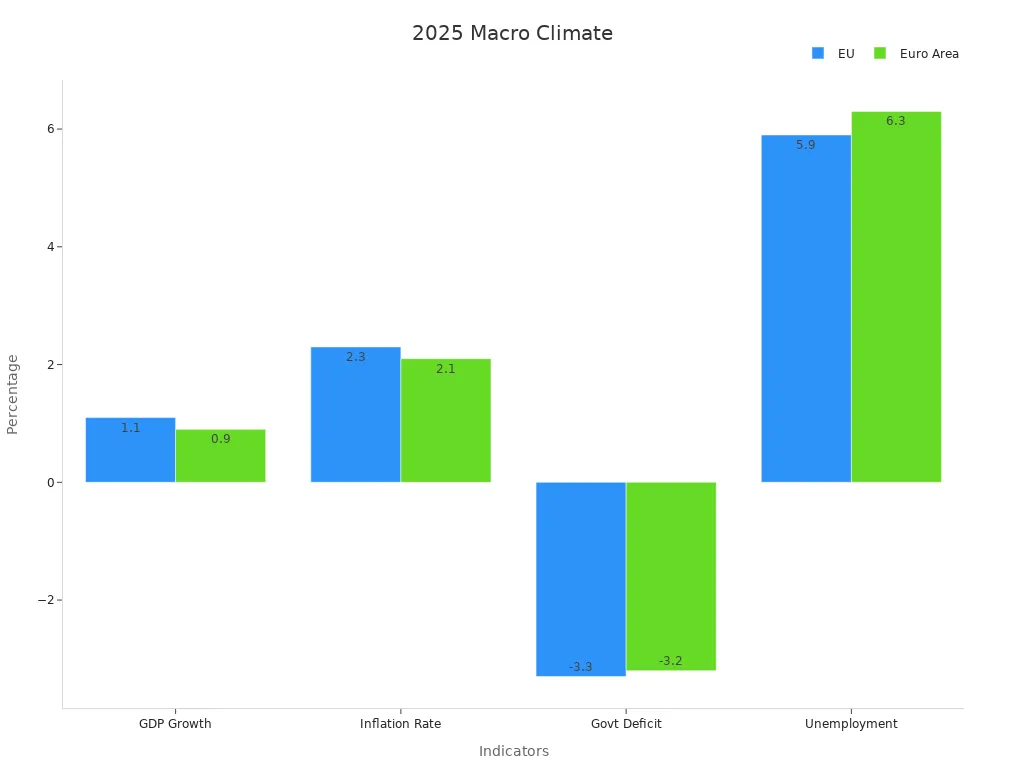
By staying informed about these macroeconomic factors, you can better navigate the equity markets and align your strategies with the evolving landscape.
Sector-Specific Equity Analysis

Technology: Growth Drivers and Challenges
The technology sector continues to dominate as one of the most dynamic and high-potential sectors for equities in 2025. With U.S. tech jobs projected to grow from 6 million in 2024 to 7.1 million by 2034, the sector is poised for sustained expansion. Artificial intelligence (AI) stands out as a key driver, with global spending on AI expected to more than double between 2024 and 2028, achieving a compound annual growth rate (CAGR) of 29%. This surge reflects increasing investments in AI-enabled applications, infrastructure, and hardware, including semiconductors, storage systems, and cloud computing services.
However, challenges persist. The rapid pace of innovation demands significant capital, and regulatory scrutiny around data privacy and AI ethics could slow adoption. Additionally, only 22% of S&P 500 companies outperformed the index over the past year, though this figure rose to 50% in the last month, signaling a broader market rally. This shift in investor sentiment highlights the importance of identifying sector-specific trends and timing your equity investments effectively.
Tip: Diversifying within the technology sector—across AI, cloud computing, and semiconductors—can help you capture growth while mitigating risks.
Financials: Navigating Interest Rate Sensitivity
The financial sector faces a mixed outlook in 2025, shaped by interest rate movements and evolving market dynamics. High deposit costs, estimated at 2.03%—more than double the previous five-year average of 0.9%—are expected to pressure net interest income. The net interest margin is projected to stabilize at around 3% by year-end, while noninterest income as a percentage of average assets could rise to nearly 1.5%, the highest in five years. These metrics underscore the sector’s sensitivity to interest rate fluctuations.
Despite these challenges, opportunities exist. Broader market participation and improved market breadth suggest a healthier environment for equities. Recent market rotations indicate a shift in investor sentiment, with financial stocks potentially benefiting from this trend. You should focus on institutions with diversified revenue streams and robust risk management practices to navigate this complex landscape.
Real Estate: Trends in Commercial and Residential Markets
Real estate equities in 2025 will reflect the sector’s ongoing transformation. In commercial real estate, hybrid work models continue to reshape demand for office spaces, while logistics and industrial properties benefit from the e-commerce boom. Residential markets, on the other hand, face affordability challenges due to elevated mortgage rates and supply constraints.
Investors should monitor regional variations. Urban centers with strong job markets may see resilience in residential demand, while suburban areas could experience slower growth. In commercial real estate, sectors like data centers and warehousing offer promising opportunities. By aligning your investments with these trends, you can position yourself to capitalize on the sector’s evolving dynamics.
Green Energy: Opportunities in Renewable Investments
The green energy sector represents a cornerstone of sustainable growth, driven by legislative support and technological advancements. The Inflation Reduction Act has catalyzed investments in clean energy technologies, reducing costs and encouraging widespread adoption. Funding initiatives from the Act are expected to spur the deployment of over 36 GW of renewables and storage by 2030.
Solar and wind energy lead the charge, supported by maturing energy storage technologies that enhance grid integration. Global capacity additions in renewables are surging as countries accelerate their transition away from fossil fuels. According to a Deloitte survey, over two-thirds of respondents believe federal policies significantly influence the energy transition. This underscores the importance of aligning your equity investments with policy-driven opportunities in this high-potential sector.
Pharmaceuticals: Innovations Driving Growth
The pharmaceutical sector is undergoing a profound transformation, fueled by advancements in technology and a deeper understanding of human biology. Innovations such as AI, personalized medicine, and telemedicine are redefining drug development and patient engagement. Sustainability practices are also gaining traction, reflecting the industry’s commitment to long-term value creation.
By 2025, mergers and acquisitions are expected to increase as companies consolidate resources to enhance their competitive edge. This trend positions the sector for sustained growth. The PwC Pharma Index, which delivered a 7.6% total shareholder return from 2018 to 2024, highlights the sector’s resilience. However, it still lags behind the S&P 500 Index, which achieved returns exceeding 15% during the same period. To maximize your equity investments, focus on companies leveraging data analytics and generative AI to drive innovation.
Note: The pharmaceutical sector’s emphasis on personalized medicine and sustainability offers unique opportunities for long-term investors.
Actionable Investment Strategies for 2025
Asset Allocation for a Balanced Portfolio
A balanced portfolio remains a cornerstone of effective investment strategies in 2025. Allocating assets strategically can help you achieve steady returns while minimizing risks. Tactical asset allocation, for instance, has consistently outperformed passive portfolios during transitional market periods, delivering an annualized return of 2.1%. Dynamic asset allocation offers even greater potential, achieving returns of 7.8% annually with lower drawdowns. Integrated asset allocation strategies provide higher Sharpe ratios and reduced volatility, making them ideal for navigating uncertain markets.
Asset Allocation Strategy | Annualized Return | Performance Comparison |
|---|---|---|
Tactical Asset Allocation | 2.1% | Outperformed passive portfolios over 10 years |
Dynamic Asset Allocation | 7.8% | Achieved higher returns with lower drawdowns |
Integrated Asset Allocation | Higher Sharpe Ratio | Lower drawdown volatility compared to benchmarks |
Constant-Weighting Allocation | 0.5% to 1.5% | Outperformed passive strategies in volatile markets |
To build a balanced portfolio, consider diversifying across asset classes. Fixed income investments can provide stability, while equities—both developed and emerging—offer growth potential. Emerging markets, in particular, present opportunities driven by regional GDP growth and productivity improvements.
Tip: Regularly rebalance your portfolio to maintain optimal asset allocation and adapt to changing market conditions.
Risk Management Techniques for Volatile Markets
Volatility is an inevitable part of the investment landscape, especially in the u.s. equity market. Effective risk management techniques can help you protect your portfolio during turbulent times. Traditional models often underestimate extreme events by 30-40%, highlighting the importance of proactive strategies. Diversification remains a key approach, spreading investments across asset types to mitigate risks during market declines.
Technique | Description |
|---|---|
Value at Risk (VaR) | Estimates potential portfolio losses over a specific period based on market behavior and confidence interval. |
Stress Testing | Simulates adverse market conditions to assess portfolio performance and identify vulnerabilities. |
Scenario Analysis | Evaluates how investments would perform under various hypothetical market scenarios. |
Diversification | Spreads investments across different asset types to mitigate risks associated with market declines. |
Volatility clustering, observed in 87% of market crashes over the past century, underscores the need for vigilance. High volatility periods often follow similar conditions, making it crucial to monitor market trends closely.
Note: Incorporating stress testing and scenario analysis into your strategy can help you identify vulnerabilities and prepare for adverse conditions.
Hedging Strategies to Protect Against Downside Risks
Hedging strategies are essential for safeguarding your investments against downside risks. Techniques like options, futures, and long-short strategies offer flexibility and protection during market downturns. The Markowitz Efficient Frontier model identifies the optimal mix of assets for maximum expected return at a defined risk level, emphasizing the importance of diversification.
Technique | Description |
|---|---|
Markowitz Efficient Frontier | Identifies the optimal mix of assets for maximum expected return at a defined risk level through diversification. |
Monte Carlo Simulations | Tests various scenarios to simulate the effects of random market variables on portfolio performance. |
Factor Models | Breaks down returns into underlying drivers (market, size, value, momentum) for systematic measurement and management. |
Monte Carlo simulations and factor models provide valuable insights into portfolio performance under various scenarios. These tools can help you make informed decisions and adjust your strategy to align with the evolving outlook for 2025.
Callout: Hedging strategies are not just about minimizing losses; they also enable you to capitalize on opportunities during market fluctuations.
Leveraging Alternative Investments for Diversification
Alternative investments offer a powerful way to enhance portfolio diversification and tap into high-potential sectors. With $17.2 trillion in assets under management globally, alternatives are projected to grow significantly, outpacing traditional markets. Private equity and real estate development stand out as promising areas, driven by persistent housing shortages and the rise of AI infrastructure investments.
Alternatives have historically outperformed traditional 60/40 portfolios, delivering higher yields and greater resilience. Normalizing interest rates are expected to benefit private equity and private credit, creating new deal-making opportunities.
Insight: Alternatives are not just a diversification tool; they represent a gateway to innovative sectors and emerging opportunities in the global private equity report.
By incorporating alternative investments into your portfolio, you can achieve greater diversification and position yourself for long-term growth in the evolving economy.
Global Perspective on Equities

Opportunities in Emerging Markets
Emerging markets present compelling opportunities for equity investors in 2025. Central banks in these regions are expected to continue cutting interest rates, which could ease foreign exchange pressures and stabilize economic policies. Inflation trends are also improving, with projections showing a decline as labor markets loosen in developed economies. This creates a favorable environment for sectors like services and high-value manufacturing, particularly in countries such as India.
Rural consumption has shown resilience, with agricultural growth reaching a five-quarter high of 3.5%. Urban areas are also thriving, as services sector growth hit 7.1% in the first half of the fiscal year, reflecting strong income potential. Additionally, trade diversion is benefiting nations that manufacture goods similar to Chinese products, allowing them to capture a larger share of global supply chains.
Indicator | Description |
|---|---|
Interest Rate Cuts | Central banks are normalizing policies, reducing FX pressures. |
Sectoral Growth | Services and high-value manufacturing are driving economic expansion. |
Market Volatility | Emerging markets may experience higher volatility and lower liquidity. |
Investment Risks | Currency fluctuations and political instability remain key challenges. |
Despite these opportunities, you should remain cautious. Emerging markets often face higher volatility and geopolitical risks, which can disrupt supply chains and impact market confidence.
Impact of Geopolitical Events on International Investments
Geopolitical events are reshaping the global equity landscape. Fragmentation among major economies has led to increased infrastructure and defense spending in regions like Europe and Japan. These shifts are driving foreign investors to repatriate funds from U.S. equities, redirecting capital to local markets. This trend is further supported by strong local returns and a weakening dollar, which enhances international equity performance for U.S. investors.
However, geopolitical risks, such as potential state-based conflicts and extreme weather events, are expected to heighten equity volatility in 2025. These factors influence asset allocation decisions, making it essential for you to monitor regional developments closely. By understanding how these events impact market dynamics, you can better position your portfolio to capitalize on emerging opportunities.
Diversification Across Regions and Currencies
Diversifying your equity investments across regions and currencies can significantly reduce portfolio volatility while enhancing returns. The MSCI Global Equity Factor Model highlights that diversification benefits are stronger now due to the distinct performance of regional markets. For example, developed markets outside the U.S., such as Europe and Japan, are focusing on shareholder value and infrastructure growth, creating unique investment opportunities.
Currency diversification also plays a critical role. A declining dollar boosts returns for U.S. investors holding international equities, while exposure to multiple currencies can help mitigate risks associated with exchange rate fluctuations. By spreading your investments across various regions and currencies, you can build a more resilient portfolio that adapts to changing global market conditions.
Tip: Use global private equity reports to identify high-potential regions and sectors for diversification.
The 2025 investment landscape demands adaptability. Broad declines in market indices highlight a risk-averse environment, while rising U.S. tariffs add inflationary pressure. European equities outperform, underscoring the value of global diversification. Focus on high-growth sectors like technology and green energy. Maintain a diversified portfolio to navigate evolving market dynamics effectively.
FAQ
What is the best way to diversify your portfolio in 2025?
Focus on a mix of equities, fixed income, and alternative investments. Include exposure to emerging markets and high-growth sectors like technology and green energy.
How can you manage risks during volatile market conditions?
Use diversification, stress testing, and scenario analysis. These techniques help identify vulnerabilities and prepare your portfolio for adverse market scenarios.
Why should you consider emerging markets for equity investments?
Emerging markets offer growth opportunities due to improving inflation trends, interest rate cuts, and expanding sectors like high-value manufacturing and services.
Why Insight-Driven Strategies Matter in 2025
In the journey of wealth creation, long-term success isn’t about chasing quick wins, it’s about making informed, intentional moves in a constantly evolving market. As we navigate 2025, understanding the forces shaping key industries, from AI-driven innovation in tech to the structural shifts in real estate and green energy, is more crucial than ever. Equity report analysis empowers you to see beyond headlines, revealing patterns and risks that may otherwise go unnoticed. At VASRO, we believe that clarity comes from precision, our equity insights are grounded in rigorous analysis and a deep understanding of macroeconomic trends. Whether you’re recalibrating your portfolio in response to rising interest rates or seeking resilient opportunities in emerging markets, the smartest strategies are those built on disciplined research and an eye for what lies ahead.
Disclaimer: The information provided on www.vasro.de is for general informational purposes only and does not constitute investment advice or a recommendation to invest in any particular asset or market. VASRO GmbH does not offer personalized investment advice, and the content on this website should not be relied upon as such. Visitors are encouraged to seek independent financial advice tailored to their specific circumstances before making any investment decisions. VASRO GmbH disclaims any liability for investment decisions made based on the information presented on this website.