


The stem-cell research resurgence in 2025 marks a transformative year for regenerative medicine. Advances in therapeutics are reshaping the healthcare landscape, driven by innovation and strategic investments. Biotech companies like Mesoblast and Capricor Therapeutics are pioneering treatments for inflammatory and rare diseases, setting new benchmarks in medical progress.
The market growth projections highlight the sector’s immense potential. Key data points include:
Year | Market Value (USD) | CAGR |
|---|---|---|
2025 | 10.20% | |
2030 | 22.21 billion | 10.20% |
Additionally, mesenchymal stem cells are expected to generate $4.33 billion in revenue by 2025, showcasing their critical role in advancing therapeutics. This surge reflects increased research and development activities, particularly in cancer stem cells, which are unlocking new therapeutic possibilities. The healthcare industry’s annual investment of $30 billion underscores the growing commitment to stem-cell innovation.
Table of Contents
Key Takeaways
Stem-cell research is growing fast in 2025 due to new ideas and funding.
Companies like Mesoblast and Capricor Therapeutics are creating new treatments for rare and inflammatory diseases.
Easier rules now help new stem-cell treatments reach patients quicker.
The global stem cell market is projected to reach approximately $13.66 billion by 2025 and $22.21 billion by 2030, reflecting a compound annual growth rate (CAGR) of 10.2%.
Teamwork between leaders, biotech companies, and investors is key to helping patients and improving research.
Regulatory and Political Winds of Change
Historical Challenges in Stem-Cell Research
Stem-cell research has faced significant hurdles over the years. Ethical concerns surrounding the use of embryonic stem cells have been a persistent issue. Harvesting these cells often involves egg donation, which poses risks to women and raises questions about exploitation. Additionally, obtaining a sufficient number of human eggs for research has proven inefficient and impractical. Embryonic stem cells have faced ethical and practical challenges; however, they have been utilized in clinical trials for conditions such as spinal cord injury and macular degeneration, with some early-stage successes reported. These challenges have historically slowed the progress of stem-cell therapeutics and biopharmaceutical advancements.
RFK Jr.’s Role in Streamlining Approvals
In 2025, Health Secretary Robert F. Kennedy Jr. has expressed interest in modifying regulations related to stem-cell treatments. However, there is no publicly verified evidence that these efforts have directly led to streamlined approval processes for stem-cell therapies. By addressing bureaucratic bottlenecks, RFK Jr. has enabled biotech companies to bring therapeutics to market more efficiently. This streamlined approach has encouraged investment in stem-cell research, fostering a more dynamic environment for innovation. His efforts have also highlighted the importance of balancing safety with the need for timely medical advancements.
Political Advocacy for Alternative Medical Technologies
The political landscape in 2025 has shifted to support alternative medical technologies, including stem-cell therapeutics. Legislative reforms have introduced new frameworks to ensure accountability and compliance. For example:
Reform | Description |
|---|---|
Expands obligations for directors in financial and healthcare institutions. | |
Aged Care Act Reforms | Mandates compliance by care providers to improve patient outcomes. |
Mandatory Sustainability Reporting | Requires transparency in sustainability efforts by healthcare companies. |
Policymakers have also focused on reducing barriers for biotech startups, encouraging innovation in biopharmaceutical solutions. Increased scrutiny on climate goals and sustainability reporting has further aligned the healthcare sector with global priorities. These changes reflect a growing commitment to fostering a supportive ecosystem for stem-cell research and development.
Leading Biotech Companies in Stem-Cell Research

Mesoblast’s Innovations in Inflammatory Disease Treatments
Mesoblast has emerged as a leader in stem-cell therapeutics, focusing on inflammatory diseases. The company’s flagship therapy, rexlemestrocel-L, has shown promising results in addressing chronic low back pain caused by inflammatory degenerative disc disease. Mesoblast has initiated a Phase III clinical trial for rexlemestrocel-L targeting chronic low back pain, with patient enrollment underway as of mid-2024. While the trial design and primary endpoint of pain reduction over 12 months have received FDA approval, comprehensive results are pending, and full approval has not yet been granted. Secondary endpoints included improved quality of life, enhanced physical function, and reduced opioid dependency.
The therapy utilizes mesenchymal precursor cells combined with hyaluronic acid, delivered through a single spinal injection. This innovative mechanism reduces inflammation, promotes tissue healing, and alleviates pain. Mesoblast’s allogeneic cellular medicines also release anti-inflammatory factors, offering potential treatments for severe inflammatory conditions. These advancements highlight the company’s commitment to innovation in stem-cell-based therapeutics.
Trial Name | Focus | Patient Population | Primary Endpoint | Secondary Endpoints |
|---|---|---|---|---|
Phase III Clinical Trial of rexlemestrocel-L | Chronic low back pain | 300 patients | Pain reduction over 12 months | Quality of life improvement, function enhancement, decline in opioid usage |
Capricor’s Breakthroughs in Rare Cardiac and Muscular Disorders
Capricor Therapeutics has made significant strides in treating rare cardiac and muscular disorders. Its lead candidate, CAP-1002, targets cardiomyopathy associated with Duchenne muscular dystrophy (DMD). Clinical trials have shown a 52% reduction in disease progression over three years, with slower functional decline in treated patients compared to untreated ones. CAP-1002 also demonstrated statistically significant improvements in systolic thickening and upper limb function, enhancing patients’ quality of life.
The therapy’s safety profile remains robust, with no major adverse cardiac events reported. Capricor Therapeutics announced that the FDA has accepted the Biologics License Application (BLA) for CAP-1002 (deramiocel) and granted it Priority Review status, setting a Prescription Drug User Fee Act (PDUFA) target action date of August 31, 2025. This milestone underscores the company’s dedication to advancing therapeutics for rare diseases.
Evidence Type | Details |
|---|---|
Disease Progression Reduction | 52% slowing of disease progression over 3 years, indicating long-term therapeutic potential. |
Yearly Treatment Effect | Mean annual PUL 2.0 decline: 1.8 points (Year 1), 1.2 points (Year 2), 1.1 points (Year 3). |
Disease-Modifying Effects | Slower decline in treated patients (2.8 points/year) vs. untreated (3.7 points/year). |
Safety Profile | Well tolerated with no new safety signals identified. |
FDA Approval Pursuits and Clinical Milestones
The FDA plays a crucial role in advancing stem-cell therapeutics by expediting approval processes. Programs like Fast Track and Priority Review reduce timelines for clinical trials and market access. For instance, the Priority Review program shortens the review period for Biologics License Applications from 10 to 6 months. This initiative has enabled companies like Mesoblast and Capricor to achieve critical milestones in their FDA approval journeys.
In 2024, the FDA recorded 164 clinical studies involving induced pluripotent stem cells (iPSCs), highlighting the growing focus on this technology. Embryonic stem cells (ESCs) accounted for 73 studies, while somatic cell nuclear transfer (SCNT) had one study. These statistics reflect the increasing diversity of stem-cell research and its potential to revolutionize therapeutics.
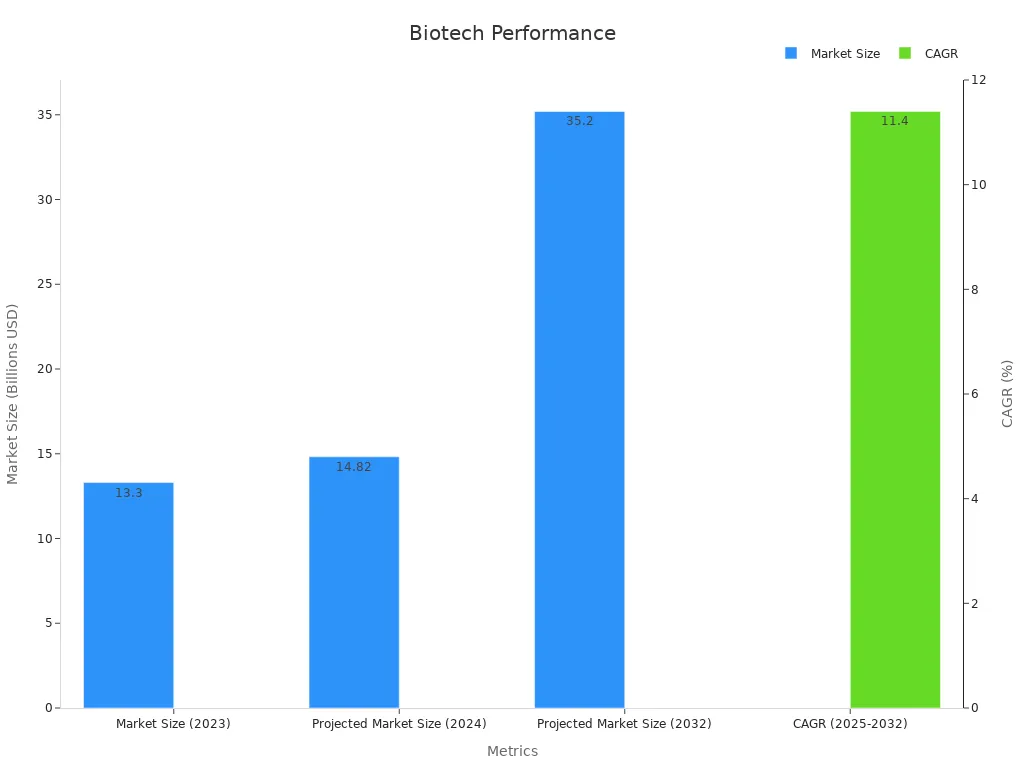
The global stem-cell market continues to expand, with a projected size of $35.2 billion by 2032 and a compound annual growth rate (CAGR) of 11.4% from 2025 to 2032. This growth underscores the transformative potential of stem-cell innovation in addressing unmet medical needs.
Investment Opportunities in the Stem-Cell Sector

Market Projections and Growth Potential
The stem-cell sector is experiencing remarkable growth, driven by advancements in therapeutics and increasing demand for innovative medical solutions. Market research highlights significant expansion across key segments. For instance:
Market Segment | 2023 Value (USD) | 2028 Value (USD) | CAGR (%) |
|---|---|---|---|
Stem Cell Therapy | 615 million | 16.5 | |
Stem Cell Manufacturing | 12.0 billion | 21.8 billion | 11.3 |
These projections underscore the sector’s potential to attract substantial investment. Stem-cell therapy, in particular, is poised to address critical medical needs, offering solutions for chronic diseases and conditions previously deemed untreatable. The consistent growth in manufacturing also reflects the increasing demand for scalable production methods to support clinical applications.
Investor Interest in Stem-Cell Research
Investor interest in stem-cell research continues to rise, fueled by government funding and private sector involvement. For example, the Department of Biotechnology in India allocated $8.80 million to stem-cell initiatives between 2019 and 2022. This commitment demonstrates the global recognition of stem-cell research as a transformative field.
Private companies are also driving innovation. Celavie Biosciences, for instance, has made strides in regenerative therapies for Parkinson’s disease. Its exploratory study using OK99 stem cells has shown promising results, attracting attention from investors seeking breakthroughs in therapeutics. Additionally, the growing demand for effective treatments for chronic diseases has led to increased R&D expenditures, further solidifying the sector’s appeal to investors.
Strategic Partnerships and Licensing Deals
Strategic partnerships and licensing agreements play a pivotal role in advancing stem-cell research. Collaborations between academic institutions, hospitals, and biotechnology firms have accelerated the development of novel therapeutics. Notable partnerships include:
Organization/Company Name | Type of Agreement/Partnership |
|---|---|
Vertex Pharmaceuticals | N/A |
University of California | N/A |
Wellcome Trust | N/A |
Yale University | N/A |
These alliances enable resource sharing, enhance research capabilities, and streamline the commercialization of stem-cell therapies. Companies like Vertex Pharmaceuticals leverage such partnerships to expand their therapeutic pipelines, ensuring a steady flow of innovative solutions to the market.
The stem-cell sector’s growth trajectory, coupled with robust investment opportunities, positions it as a cornerstone of future medical advancements. As the industry evolves, strategic collaborations and sustained investor interest will continue to drive progress in this transformative field.
The resurgence of stem-cell research in 2025 marks a turning point in regenerative medicine. Regulatory reforms, political advocacy, and financial investments have created a fertile environment for innovation. Companies like Mesoblast and Capricor Therapeutics are addressing critical medical challenges with groundbreaking therapies. Their advancements highlight the transformative potential of regenerative technologies.
The collaboration between policymakers, biotech firms, and investors is shaping a promising future. This synergy is paving the way for a new era in regenerative science, offering hope for patients worldwide.
FAQ
What are stem cells, and why are they important?
Stem cells are undifferentiated cells capable of developing into specialized cell types. They play a crucial role in regenerative medicine by repairing damaged tissues and treating diseases. Their ability to self-renew and differentiate makes them valuable for medical research and therapeutic applications.
How has the regulatory environment changed in 2025?
In 2025, regulatory reforms have streamlined approval processes for stem-cell therapies. These changes reduce bureaucratic delays, enabling faster clinical trials and market access. Political advocacy has also introduced frameworks that ensure safety while promoting innovation in regenerative medicine.
Which diseases can stem-cell therapies treat?
Stem-cell therapies target a wide range of conditions, including inflammatory diseases, cardiac disorders, and muscular dystrophies. They also show promise in treating chronic illnesses like Parkinson’s disease and degenerative disc disease. Research continues to expand their potential applications.
Why are investors interested in stem-cell research?
Investors see stem-cell research as a high-growth sector with transformative potential. Market projections indicate significant revenue growth, driven by advancements in therapy and manufacturing. Strategic partnerships and government funding further enhance the sector’s appeal to investors.
What role do biotech companies play in advancing stem-cell research?
Biotech companies like Mesoblast and Capricor Therapeutics lead innovation in stem-cell therapies. They develop treatments for critical medical needs, conduct clinical trials, and pursue FDA approvals. Their breakthroughs drive the industry forward and improve patient outcomes.
From Innovation to Insight: Why Market Intelligence Matters in Stem-Cell Investment
As the stem-cell sector enters a pivotal phase of innovation and growth, the need for clear, data-driven perspectives becomes more critical than ever. Navigating such dynamic landscapes requires more than headlines—it demands structured analysis, contextual depth, and strategic foresight. At VASRO GmbH, our expertise in equity analysis and market intelligence helps investors, industry professionals, and decision-makers uncover meaningful signals within complex market narratives. By combining sector-specific insights with rigorous financial research, we aim to support informed decisions in high-impact industries like biotechnology and regenerative medicine. For those looking to stay ahead of market shifts, explore more at www.vasro.de, or consider joining our market intelligence service to gain a competitive edge backed by real analysis.
Disclaimer: The information provided in this article is for general informational purposes only and does not constitute investment advice or a recommendation to invest in any specific asset or market. VASRO GmbH does not offer personalized investment advice, and the content of this article should not be relied upon as such. We strongly recommend that you seek independent financial guidance tailored to your unique circumstances before making any investment decisions. VASRO GmbH disclaims any liability for decisions made based on the information presented in this article.