


The convergence of health technology is fundamentally shaping the digital health industry and bringing about decisive changes for startups, investors, and the healthcare system. Key insights from the current Equity Report show:
Telehealth innovations are simplifying access for patients and providers.
Mobile and wearable technologies enable flexible remote monitoring.
M&A strategies are becoming more significant despite declining volumes.
Startups are reacting agilely to new funding conditions.
Digital tools strengthen patient engagement.
Precision medicine and AI-powered diagnostics promote efficiency and individualized care.
Statistic / Metric | Value / Description |
|---|---|
Funding of digital health startups (2024) | USD 17.2 billion in the USA, 4% growth year-over-year |
Share of AI-driven digital health investments (2024) | USD 3.3 billion, 36% of all health investments |
Forecasted digital health market growth | 23.8% CAGR globally |
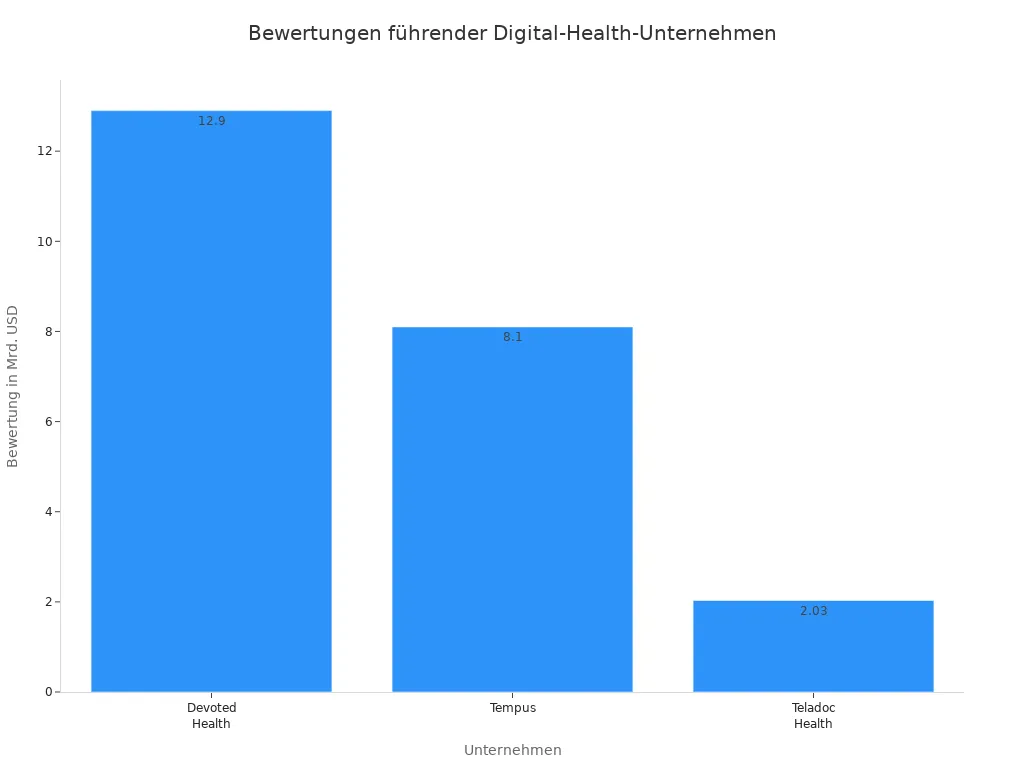
These developments highlight the growing importance of digital solutions that make the healthcare system more efficient and patient-centered.
Key Insights
Digital health technologies connect medicine and IT to make patient care more efficient and individualized.
Startups leverage telemedicine, wearables, and artificial intelligence to create new solutions for health and prevention.
Investments in digital health companies are growing, especially in AI and mental health, despite changing market conditions.
Partnerships between startups, clinics, and tech companies are crucial for innovation and market success.
Regulation and data privacy are major challenges that startups must overcome to ensure trust and sustainable growth.
Convergence of Health Technology

Definition
The convergence of health technology describes a profound transformation in healthcare, where the boundaries between traditional industries and modern technologies are increasingly blurred. In current literature, it is seen as the fusion of information and communication technology with medical services. This process leads to previously separate sectors such as medical technology, IT, and telecommunications collaborating on common technological foundations. This development is particularly visible in the integration of big data, the Internet of Things (IoT), and digital health services. Companies leverage this multidisciplinary connection to create new hybrid technologies that enhance both the performance of the healthcare system and patient care. The convergence of health technology thus opens up new fields of innovation, changes the competitive landscape, and promotes the emergence of new business models.
Drivers
Several key factors are driving the convergence of health technology and shaping the dynamics of the market:
Electronic Health Records (EHRs): The digitization of patient data improves communication between doctors and patients and increases safety in the treatment process.
Wearable technologies: Devices such as fitness trackers and smartwatches enable continuous monitoring of vital signs and promote patient self-management.
Telemedicine: Remote treatments, such as in teleoncology or teleradiology, expand access to medical care, especially in rural areas.
Mobile health: Health apps and mobile sensors support patients in managing their health flexibly and independently of location.
Artificial Intelligence: AI-powered systems optimize diagnostics, therapy, and prevention, enabling personalized medicine.
The increasing prevalence of smartphones, cloud technologies, and digital platforms further accelerates this development. At the same time, new challenges such as interoperability, data privacy, and digital inequality arise, which companies and healthcare institutions must actively address.
The convergence of health technology thus lays the foundation for more efficient, accessible, and individualized healthcare. It challenges all stakeholders to recognize technological opportunities early and use them responsibly.
Market Trends

Investments
The investment landscape in the digital health sector shows remarkable dynamism. The Stout Report documents a growing number of transactions driven by technological innovation and increased consolidation. Startups in the mental health space are particularly in focus, but the range of investments extends far beyond that. Companies are increasingly focusing on sustainable growth strategies that not only aim for rapid scaling but also the improvement of care quality. Investors realize that long-term success in the digital health market requires a balance between innovation, scaling, and care quality.
The evolution of investment volumes underlines this trend. Between 2018 and 2020, the global investment volume rose significantly, as shown in the following table:
Year | Investment Volume (in billion USD) | Number of Funding Rounds |
|---|---|---|
2018 | 7.7 | 244 |
2019 | 7.2 | 251 |
2020 | 13.8 | 372 |
In 2021, the market reached a new high of USD 29.1 billion in the US. At the same time, the sector saw a record 307 exits in 2021, before the number fell by 36% in 2023. Early data from 2024 suggests a recovery, confirming sustained interest in digital health companies.
Regions
North Rhine-Westphalia (NRW) has established itself as one of the leading locations for digital health innovation. The region benefits from a data-driven strategy that specifically promotes scaling and deep-tech growth. The startup ecosystem in NRW has tripled its value in recent years. Particularly attractive is the Startup Welcome Package, offering international young companies financial grants, consulting services, and access to coworking spaces. Companies with fewer than 250 employees and revenue under 50 million euros receive easier market entry and benefit from tailored mentoring and B2B support.
NRW thus positions itself as a magnet for innovative founders and investors seeking sustainable growth and international networking in the digital health sector.
These targeted funding measures and strong infrastructure make NRW a hotspot for digital health startups and underline the importance of regional ecosystems for the industry’s future.
Impacts
Innovation
The convergence of health technology has triggered a wave of innovation that is fundamentally changing healthcare. Digital health startups are increasingly leveraging artificial intelligence, remote monitoring, and wearable technologies to develop new solutions for chronic diseases, mental health, and personalized medicine. Companies such as Omada Health and Livongo use AI-powered platforms to provide individualized patient care and evaluate health data in real time. Telemedicine platforms like Teladoc Health and Amwell also enable flexible care that fits patients’ daily lives.
The most promising areas of innovation include AI-powered diagnostics, digital therapeutics, and automated documentation. Startups such as Abridge and CodaMetrix use AI to improve medical coding, relieving clinical staff. Wearables and mobile sensors continuously collect vital data, enabling early intervention and personalized prevention. Especially in mental health and oncology, digital solutions are creating new possibilities for early detection and therapy.
Digital health applications and internet medicine play a central role in this development. They offer not only new tools for patient care but also improve access to medical services, especially for underserved populations. The integration of these technologies into medical education is gaining importance, as future physicians need competencies in dealing with digital tools. Universities are thus developing curricula that include telemedicine, mobile health, and AI applications. Collaboration between medicine, engineering, and business drives the development of practical innovations.
Digital health applications and internet medicine are transforming care by empowering patients, making access easier, and enabling personalized medicine. Close cooperation between physicians, technologists, and educators remains crucial to unlocking the full potential of these innovations.
Business Models
The convergence of health technology has fundamentally changed business models in the digital health sector. Startups today no longer address just individual products but develop holistic care solutions that cover the entire treatment pathway. An international McKinsey survey shows that over 75% of patients want to use digital health services in the future. 86% of respondents stress that a company’s success depends on addressing the full care pathway model. MedTech leaders expect lasting, strong changes in their business models, especially through expanded care settings and new reimbursement models.
Digitization has expanded target groups: Besides doctors, patients, providers, and payers are now also in focus. Research and development use genetic and digital tools, while products increasingly include digital therapeutics and health devices. New competitors from the tech sector are entering the market and driving the development of outcome-oriented, sustainable models.
Business Model | Description | Examples |
|---|---|---|
Software solutions for healthcare providers, integration of digital technologies into care | Solv, Murj, Vital | |
Provider Organizations | Digital companies as service providers, revenue from patients, insurers, employers | Amwell Medical Group |
Hybrid Models | Combination of software and proprietary digital health services | DrFirst, Amwell |
Digital health startups are also relying on eCommerce automation to make processes such as provider onboarding, billing, and patient engagement more efficient. Automated tools speed up provider accreditation and optimize resource management. API-first infrastructures allow for flexible integration into existing systems and increase company agility.
The consumer health tech industry is dissolving traditional sector boundaries. Players from retail, fitness, pharma, and tech are jointly developing holistic solutions that connect wellness and medical care. Over 900 new partnerships in 2024 demonstrate this innovation dynamic. Business models are focusing on patient empowerment, improved patient engagement, and preventive approaches that relieve the healthcare system and enable better outcomes.
Partnerships
Partnerships and collaborations are a key success factor for digital health startups to overcome market entry barriers and ensure sustainable growth. The convergence of health technology fosters collaboration between healthcare providers, insurers, research institutions, and tech companies. Startups use partnerships to overcome regulatory hurdles, build credibility, and integrate their solutions into existing workflows.
The development of the CoWIN platform in India shows impressively how collaboration at the national level can lead to large-scale, effective health solutions. Cooperation between 19 ministries, IT companies, and government agencies led to a modular, multilingual application that coordinated millions of vaccinations and now serves as a model for other countries.
Internationally, partnerships are also producing innovative solutions:
Partnership | Goal | Implementation | Results |
|---|---|---|---|
Improving clinical trial matching via AI | Integration of Watson into electronic health records, use of NLP | Faster patient allocation, better outcomes, scalability | |
Google Health Studies & Universities | Advancing health research through data analytics | Collection of large health datasets, use of ML models | Development of risk prediction algorithms, accelerated research |
Digital health startups also benefit from strategic alliances with experts, consultants, and major tech companies. These partnerships facilitate access to funding sources, support scaling, and strengthen trust among investors, providers, and patients. The concept of “collab-etition” – collaboration among competitors – opens up additional opportunities to jointly tackle complex challenges.
The continuous adaptation of strategy and engagement of all stakeholders remain decisive for fully leveraging the advantages of health tech convergence and establishing sustainable innovation in healthcare.
Challenges and Opportunities
Regulation
Digital health startups operate in an environment shaped by complex and often fragmented regulatory requirements. The classification of a product as a medical device – for example, according to FDA classes – determines the scope of approval procedures and significantly influences the speed of market entry. A misjudgment can lead to considerable delays and costs. Regulatory clarity therefore remains a key factor for strategic decisions and securing reimbursement pathways. Startups often adapt their solutions to existing reimbursement codes or value-based care models to increase market access and acceptance. Partnerships with established players and integration into clinical workflows help overcome regulatory hurdles and build trust.
In addition to formal requirements, ethical questions are another challenge. Digital health innovations must not only meet regulatory minimum standards but also be clinically validated and effective. Responsibility for data privacy, transparency, and user involvement is increasing, as algorithms and AI systems play a greater role in care. Only about half of startups have dedicated ethical governance, increasing the risk of conflicts of interest and loss of trust.
Competition
Competition in the digital health sector is driving innovation and continuously changing market mechanisms:
Companies differentiate themselves through pricing, product development, and user experience.
Data-driven insights and technological innovations strengthen market position.
Specialized, customer-oriented solutions emerge to meet individual needs.
Strategic partnerships, alliances, and acquisitions expand reach and accelerate market penetration.
Advanced technologies such as AI, wearables, and blockchain improve efficiency and patient experience.
Compliance with regulatory requirements and sustainability are becoming central differentiators.
This dynamic promotes not only the variety of offerings but also the quality and accessibility of digital health services.
Growth
The opportunities for sustainable growth and scaling in the digital health market are manifold:
Companies are increasingly using AI and computer vision to optimize user experience and reduce costs.
Successful startups such as Hinge Health and Omada Health show that innovation and market expansion enable sustainable growth.
M&A activity is on the rise: In the first half of 2025, 107 deals were completed, with digital health accounting for 63% of all acquisitions.
Strategic acquisitions expand product portfolios, such as through platforms for women’s health or at-home tests.
Scalable IT infrastructures and outsourcing help ensure quality and control costs.
Compliance with data privacy and security standards remains essential for sustainable success.
Forecasts show strong growth in healthcare AI services, with expected increases to over USD 94.56 billion by 2034.
Those seeking sustainable growth should focus on interoperability, ethical AI integration, and developing scalable business models. The ability to proactively address regulatory and ethical challenges determines long-term success and societal acceptance.
Future
Trends
The digital health industry faces a phase of profound change driven by technological innovation and societal demands. Leading market analysts expect the following trends to shape the future:
Data-driven health solutions continue to gain importance, especially in mental health and women’s health. In September 2024, for example, the US Department of Defense invested USD 500 million in women’s health research.
Virtual hospital wards and digital health tools are being expanded. In August 2024, the UK NHS set a framework to increase the capacity of virtual wards to over 80%.
Strategic partnerships and collaborations foster innovative solutions. In May 2024, Sanofi, Formation Bio, and OpenAI launched a partnership to develop AI-powered software for drug development.
Advances in IoT, 5G, and AI are driving digital applications. In May 2023, January AI introduced an app that predicts individual glucose responses to millions of foods.
R&D activities as well as new startups and venture capital funding are creating additional opportunities.
Forecasts predict annual market growth of 19.7% through 2032.
New technologies such as the Internet of Medical Things (IoMT) enable seamless data exchange between patients and providers. Real-time data from connected devices support personalized treatment strategies and proactive interventions. At the same time, cybersecurity remains a key issue in protecting sensitive health data.
Implications
The ongoing convergence of digital health technologies has far-reaching implications for founders, investors, and the healthcare system:
Founders must balance innovation and intellectual property, consider regulatory requirements early, and focus on sustainable open-source strategies. Successful startups build supportive partnerships and focus on core values such as antifragility and multidisciplinary collaboration.
Investors are increasingly aligning their strategies towards sustainable, scalable, and patient-centered solutions. They prefer providers who demonstrate value, ensure compliance, and react flexibly to technological developments.
The healthcare system benefits from improved accessibility, quality, and efficiency. Digital technologies help close care gaps, foster collaboration between stakeholders, and support data-driven decisions. At the same time, modernizing technical infrastructure remains a major challenge.
The future of digital health requires courage for change, openness to cooperation, and a willingness to forge new paths. Those who invest in innovation, partnership, and sustainable structures today are actively shaping tomorrow’s healthcare.
The convergence of health technology is opening new pathways for innovation and growth for digital health startups. Leading countries such as Japan, China, and the USA are relying on different models of cooperation and benefiting from regulatory support and strong partnerships. Companies are actively shaping the patent landscape and driving developments such as wearable monitoring devices. Organizations, investors, and health systems face opportunities and challenges: they must promote innovation, ensure data protection, and develop viable business models. Successful examples from India and Chile show that digital solutions improve quality of life and enable sustainable change. The future promises greater patient participation and data-driven prevention, motivating all stakeholders to work together for better healthcare.
FAQ
What does the convergence of health technology mean for startups?
Convergence opens up new opportunities for startups to develop innovative solutions. It combines medical expertise with digital technologies. Companies benefit from more efficient processes, better data analysis, and expanded cooperation opportunities. This development strengthens their competitiveness and promotes sustainable growth.
What role does regulation play in the digital health market?
Regulation creates safety and trust. It sets standards for quality, data privacy, and efficacy. Startups must consider regulatory requirements early. Those who meet these requirements can scale faster and achieve long-term market success.
How do patients benefit from digital health solutions?
Digital health solutions offer patients more flexibility and access to medical care. Wearables and apps enable continuous health monitoring. Patients receive personalized recommendations and can actively shape their therapy. This strengthens personal responsibility and quality of life.
What trends are shaping the future of digital health?
Artificial intelligence, connected devices, and personalized medicine will define the coming years. Companies are increasingly investing in research and partnerships. New business models are emerging that put prevention and patient orientation at the center. The sector remains dynamic and open to change.
Those who combine innovation and responsibility are actively shaping the healthcare of tomorrow.
Rethinking Wealth
In a world where technological convergence is redefining entire industries, sustainable wealth creation is no longer limited to the classic portfolio – it arises where innovation and long-term thinking intersect. This is especially true in digital health, where smart investment strategies must be based on solid analysis: Startups focusing on AI-powered diagnostics, telemedicine, or wearables are not just shaping the care of the future, but also new value chains. In its current Equity Report, VASRO highlights the dynamics behind these developments – with a clear view of the interplay between market movement and substance. As a reliable voice in the field of Equity Intelligence, VASRO provides not only numbers but also an understanding of the structural forces that enable long-term growth paths. Anyone navigating this landscape needs more than just trends – they need clarity, context, and the courage to use foresight as a compass.
Disclaimer: The information provided on www.vasro.de is for general informational purposes only and does not constitute investment advice or a recommendation to invest in any particular asset or market. VASRO GmbH does not offer personalized investment advice, and the content on this website should not be relied upon as such. Visitors are encouraged to seek independent financial advice tailored to their specific circumstances before making any investment decisions. VASRO GmbH disclaims any liability for investment decisions made based on the information presented on this website.