


Asia continues to captivate global investors in 2025 with its remarkable economic growth and transformative potential. The region’s dynamic economies have become a magnet for business opportunities, fueled by innovation and robust policy support. Across Asia, governments are introducing measures that strengthen investor confidence. For instance:
Real estate investment trusts (REITs) show net investment intentions of 22% in 2025, a sharp recovery from -13% the previous year.
Interest rate cuts by central banks, including the first Fed rate cut in late 2024, have significantly reduced debt costs, benefiting funds in Korea and Hong Kong SAR.
Regional monetary policies now align to promote stability and attract capital.
These developments highlight Asia’s ability to adapt and lead in an evolving global business landscape. With expanding consumer markets and a focus on sustainability, the region sets the stage for long-term growth.
Table of Contents
Key Takeaways
Asia’s economies, like China, India, and Indonesia, are growing fast. This makes the region a good place for investors.
More people in Asia are joining the middle class. This is changing shopping habits and helping businesses like online stores and fancy brands.
Technology in Asia is improving quickly. Cities like Shenzhen and Tokyo are leading with new ideas.
Green projects and clean energy are becoming popular. Investors now have chances to support these eco-friendly plans.
Rules and trade deals in Asia are helping foreign businesses. These make it easier for investors to enter the market.
Asia’s Economic Transformation

Sustained GDP Growth Across Key Economies
Asia continues to demonstrate remarkable economic growth, with key economies like China, India, and Indonesia leading the charge. These nations have consistently posted robust GDP growth rates, driven by industrial expansion, technological advancements, and increasing domestic consumption. India, for instance, has emerged as a global hub for technology and innovation, with its GDP growth projected to remain above 6% in 2025. Similarly, Indonesia has capitalized on its abundant natural resources and growing manufacturing sector, making it a vital player in the region’s economic landscape.
China, despite facing challenges such as demographic shifts, remains a cornerstone of Asia’s economic engine. Its focus on high-tech industries and green energy has bolstered its position as a global leader. The country’s Belt and Road Initiative continues to enhance connectivity across Asia, fostering trade and investment opportunities. These sustained growth patterns highlight the resilience and adaptability of Asia’s economies, making the region an attractive destination for global investors.
Asia’s Influence on Global Trade and Markets
Asia’s role in global trade has expanded significantly, reshaping market dynamics and emerging market trends. Intra-Asia trade has outpaced trade with traditional partners like the EU and the US, showcasing the region’s growing interconnectedness. For example:
In 2022, intra-Asia trade volumes surpassed those with the EU and US, reflecting the region’s resilience.
Beibu Gulf’s throughput experienced double-digit growth, underscoring active trade between China and ASEAN nations.
Intermediate goods accounted for 60%-70% of intra-Asian trade, highlighting the region’s industrial focus.
This shift is not limited to trade volumes. The evolution of intra-regional trade in East Asia, driven by domestic demand growth averaging 6.4% annually over the past decade, underscores Asia’s transformation into a significant consumer market. Countries like Indonesia and Vietnam have played pivotal roles in this transition, leveraging their strategic locations and competitive labor markets to attract foreign investment. As Asia’s influence on global trade deepens, businesses worldwide are recalibrating their strategies to align with the region’s emerging market trends.
Regional Powerhouses Driving Economic Change
Asia’s economic transformation is powered by regional leaders like China, India, and Indonesia, alongside smaller yet dynamic economies in Southeast Asia. These powerhouses are not only driving growth but also setting the stage for long-term economic change. For instance, Vietnam’s exports to the US grew nearly 25% faster than to other destinations between 2018 and 2021, reflecting the impact of shifting trade dynamics. Meanwhile, Indonesia has emerged as a key player in the global supply chain, thanks to its rich natural resources and expanding industrial base.
Technological advancements have also played a crucial role. Between 2018 and 2022, the adoption of robotics across Asia created approximately 2 million jobs in skilled sectors, showcasing the region’s ability to adapt to and lead in technological innovation. Even smaller economies, such as the Pacific Island countries, are contributing to the region’s economic vibrancy. Their projected GDP growth of 3.4% in 2025 highlights a recovery in tourism and other key sectors.
These regional powerhouses are not only shaping Asia’s economic trajectory but also influencing global business strategies. Their focus on innovation, sustainability, and connectivity ensures that Asia remains at the forefront of global economic transformation.
Investment Opportunities in Asia

The Expanding Middle Class and Consumer Demand
Asia’s growing middle-class populations are reshaping global consumer markets, creating unique opportunities for businesses to tap into this expanding demographic. Over half of Asians are now classified as middle class or affluent, a trend that has accelerated since 2000. By 2030, two out of every three members of the global middle class will reside in Asia, underscoring the region’s influence on global consumption patterns.
This demographic shift has sparked a surge in consumer demand across sectors such as e-commerce, luxury goods, and financial services. Countries like China and India are leading this transformation, with their middle-class populations driving significant growth in domestic consumption. For instance, China’s lower-middle-class population accounts for 66% of the global share, highlighting its pivotal role in shaping consumer trends.
Businesses are adapting their strategies to cater to these evolving consumer markets. Companies are prioritizing localized products and services to meet the diverse needs of Asian consumers. The rise of e-commerce platforms has further amplified this trend, enabling businesses to reach millions of consumers across the region. As Asia’s middle class continues to expand, global investors are recognizing the immense potential for returns in these dynamic markets.
Digital Innovation and Technology Leadership
Asia has emerged as a global leader in digital innovation, offering unique opportunities for investment in technology-driven sectors. The region boasts the largest number of science and technology clusters worldwide, surpassing even the United States. Leading clusters such as Tokyo–Yokohama, Shenzhen–Hong Kong–Guangzhou, Seoul, and Beijing are driving advancements in artificial intelligence, robotics, and digital adoption.
Singapore, ranked among the top five innovative economies globally, exemplifies Asia’s commitment to fostering technological growth. Its leadership in the SEAO region highlights the strategic importance of digital transformation in driving economic progress. The GovTech Maturity Index, which evaluates digital adoption across 198 economies, further underscores Asia’s role as a hub for public sector innovation.
Investors are capitalizing on these advancements by focusing on sectors such as fintech, cloud computing, and smart infrastructure. The rise of quant trading, fueled by access to big data and capitalized funds, is another testament to Asia’s technological prowess. As digital innovation continues to reshape industries, Asia offers unparalleled opportunities for businesses seeking to leverage cutting-edge technology for sustainable growth.
Sustainability and Green Investment Potential
Asia’s commitment to sustainability is creating a fertile ground for green investment opportunities. Governments and businesses across the region are prioritizing initiatives that address climate risks and promote environmental stewardship. For example, a prime-grade office building in Seoul achieved a LEED platinum rating, reducing energy consumption by 40% compared to the average office in the city.
This focus on sustainability extends to sectors such as renewable energy, green infrastructure, and sustainable agriculture. Countries like China and India are leading the charge, with investments in solar and wind energy projects driving significant progress. The transition to cleaner energy sources is not only reducing carbon emissions but also creating new avenues for investment.
Private equity firms and institutional investors are increasingly recognizing the potential for returns in sustainable projects. The surge in demand for ETFs tailored to climate-focused portfolios reflects this growing interest. As Asia continues to prioritize sustainability, global investors have the opportunity to align their strategies with the region’s green growth agenda, ensuring long-term profitability and environmental impact.
Enablers of Investment Growth
Infrastructure Development and Connectivity
Asia’s infrastructure development continues to play a pivotal role in attracting global portfolios. The region has made significant strides in enhancing connectivity through large-scale projects that improve transportation, energy, and digital networks. Recent reports highlight the importance of public-private partnerships and renewable energy initiatives in driving sustainable infrastructure. For example, Southeast Asia and South Asia require over $1.8 trillion in climate-related investments to meet sustainable development goals. Blended finance models and innovative funding mechanisms are unlocking these opportunities, enabling diversification benefits for investors.
China remains a leader in infrastructure expansion, with its Belt and Road Initiative connecting markets across Asia and beyond. Meanwhile, the Asian Development Bank (ADB) has committed $4 billion to Philippine infrastructure in 2025, emphasizing the region’s focus on long-term growth. These developments not only enhance regional connectivity but also create opportunities for businesses to diversify their portfolios and tap into Asia’s dynamic markets.
Pro-Investment Policies and Economic Reforms
Governments across Asia are implementing pro-investment policies to attract foreign capital and foster economic growth. Tax incentives, grants, and streamlined regulations are creating a favorable environment for businesses. Southeast Asian nations, in particular, have introduced measures to support sustainable development, such as tax breaks for green projects and subsidies for renewable energy.
China has also prioritized economic reforms to boost investor confidence. Its focus on high-tech industries and green energy aligns with global trends, offering diversification benefits for global portfolios. Additionally, sustainability-linked loans and blended finance solutions are gaining traction, enabling businesses to scale green technologies. These reforms not only enhance Asia’s investment landscape but also provide global investors with opportunities to align their portfolios with long-term growth trends.
Regional Trade Agreements Boosting Integration
Regional trade agreements are strengthening Asia’s position as a hub for global portfolios. Initiatives like the Regional Comprehensive Economic Partnership (RCEP) are fostering economic integration by reducing trade barriers and harmonizing regulations. These agreements enhance market access and create opportunities for diversification across industries.
Intra-Asia trade has surged in recent years, driven by the region’s interconnected supply chains and growing consumer markets. Countries like Vietnam and Indonesia have emerged as key players, leveraging their strategic locations to attract foreign investment. This integration not only boosts economic growth but also provides businesses with diversification benefits, enabling them to navigate global market uncertainties.
Tip: Investors seeking to capitalize on Asia’s growth should consider sectors like infrastructure, technology, and sustainability. These areas offer significant opportunities for portfolio diversification and long-term returns.
Challenges for Global Investors
Geopolitical Risks and Policy Uncertainty
Geopolitical risks remain a significant concern for global investors in Asia. Regional tensions, such as North Korea’s nuclear buildup, create uncertainty that impacts investment decisions. Studies analyzing data from 1991 to 2022 reveal a negative correlation between geopolitical risk and stock market returns. Policymakers must address speculation caused by geopolitical shocks to stabilize markets.
North-East Asia experiences varying responses to geopolitical events.
China and South Korea face short-term impacts on stock returns.
Japan sees longer-term effects, reflecting its unique market dynamics.
Risk | Description | Likelihood |
|---|---|---|
North Korea conflict | North Korea’s nuclear buildup and provocative actions increase regional tensions. | Medium |
European fragmentation | Economic challenges and energy security issues lead to a rise in populism. | Low |
Comprehensive studies emphasize the importance of corporate engagement and collective action among investors to address climate risks and sustainable investment practices. High-level guidance from asset owners, governments, and regulators must integrate into investment strategies to mitigate uncertainties effectively.
Regulatory Complexities Across Markets
Navigating Asia’s diverse regulatory landscape poses challenges for investors. Each country enforces unique rules, creating complexities for businesses operating across multiple markets. CFO surveys highlight the varying impact of regulations on industries:
Region/Sector | Moderate Impact (%) | Significant Impact (%) | Adequate Processes (%) |
|---|---|---|---|
CFOs in Asia-Pacific | 46 | 18 | 27 |
CFOs in Australia | 61 | N/A | N/A |
CFOs in Japan | 62 | N/A | N/A |
CFOs in China | 44 | N/A | N/A |
CFOs in Energy and Resources | 56 | N/A | N/A |
CFOs in Financial Services | 55 | N/A | N/A |
CFOs in Southeast Asia | N/A | N/A | 46 |
CFOs in Life Sciences | N/A | N/A | 31 |
CFOs in Health Care | N/A | N/A | 31 |
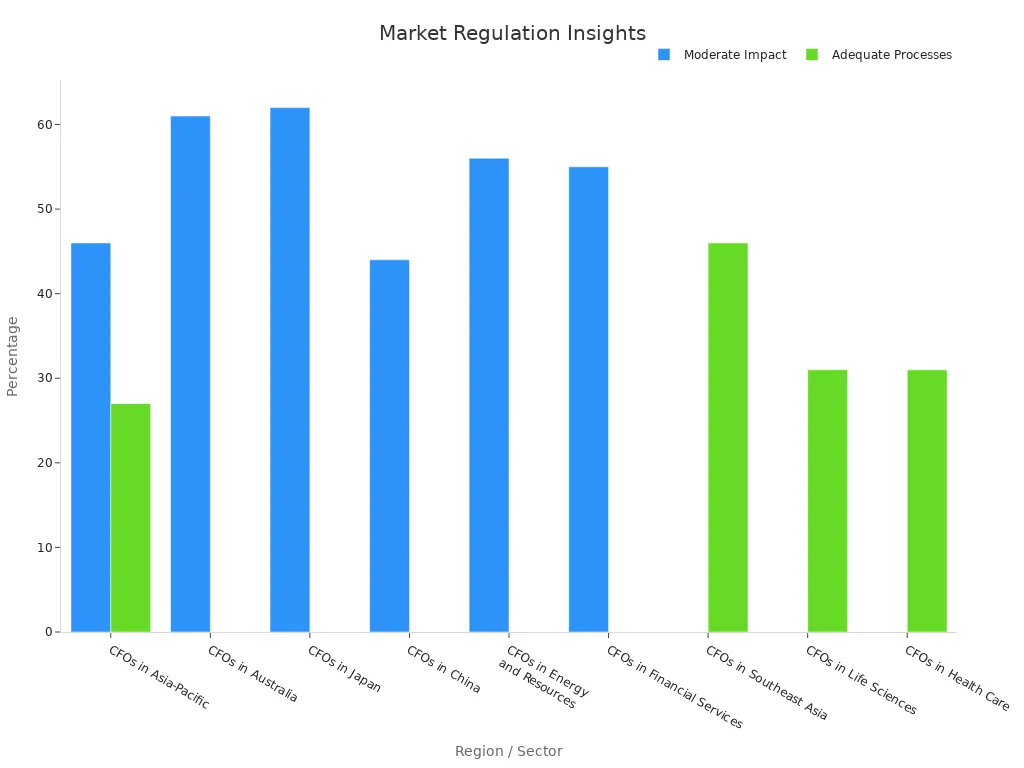
Investors must adapt to these regulatory challenges by developing robust compliance frameworks. Understanding local laws and fostering relationships with regulatory bodies can help mitigate risks and ensure smoother operations.
Cultural and Market-Specific Considerations
Cultural nuances play a crucial role in shaping investment strategies in Asia. Foreign brands entering markets like China must prioritize cultural sensitivity to resonate with local consumers. Market research highlights the benefits of co-branding strategies, which enhance consumer perceptions and acceptance.
Key Findings | Implications for Investors |
|---|---|
Cultural sensitivity is crucial for foreign brands in China. | Investors must prioritize understanding local cultural nuances to effectively market their products. |
Co-branding strategies positively influence consumer perceptions. | Collaborations between foreign and local brands can enhance brand image and consumer acceptance. |
Local consumers respond positively to culturally mixed branding. | Investors should consider integrating local cultural elements into their branding strategies to improve purchase likelihood. |
Adapting branding strategies to reflect local traditions and values can significantly boost market penetration. Investors who embrace cultural diversity and tailor their approaches to specific markets will find greater success in Asia’s dynamic consumer landscape.
Asia’s dynamic growth and innovation continue to position the region as a focal point for global investors in 2025. The region’s transformation is supported by a combination of factors, including a rapidly expanding consumer base, progressive government policies, and a thriving labor market. For instance, nearly one-third of the top 200 universities are located in Asia, reflecting the region’s commitment to talent development. Additionally, 64% of business leaders plan to establish new partnerships or joint ventures in Asia, underscoring its appeal as a hub for collaboration.
Strategic planning remains essential for navigating Asia’s diverse markets. Investors must prioritize understanding local cultures and regulations to maximize opportunities. Sectors such as technology, sustainability, and consumer markets offer significant potential for long-term success. With over 55% of the global consumer class already residing in Asia and an additional 830 million consumers expected by 2030, the region’s influence on global consumption patterns will only grow.
Takeaway: Investors who align their strategies with Asia’s evolving landscape will not only unlock substantial returns but also contribute to the region’s sustainable and innovative future.
FAQ
What makes Asia a key focus for global investors in 2025?
Asia’s rapid economic growth, technological advancements, and expanding consumer markets attract global investors. The region’s commitment to sustainability and infrastructure development further enhances its appeal, offering diverse opportunities across industries like technology, green energy, and e-commerce.
How do regional trade agreements benefit investors?
Trade agreements like RCEP reduce barriers, harmonize regulations, and boost economic integration. These initiatives enhance market access, streamline operations, and create opportunities for businesses to diversify portfolios while navigating Asia’s interconnected supply chains and growing consumer markets.
What sectors offer the most potential for investment in Asia?
Technology, sustainability, and consumer markets stand out as high-potential sectors. Digital innovation drives growth in fintech and smart infrastructure, while sustainability initiatives create opportunities in renewable energy and green projects. Expanding middle-class populations fuel demand for consumer goods and services.
How can investors navigate Asia’s regulatory complexities?
Investors should develop robust compliance frameworks and build relationships with local regulatory bodies. Understanding country-specific laws and adapting strategies to align with local regulations can help mitigate risks and ensure smoother operations across diverse markets.
What challenges should investors consider when entering Asian markets?
Geopolitical risks, regulatory complexities, and cultural differences pose challenges. Investors must stay informed about regional tensions, adapt to varying regulations, and prioritize cultural sensitivity to resonate with local consumers and achieve long-term success in Asia’s dynamic markets.
Tip: Strategic planning and local market understanding are essential for overcoming challenges and maximizing opportunities in Asia’s evolving investment landscape.
Why Asia Is a Cornerstone for Long-Term Wealth Creation in 2025
As global investors look toward the future, Asia stands out in 2025 as more than just a growth story, it’s a transformation unfolding in real time. With sweeping economic reforms, tech-forward cities, and a burgeoning middle class reshaping demand, the region offers a compelling case for long-term investment. From the streets of Jakarta to the labs of Seoul, innovation isn’t just thriving, it’s being supported by aligned monetary policies and strategic trade partnerships that create an ecosystem where capital can take root and grow. At VASRO, we see this not just in the data, but in the underlying currents of change, where infrastructure meets opportunity, and policy meets purpose. Our role in equity analysis and market intelligence is to help investors cut through the noise and find clarity in complexity, especially in a region as dynamic and nuanced as Asia. For those focused on wealth creation, the story here isn’t about chasing trends, it’s about positioning with insight and precision for the decades ahead.
Disclaimer: The information provided on www.vasro.de is for general informational purposes only and does not constitute investment advice or a recommendation to invest in any particular asset or market. VASRO GmbH does not offer personalized investment advice, and the content on this website should not be relied upon as such. Visitors are encouraged to seek independent financial advice tailored to their specific circumstances before making any investment decisions. VASRO GmbH disclaims any liability for investment decisions made based on the information presented on this website.