

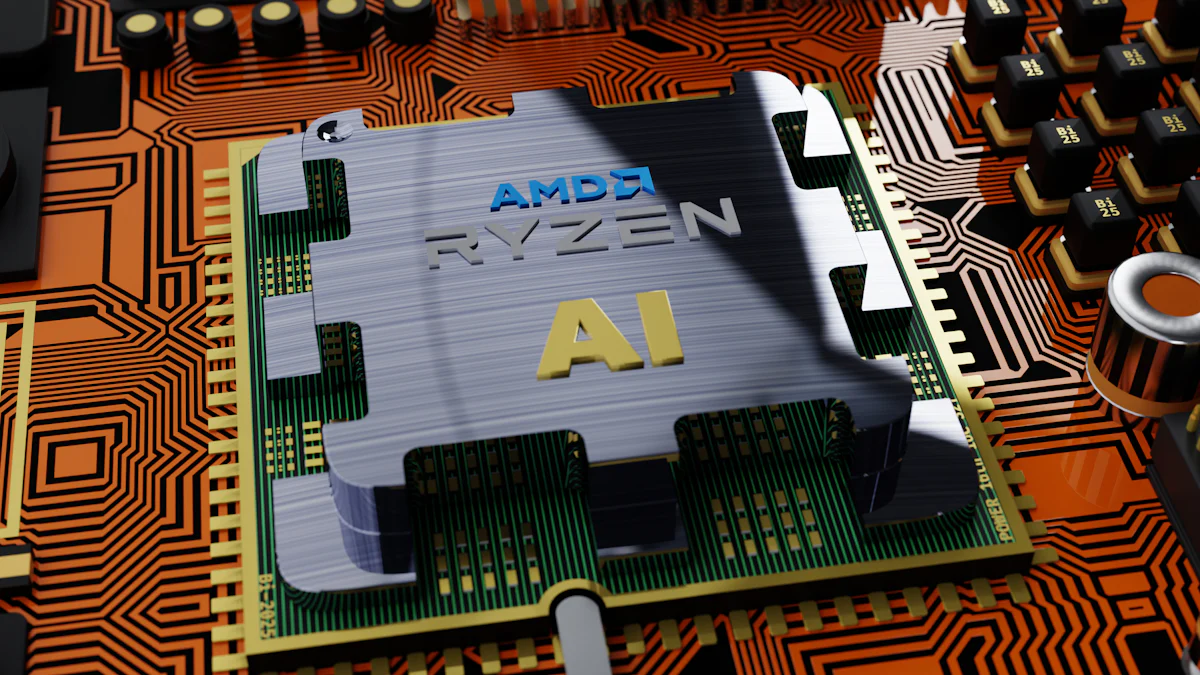
AI memory chips have become the backbone of modern artificial intelligence, enabling breakthroughs in automation, data analysis, and decision-making. The demand for AI memory has surged as generative AI and machine learning applications evolve, requiring high processing power and rapid data storage. Industries such as healthcare and automotive increasingly rely on these chips to handle complex algorithms and massive datasets. High-Bandwidth Memory (HBM) technology plays a critical role in meeting these demands by delivering exceptional speed and efficiency. With the AI memory chip market projected to grow at a CAGR of 27.50% from 2025 to 2034, the future of AI innovation hinges on advancements in memory solutions.
Table of Contents
Key Takeaways
AI memory chips are important for today’s technology. They help process data faster and make better decisions in many fields.
High-Bandwidth Memory (HBM) is key for AI. It provides great speed and uses less energy to solve hard problems.
The need for AI memory is growing quickly. Experts predict the market will grow a lot because AI is improving.
Working with big companies like Nvidia helps create new ideas and solve problems for memory chip makers.
New companies in the AI memory chip business can succeed by making fast memory and meeting new demands.
Key Technological Advancements

The Evolution of High-Bandwidth Memory (HBM) Technology
Unprecedented bandwidth and pin speed for AI workloads
High-Bandwidth Memory (HBM) technology has undergone significant advancements, making it indispensable for AI workloads. Modern HBM solutions deliver unparalleled bandwidth and pin speed, enabling faster data processing and improved performance for AI applications. Samsung’s HBM3 technology, for instance, achieves speeds of up to 819GB/s, a substantial leap from its predecessor, HBM2. This improvement ensures that AI systems can handle increasingly complex computations with ease. Marvell’s custom HBM architecture further enhances compute capacity by 25% and memory density by 33%, while reducing interface power by 70%. These innovations address the growing demand for AI memory, ensuring that AI systems remain efficient and scalable.
Energy efficiency and compact design advantages
Energy efficiency and compact designs have become critical in the evolution of HBM technology. SK hynix has focused on developing energy-efficient HBM3 solutions by leveraging Through-Silicon Via (TSV) technology, which enhances interconnect density. Compact designs, achieved through vertical stacking of memory chips, allow for higher performance without increasing the physical footprint. These advancements not only reduce power consumption but also enable the integration of HBM into smaller devices, meeting the rising demand for AI memory in portable and embedded systems.
Proprietary Innovations in AI Memory Chips
SK Hynix’s MR-MUF technology for thermal management
Thermal management remains a key challenge in AI memory chips, especially as workloads become more demanding. SK Hynix has introduced MR-MUF (Molded Underfill) technology to address this issue. This proprietary innovation improves heat dissipation, ensuring that memory chips operate efficiently under high thermal loads. By maintaining optimal temperatures, MR-MUF technology enhances the reliability and longevity of AI memory chips, making them suitable for intensive AI applications.
Development of 12-layer HBM3E chips and future HBM4 innovations
The development of 12-layer HBM3E chips marks a significant milestone in AI memory technology. These chips offer higher bandwidth and capacity, catering to the increasing complexity of AI workloads. SK Hynix is also exploring HBM4 innovations, which promise even greater performance and energy efficiency. These advancements align with industry trends, ensuring that AI memory chips continue to evolve to meet future demands.
The rapid evolution of HBM technology and proprietary innovations highlights the industry’s commitment to addressing the growing demand for AI memory. These advancements not only enhance performance but also pave the way for new possibilities in AI applications.
Market Trends and Growth Drivers
Expansion of AI-Equipped Devices
The proliferation of AI-equipped devices continues to reshape the global technology landscape. AI-enabled PC sales are projected to reach 114 million units by 2025, reflecting the growing integration of AI functionalities in consumer electronics. This surge aligns with a compound annual growth rate (CAGR) of 36.6% for AI-equipped devices from 2024 to 2030.
Several factors drive this remarkable growth. Advancements in machine learning and the increasing adoption of wearable AI devices contribute significantly. For instance, the wearable AI market is expected to reach $180 billion in 2024. Additionally, AI technology’s potential to generate $15.7 trillion in revenue by 2030 underscores its transformative impact on industries and economies.
Evidence Description | Source |
|---|---|
Global AI adoption by organizations is set to expand at a CAGR of 36.6% between 2024 and 2030. | Exploding Topics |
The wearable AI market is expected to reach $180 billion this year. | Global Market Insights |
AI technology could generate $15.7 trillion in revenue by 2030, boosting local economies’ GDP by an additional 26%. | PwC |
The AI market is projected to grow by at least 26% each year. | Tractica |
Rising Demand for DRAM and NAND
The demand for AI memory continues to accelerate, with DRAM and NAND technologies playing pivotal roles in supporting AI applications. DRAM demand is expected to grow by a mid to high teen percentage in 2025, driven by increased AI server deployments. The server sector alone anticipates a 17.3% annual increase in DRAM content per box. Similarly, NAND demand is projected to rise by a low teen percentage, fueled by the adoption of QLC flash in enterprise SSDs and smartphones.
This growth reflects broader market trends, as DRAM revenue is forecasted to reach $90.7 billion by the end of 2024, marking a 75% year-over-year increase. NAND Flash memory revenue is also expected to grow to $67.4 billion, with a 77% year-over-year increase. These figures highlight the critical role of DRAM and NAND in meeting the demand for AI memory across various sectors.
Financial Success of Industry Leaders
Industry leaders like SK Hynix have achieved remarkable financial success by capitalizing on the growing demand for AI memory chips. In 2025, SK Hynix reported an operating profit of 8.08 trillion won, surpassing Samsung’s 6.5 trillion won for the first time. This achievement stems from its strategic focus on high-performance memory chips, particularly HBM technology.
The introduction of 12-layer HBM3E chips has further solidified SK Hynix’s position as a leader in the AI memory chip market. These chips offer enhanced processing speeds and reduced power consumption, making them indispensable for AI applications. CFO Kim Woohyun emphasized the industry’s shift from a commodity market to a customized market focused on high performance and quality. This strategic transition has allowed SK Hynix to align with market trends and capitalize on the rapid growth in AI adoption.
The expansion of AI-equipped devices, rising demand for DRAM and NAND, and the financial success of industry leaders underscore the dynamic growth of the AI memory chip market. These trends highlight the industry’s ability to adapt and innovate, ensuring that AI technologies continue to thrive.
Competitive Landscape and Industry Challenges
Key Players in the AI Memory Chip Industry
SK Hynix’s dominance in HBM technology
SK Hynix has emerged as a dominant force in the memory chip industry, particularly in High-Bandwidth Memory (HBM) technology. Its innovative solutions, such as the 12-layer HBM3E chips, have set new benchmarks for performance and energy efficiency. These advancements have allowed SK Hynix to secure a significant share of the AI memory chip market, positioning it as a leader in meeting the demands of AI applications. The company’s focus on proprietary technologies, including MR-MUF for thermal management, further strengthens its competitive edge.
Challenges faced by competitors like Micron and Samsung
While SK Hynix continues to lead, competitors like Micron and Samsung face notable challenges. Micron has made progress with its HBM3E chips, receiving Nvidia’s approval, but it struggles to match the speed and efficiency of its rivals. Samsung, despite its vast financial resources, has encountered delays in the mass production of HBM3E chips. These setbacks have allowed SK Hynix to solidify its position further.
Competitor | Challenges Faced |
|---|---|
Micron | Struggles to match speed and efficiency of rivals |
Samsung | Delays in mass production of HBM3E chips |
SK Hynix | Strengthened position due to competitors’ challenges |
Navigating Industry Challenges
Addressing inventory adjustments and geopolitical risks
The memory chip industry faces significant challenges, including inventory adjustments and geopolitical risks. CFO Kim Woohyun highlighted these concerns, stating, “The outlook for memory demand in 2025 was clouded by inventory adjustments, protective trade policies, and geopolitical risks.” Companies are adopting strategic planning and market adaptation to navigate these uncertainties. By aligning production with demand and diversifying supply chains, industry leaders aim to mitigate risks and maintain stability.
Strategic collaborations with AI leaders like Nvidia
Collaborations with AI leaders play a crucial role in shaping the competitive landscape. Nvidia’s partnerships with companies like SK Hynix and SoftBank underscore the growing demand for advanced memory technologies. For instance, SoftBank’s installation of 4,000 Nvidia Hopper GPUs has enhanced its AI computing capabilities. SK Hynix’s accelerated delivery of HBM4 solutions reflects the urgency to meet the needs of AI-driven workloads. These collaborations drive innovation and reinforce the industry’s ability to adapt to evolving trends.
The competitive landscape of the AI memory chip industry highlights the dynamic interplay between innovation, challenges, and strategic partnerships. As companies address obstacles and leverage collaborations, they continue to shape the future of AI technologies.
Future Outlook and Opportunities

Projected Growth in AI Memory Chip Market
Increasing adoption of AI functionalities in consumer and enterprise devices
The AI memory chip market is poised for remarkable growth, driven by the increasing adoption of AI functionalities across consumer and enterprise devices. AI chip sales are expected to surge as industries integrate AI into everyday operations. From smart home devices to enterprise-level AI applications, the demand for high-performance memory solutions continues to rise. The market is projected to grow from USD 110 billion in 2024 to USD 1,248.8 billion by 2034, reflecting a CAGR of 27.50%. This growth underscores the critical role of AI memory chips in enabling advanced compute capabilities.
Enhanced memory solutions for data centers and AI-driven workloads
Data center infrastructure plays a pivotal role in supporting AI-driven workloads. AI data centers require memory chips that deliver exceptional bandwidth and power efficiency for AI applications. The server sector anticipates a 17.3% annual increase in DRAM content per box, highlighting the growing need for high-performance memory solutions. Enhanced memory solutions, such as HBM3 and emerging hybrid memory systems, are transforming data center infrastructure by optimizing compute efficiency and scalability. These advancements ensure that AI data centers can handle the increasing complexity of AI workloads.
Innovations Shaping the Future of AI Memory Chips
Advancements in HBM technology and emerging memory solutions
Advancements in HBM technology continue to shape the future of AI memory chips. Samsung’s HBM3 technology achieves speeds of up to 819GB/s, significantly enhancing bandwidth for AI applications. Marvell’s custom HBM architecture improves memory density and power efficiency for AI workloads. SK hynix focuses on scalability and energy efficiency, addressing the growing demand for high-performance memory solutions. Micron explores hybrid memory systems that combine the benefits of HBM and GDDR technologies, paving the way for innovative memory solutions tailored to AI needs.
Opportunities for new entrants and untapped markets
The AI memory chip market offers significant opportunities for new entrants. The surge in demand for high-bandwidth memory, driven by the growth in generative AI and machine learning, creates a favorable environment for innovation. High-capacity SSDs and the adoption of QLC NAND technology present additional opportunities. Edge AI development further expands the market, requiring memory solutions optimized for advanced AI processors. These trends highlight the potential for new players to capitalize on the transition to high-performance memory products and address untapped markets.
The future of AI memory chips lies in continuous innovation and strategic market positioning. As the industry evolves, advancements in HBM technology and emerging memory solutions will drive growth and efficiency, ensuring that AI applications remain at the forefront of technological progress.
AI memory chips have revolutionized industries by enabling faster decision-making, real-time data processing, and enhanced productivity. Their role in edge computing and automation highlights their transformative impact. HBM technology, with its vertically stacked DRAM architecture, has become a cornerstone for generative AI, offering unmatched power efficiency and performance. As AI applications expand, the market is projected to grow significantly, with HBM shipments expected to rise by 70% year-over-year. This growth underscores the industry’s potential to drive innovation and meet the demands of increasingly complex AI workloads, ensuring a promising future for AI technologies and industries.
FAQ
What is the role of High-Bandwidth Memory (HBM) in AI applications?
HBM technology provides the high-speed data transfer and energy efficiency required for AI workloads. Its vertically stacked architecture enables faster processing and compact designs, making it essential for handling complex computations in AI-driven devices and data centers.
How does SK Hynix maintain its competitive edge in the AI memory chip market?
SK Hynix leverages proprietary innovations like MR-MUF technology for thermal management and develops advanced solutions such as 12-layer HBM3E chips. These advancements ensure superior performance and energy efficiency, solidifying its leadership in the industry.
Why is the demand for DRAM and NAND increasing in AI applications?
AI applications require high-performance memory to process large datasets efficiently. DRAM supports faster data access, while NAND provides scalable storage solutions. Their combined capabilities meet the growing needs of AI servers, enterprise SSDs, and consumer devices.
What challenges do AI memory chip manufacturers face?
Manufacturers encounter challenges like inventory adjustments, geopolitical risks, and production delays. Strategic collaborations with AI leaders and supply chain diversification help address these issues, ensuring stability and innovation in the market.
How will the AI memory chip market evolve by 2034?
The market is projected to grow significantly, driven by the adoption of AI functionalities in consumer and enterprise devices. Emerging memory solutions, such as hybrid systems, will enhance performance and efficiency, supporting the increasing complexity of AI workloads.
In today’s fast-moving tech world, staying ahead means staying informed. At VASRO GmbH, we bring you Market Intelligence Reports that dive deep into emerging trends, like the game-changing innovations in AI memory chips. These reports aren’t just about data—they’re about giving you the insights you need to uncover opportunities, tackle challenges, and make confident decisions. From industry shifts to cutting-edge breakthroughs, our analyses keep you ahead of the curve—without offering investment advice. Ready to transform insights into action? Explore more at vasro.de.
Disclaimer: The information provided in this article is for general informational purposes only and does not constitute investment advice or a recommendation to invest in any particular asset or market. VASRO GmbH does not offer personalized investment advice, and the content of this article should not be relied upon as such. Readers are encouraged to seek independent financial advice tailored to their specific circumstances before making any investment decisions. VASRO GmbH disclaims any liability for investment decisions made based on the information presented in this article.