

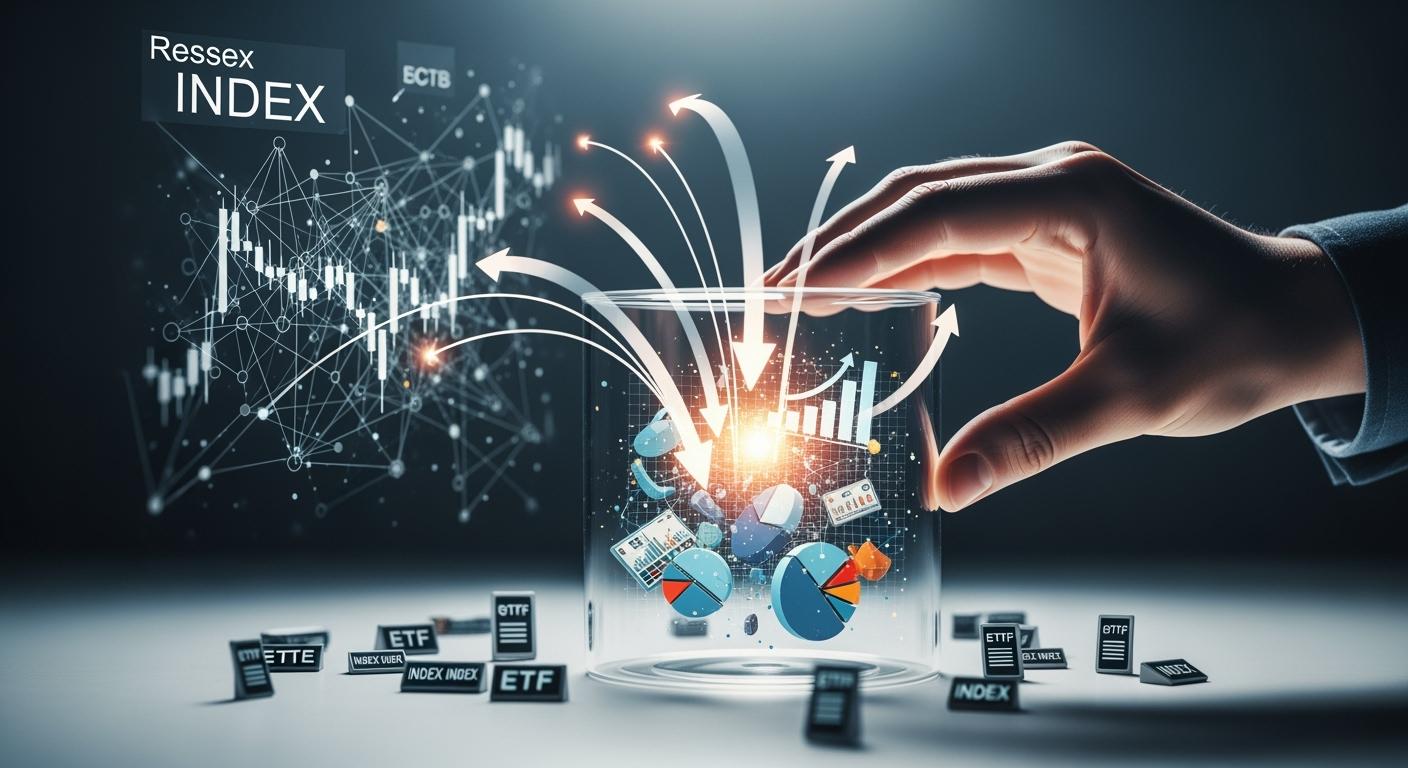
ETF & index mechanics shape the rhythm of markets in ways you might not expect. When rebalances occur, you often see large, coordinated movements that influence how money flows and how prices shift. ETF & index mechanics play a key role in this process, as they guide the creation of baskets, dictate the timing of trades, and set the stage for market activity.
Studies show that ETF & index mechanics can drive late-day returns and volatility.
The market usually has enough liquidity to absorb these changes without harming quality.
Some research suggests the economic impact of ETF & index mechanics on volatility may remain minimal.
Understanding ETF & index mechanics helps you become a more informed participant in investing. Many investors look for signals within these mechanics to spot opportunities and manage risk.
Table of Contents
Key Takeaways
ETF and index mechanics significantly influence market movements during rebalances, creating opportunities and risks for investors.
Rebalancing events lead to increased trading volume, especially in the last hour of trading, which can cause price volatility.
Understanding the timing of rebalances helps investors anticipate market shifts and manage their portfolios effectively.
Liquidity can become a concern during rebalancing, particularly for less liquid stocks, leading to sharper price swings.
Investors can use rebalance calendars to prepare for increased volatility and adjust their strategies accordingly.
Tracking error indicates how closely an ETF follows its index; lower tracking error is preferable for better performance.
Arbitrage opportunities arise during rebalancing, allowing savvy investors to capitalize on predictable price movements.
Long-term strategies often yield better results than short-term trading around rebalancing events, reducing transaction costs.
How Rebalances Move Markets
Fund Flows and Coordinated Trades
When you look at the market during major index changes, you see a fascinating pattern. Funds that track indexes must buy and sell stocks to match new weights. This process creates waves of buying and selling, especially for stocks that get upweighted or downweighted. In Asia-Pacific and Japan, upweighted stocks often surge just before the rebalance date. You might notice these stocks outperforming others, only to see quick reversals after the event. In the United States and Japan, upweighted stocks sometimes keep outperforming, while downweighted stocks lag behind. These moves come from supply and demand imbalances, as passive funds adjust their holdings.
Impact on Trading Volume
You can spot the effect of etf rebalancing demand in trading volume. When funds rebalance, trading volume spikes, especially in the last hour of the trading day. This happens because many funds want to match the closing price of the index. The table below shows how coordinated trades by institutional investors can affect market liquidity:
Evidence Summary | Description |
|---|---|
Liquidity Deterioration | Rapid deterioration of liquidity during portfolio rebalancing can amplify the effects of shocks. |
Market Depth Dependence | Lower market depth increases the risk of liquidity fragility during active trading. |
Common Shocks Impact | Coordinated selling leads to stronger price declines than buying. |
Market Depth and Liquidity | Reduced market depth during high activity increases market fragility. |
You see that when many funds trade at once, liquidity can dry up. This makes it harder to buy or sell large amounts without moving the price. The market becomes more fragile, especially if leveraged etfs join the action.
Late-Day Volatility
Late in the trading day, you often notice a jump in volatility. This happens because funds rush to complete trades before the market closes. The pressure from etf rebalancing demand can push prices up or down quickly. Leveraged etfs, which must adjust their positions daily, add to this effect. They trade large volumes near the close, amplifying price swings. You might see sharp moves in stocks that are entering or leaving an index, or in those with big weight changes.
Price Movements and Short-Term Volatility
Rebalancing events can cause sudden price changes. When funds buy upweighted stocks, prices rise. When they sell downweighted stocks, prices fall. These moves often reverse after the rebalance, as the supply-demand imbalance fades. Leveraged etfs can magnify these swings, since they must rebalance their own portfolios to maintain leverage. You may see short-term volatility spike, especially in stocks with less liquidity. The market reacts quickly, and prices can overshoot before settling back.
Opportunities and Risks for Investors
You can find both opportunities and risks during these periods. Many investors use etfs to enter or exit positions efficiently. You can rebalance your own portfolio or manage risk with low-cost funds. Leveraged etfs offer a way to amplify returns, but they also increase risk. Interest rate changes can hurt bond etfs, and credit risk can affect returns if issuers fail to pay. Professional investors watch for supply-demand imbalances. They use active and passive strategies to profit from predictable flows. Some spread trades over time to reduce costs. Others try to capture price pressure around rebalancing dates. You should remember that large trades can distort prices, but these effects often fade quickly.
Tip: Watch for patterns in trading volume and price moves around rebalance dates. You can spot opportunities, but you must manage risk carefully.
Leveraged etfs, funds, and etfs all play a role in these market moves. By understanding how rebalancing works, you can navigate the market with more confidence and spot moments of strategic growth.
ETF & Index Mechanics Explained
Index Construction and Rebalancing
You encounter many methodologies when you explore how indexes are built. Each method shapes the way passive funds operate and influences the frequency of rebalancing.
Stock eligibility sets the rules for which companies enter or leave an index. This decision can impact returns, much like active management choices.
Country eligibility determines which regions appear in multi-country indexes, giving you different exposures and opportunities for diversification.
Rebalancing frequency matters. More frequent updates keep the index current but can increase trading costs for passive funds.
You see that index providers define constituents by selecting a universe of securities. They set criteria for liquidity and accessibility, then choose how to weight each security. Periodic rebalancing adjusts both membership and weights, reflecting market changes and driving coordinated trades among passive investors.
Scheduled vs. Unscheduled Changes
Scheduled changes happen at regular intervals, such as quarterly or annually. You can plan for these events and anticipate how passive funds will react. Unscheduled changes occur when companies merge, split, or face other corporate actions. These surprise adjustments can create sudden shifts in passive fund holdings and spark market volatility.
Inclusion and Exclusion Criteria
Indexes use clear rules for adding or removing stocks. You might see requirements for market capitalization, liquidity, or sector representation. These criteria help maintain diversification and ensure the index reflects its target market. Different methodologies can lead to significant performance gaps. For example, the S&P SmallCap 600, Russell 2000, and CRSP US Small Cap indexes have shown a 4.9% average annual difference between the best and worst performers over twenty years.
How ETFs Track Indexes
ETFs use a unique creation and redemption process to stay aligned with their underlying index.
ETFs maintain their price alignment with the underlying assets through a unique creation and redemption mechanism involving authorized participants (APs). APs can create new ETF shares by delivering a basket of the underlying securities to the ETF provider or redeem ETF shares for the underlying securities. This process helps keep the ETF’s market price close to its net asset value.
Authorized participants play a key role. You see them step in to balance supply and demand, ensuring that ETF prices do not stray far from the value of the underlying assets. This mechanism supports liquidity and helps passive investors manage risk during rebalancing periods.
Creation/Redemption Process
When you buy or sell ETF shares, the creation and redemption process keeps the ETF’s holdings in sync with the index. This system allows passive funds to adjust their portfolios efficiently, maintaining diversification and optimizing returns.
Role of Authorized Participants
Authorized participants act as market makers. They create or redeem ETF shares as needed, helping passive funds track the index closely. Their actions reduce price discrepancies and support smooth trading, especially during periods of high activity.
Tracking Error and Performance
Tracking error measures how closely an ETF follows its index.
Tracking error is the annualized standard deviation of the difference between a fund’s performance and its benchmark.
It shows how much a portfolio deviates from its benchmark, often reflecting effective diversification.
During index rebalancing, tracking error can rise as portfolios adjust to new weights.
You notice that tracking error is not always negative. Sometimes, it signals a thoughtful investing strategy. Deviating from the market norm during rebalancing can lead to long-term success. Common causes of tracking error include transaction costs, market liquidity, and price movements related to index changes.
Cause of Tracking Error | Description |
|---|---|
Transaction Costs | Costs incurred during the buying and selling of securities, affecting overall returns. |
Market Liquidity | The ease with which assets can be bought or sold in the market without affecting the price. |
Price Movements Related to Reconstitution | Changes in the prices of securities during the index rebalancing process, impacting performance. |
Poor execution prices can occur when passive funds follow strict reconstitution schedules, sometimes buying at higher prices or selling at lower prices. You see additions to the index often rise before rebalancing, while deletions tend to fall, leading to price reversals after the event.
Passive investing relies on these mechanics to deliver broad market exposure, manage risk, and support strategic growth. By understanding how etfs track indexes and how tracking error works, you gain valuable insight into the world of passive investing and diversification.
Effects on Flows and Liquidity
Liquidity Needs During Rebalances
You notice that liquidity becomes a central concern during major rebalancing events. When funds adjust their portfolios, the market experiences a surge in trading activity, especially in the final moments before the close. Most ETF rebalance trading happens in the last 30 minutes of the trading day, with the most intense flows in the final 10–15 minutes. This concentrated demand for liquidity often appears as sudden spikes in trading volume, particularly in futures markets. Large funds rely on index futures to manage exposure quickly, using their speed and liquidity to facilitate efficient adjustments.
Evidence Description | Key Insights |
|---|---|
Most ETF rebalance trading occurs in the last 30 minutes of the trading day. | This indicates a concentrated liquidity need during this period, particularly in futures markets. |
A sudden volume spike in futures often indicates ETF rebalancing activity. | This suggests that liquidity needs can manifest as unexpected trading volumes without news. |
ETF rebalance flows are most intense in the final 10–15 minutes before market close. | This highlights the urgency and timing of liquidity needs during rebalancing events. |
Large funds use index futures to manage exposure quickly during rebalancing. | This shows that futures are preferred for their speed and liquidity, facilitating efficient adjustments. |
Impact on Illiquid Stocks
You see that liquidity challenges become even more pronounced when ETFs track less liquid indexes. The liquidity of ETFs depends on the liquidity of the underlying assets. If an ETF links to a less liquid index, trading activities can become complicated. You may find it harder to buy or sell shares without affecting prices. This relationship highlights the importance of understanding the liquidity characteristics of the underlying securities, especially in less liquid markets. When demand for these stocks rises during rebalancing, price swings can become more severe, and market participants must adapt quickly.
Price Impact and Temporary Dislocations
You observe that price impact is a natural consequence of concentrated demand during rebalancing. Traders often pre-position ahead of known index rebalancing dates. They anticipate the buying and selling activities of index funds, which can lead to temporary price distortions. Stocks added to indexes frequently see price increases due to heightened demand, while those removed may experience declines from selling pressure. Trading volume spikes during these periods, reflecting the influence of these strategies on stock prices. You can spot these dislocations and use market intelligence to understand the underlying flows.
Pre-Positioning by Traders
Pre-positioning allows traders to benefit from predictable demand patterns. By analyzing index changes, you can identify which stocks will attract buying or selling interest. This approach can create short-term opportunities, but it also introduces risks if price moves reverse after the event. You must remain adaptable and monitor liquidity closely to avoid getting caught in temporary distortions.
Crowding and Herd Behavior
You witness crowding when many investors chase the same flows during index rebalances. This behavior can disrupt price efficiency and market stability.
Crowding during index rebalances can cause significant price fluctuations and impact market stability.
Trading volume can increase dramatically, leading to altered share prices and market inefficiencies.
Research shows an average cumulative excess return of 3.9% for stocks added or deleted from indices over 20 days before reconstitution, followed by a reversal of 4.4% in the subsequent 20 days.
A tranched approach to managing index changes can help mitigate the negative effects of crowding.
You can use a strategic approach to manage exposure and avoid the pitfalls of herd behavior. By understanding the demand dynamics and liquidity needs, you position yourself to navigate rebalancing events with greater confidence.
Case Studies: Real-World Rebalance Events
Tesla’s S&P 500 Inclusion
Surge in ETF Flows
When Tesla joined the S&P 500, you witnessed one of the largest index inclusion events in history. Index funds and etfs that tracked the S&P 500 needed to buy Tesla shares to match the new index composition. This created a powerful wave of demand.
Index trackers purchased an estimated $85 billion to $90 billion worth of Tesla stock.
The forced buying extended beyond the initial inclusion date, showing how strong the demand remained.
You saw this demand ripple through the market, as passive funds and etfs adjusted their holdings to reflect the new index member.
Price and Volatility Effects
Tesla’s inclusion did not just boost trading volume. You also observed a sharp increase in price and volatility. The stock price surged in anticipation of the event, as traders and funds positioned themselves ahead of the buying pressure. After the inclusion, Tesla’s price remained elevated for a period, reflecting the sustained demand. However, such events can also lead to short-term price distortions, as the market absorbs the sudden shift in ownership.
Apple’s Weight Change After Stock Split
Index Adjustments and ETF Flows
Apple’s widely publicized stock split drew significant attention from investors. You noticed that etfs holding Apple experienced increased inflows, which improved liquidity and narrowed bid-ask spreads.
Stock splits do not directly change index weights, but they often attract more investor interest in etfs.
This heightened activity can influence market prices, even if the index composition remains the same.
You can see how investor behavior around high-profile events can impact both liquidity and pricing, even without structural changes to the index.
Russell Index Annual Rebalance
Market-Wide Impact
Each year, the Russell Index rebalancing brings a surge in trading activity. You observe increased trading volume, shifts in stock liquidity, and changes in institutional ownership. The reconstitution process heightens volatility, especially around the rebalancing date, as funds realign their portfolios to match the updated index.
Lessons for Investors
The tech boom of the late 1990s provides a perfect example—investors who didn’t rebalance found themselves with 70-80% of their portfolio in technology stocks by 2000, just before the crash.
Regular rebalancing would have helped you buy undervalued stocks in 2009 or reduce exposure to overvalued assets in 2021.
Over time, certain assets can outperform others, causing your portfolio to drift from its original allocation. This drift may increase your exposure to riskier assets beyond your comfort level or goals. By studying these high-profile events, you gain insight into the opportunities and risks that rebalancing brings, helping you make more informed decisions in a dynamic market.
Trading Strategies for Passive ETFs
Arbitrage and Index Front-Running
You can unlock unique opportunities by understanding how arbitrage and index front-running work during rebalancing events. Arbitrageurs often step in when passive funds adjust their portfolios, exploiting predictable price movements. When stocks get added to or removed from an index, you may notice price pressure as funds rush to rebalance. Arbitrageurs go long on stocks entering the index and short those leaving, capturing abnormal returns. The table below highlights key findings about these opportunities:
Evidence Description | Findings |
|---|---|
Arbitrageurs exploit predictable price changes around index reconstitution, earning abnormal returns by going long on additions and short on deletions. | |
Price pressure on ED-1 | Investors often delay rebalancing, creating price pressure that arbitrageurs can capitalize on. |
Regional differences | North American investors show less rigidity than Asia-Pacific, leading to different arbitrage opportunities. |
You can also engage in index front-running by predicting the actions of other market participants. Traders often limit the number of dealers they contact to avoid information leakage, which can lead to others front-running their trades. If you manage this process well, you may achieve better pricing and execution, but you must remain aware of the risks, such as increased costs and exposure.
Managing Execution and Timing
You can minimize slippage and market impact by using thoughtful execution and timing strategies. Many traders split large trades into smaller orders throughout the day, blending them into the market. VWAP (Volume Weighted Average Price) and TWAP (Time Weighted Average Price) help you achieve fair prices by spreading trades over time. Randomized trading patterns and hidden or iceberg orders allow you to avoid alerting high-frequency traders, protecting your strategy.
Limit Orders and VWAP
Limit orders give you control over the price at which you buy or sell, helping you avoid unfavorable moves during volatile rebalancing periods. VWAP strategies let you participate in the market without drawing attention, as you execute trades at prices close to the average for the day. You may also use dark pools to trade large blocks anonymously, or auction-based trading to match liquidity at tight spreads. Internal cross-trading within fund families can help you avoid public market impact.
Market-on-Close (MOC) orders blend seamlessly with other end-of-day trades, minimizing slippage on large transactions. The closing auction pools together orders and determines the final price based on a weighted average, supporting fair price discovery and improving execution efficiency. Many fund managers use a mix of these strategies, as relying solely on MOC orders can sometimes increase market impact.
Avoiding Overcrowded Trades
You can sidestep the pitfalls of overcrowded trades by timing your entries and exits carefully. Following index reconstitution schedules may lead to poor execution prices and higher costs. Stocks added to indices often see a brief price increase, which can reverse by the next market open. Volume pressure, especially in indexes like the Russell 2000, can amplify price movements. If you study performance trends, you may notice that new entrants tend to outperform before their addition, while deletions underperform. By using systematic rebalancing strategies and monitoring market intelligence, you can avoid crowded trades and position yourself for strategic growth.
Tip: Stay adaptable and use market intelligence to guide your decisions during passive ETF rebalancing events. This approach helps you manage risk and seize opportunities in a dynamic market.
Long-Term vs. Short-Term Approaches
When you consider trading strategies around ETF and index rebalancing, you face a choice between long-term and short-term approaches. Each path offers unique advantages and challenges, especially during periods of heightened market activity. Understanding how these strategies perform can help you make more informed decisions and navigate the complexities of passive investing.
Long-term strategies often focus on holding positions through multiple rebalancing cycles. You benefit from lower transaction costs because you trade less frequently. Over time, these savings can add up, especially if you invest for retirement or other long-term goals. Research shows that longer investment horizons can enhance the benefits of transaction cost savings. This means that, during index rebalancing events, you may see better performance outcomes if you stick to a long-term plan rather than reacting to every market move.
Short-term approaches, on the other hand, involve frequent trading to capture quick gains from price movements around rebalancing dates. You might try to anticipate which stocks will be added or removed from an index and trade ahead of the crowd. While this can sometimes lead to profits, it also exposes you to higher transaction costs and the risk of poor execution. Index-tracking funds often incur costs due to the simultaneous trading of securities during reconstitution events. These costs can eat into your returns, making short-term strategies more challenging to sustain.
You can also consider threshold-based rebalancing, which means you only adjust your portfolio when allocations drift beyond set limits. This method can reduce unnecessary trades and help you avoid the pitfalls of chasing every market fluctuation. Over time, threshold-based strategies have shown the potential to lower transaction costs and improve overall performance. By focusing on the bigger picture, you position yourself to benefit from market growth while minimizing the impact of short-term volatility.
Tip: Patience and discipline often reward investors who take a long-term view. By resisting the urge to react to every index change, you can avoid unnecessary costs and stay aligned with your investment goals.
In the world of passive ETFs, adaptability and strategic thinking set you apart. Whether you choose a long-term or short-term approach, staying informed and mindful of transaction costs can help you navigate rebalancing events with confidence. As markets evolve, your ability to balance innovation with discipline will shape your success.
What Investors Should Know About ETFs
Monitoring Rebalance Calendars
You gain an edge when you track rebalance calendars for major indexes and ETFs. These schedules tell you when funds will adjust their holdings, often leading to increased trading activity and price shifts. Index providers publish their rebalance dates well in advance. You can find these calendars on official websites or through market data platforms. By marking these dates, you prepare for periods of higher volatility and liquidity needs.
Tip: Set reminders for key rebalance dates. You can review your portfolio before these events and decide if you want to adjust your positions.
Many professional investors use rebalance calendars to anticipate market moves. You can study past patterns to spot opportunities or avoid crowded trades. Staying informed helps you adapt quickly and make thoughtful decisions.
Assessing Liquidity and Volatility
Liquidity and volatility shape your experience with ETFs. You want to know how easily you can buy or sell shares without causing large price changes. Highly liquid ETFs trade with tight bid-ask spreads and steady volume. Illiquid ETFs may show wider spreads and sudden price jumps, especially during rebalancing.
You can check liquidity by looking at average daily trading volume and the spread between buy and sell prices. Volatility often rises around rebalance dates, as funds execute large trades. You may notice price swings in stocks with less trading activity. If you invest in sector or thematic ETFs, pay close attention to the liquidity of the underlying assets.
Liquidity Indicator | What It Tells You |
|---|---|
Trading Volume | Shows market activity level |
Bid-Ask Spread | Measures transaction cost |
Underlying Assets | Reveals true liquidity |
Note: You can manage risk by choosing ETFs with strong liquidity and by monitoring volatility during rebalance periods.
Understanding Tracking Error
Tracking error measures how closely an ETF follows its benchmark index. You want your ETF to match the index as closely as possible, but small differences can occur. These gaps may result from transaction costs, timing of trades, or changes in the index itself.
You can find tracking error data in fund reports or on financial websites. Lower tracking error means the ETF performs more like the index. Higher tracking error may signal issues with execution or liquidity. You can use this information to compare ETFs and select those that best fit your strategy.
Tracking error is not always a negative sign. Sometimes, it reflects smart management decisions or market conditions that create short-term gaps.
You build confidence by understanding these mechanics. You learn to spot patterns, manage risk, and make informed choices as markets evolve.
Navigating Market Ripples
You often see the market react in waves during ETF and index rebalancing events. These ripples can create both challenges and opportunities for investors at every level. When you understand how these ripples form and move through the market, you gain an edge in adapting your strategy and making informed decisions.
Market ripples usually start with large, coordinated trades from passive funds. These trades can shift prices quickly, especially in stocks with lower liquidity. You might notice sudden spikes in trading volume or sharp price moves near the close of trading. These patterns often signal that funds are adjusting their portfolios to match new index weights.
To navigate these ripples, you need to stay alert and use market intelligence. Here are some practical steps you can take:
Watch for Unusual Volume: Sudden increases in trading volume, especially late in the day, often point to rebalancing activity. You can use this information to anticipate short-term volatility.
Track Price Gaps: Stocks added to or removed from indexes may experience price gaps. These gaps can reverse after the event, so you should avoid chasing moves without a clear plan.
Monitor News and Announcements: Index providers announce changes ahead of time. By following these updates, you can prepare for upcoming market shifts.
Tip: Use a watchlist to track stocks affected by index changes. This helps you spot patterns and react quickly when ripples appear.
You also benefit from understanding the behavior of other investors. Crowding can amplify market ripples, as many participants try to trade the same stocks at once. This can lead to temporary price dislocations. If you remain patient and avoid following the herd, you often find better entry or exit points.
A table can help you visualize how different market participants respond to rebalancing ripples:
Participant Type | Typical Response | Potential Opportunity |
|---|---|---|
Passive Funds | Trade at close to match index | None (must follow index) |
Active Traders | Anticipate flows, pre-position | Capture short-term moves |
Long-Term Investors | Hold through volatility | Buy on dips, reduce costs |
Adaptability stands out as a key trait. When you combine careful observation with a willingness to adjust your approach, you turn market ripples into moments of strategic growth. You do not need to react to every move, but by staying informed and thoughtful, you can navigate the shifting tides with confidence.
Note: Market ripples from ETF rebalancing rarely last long. By focusing on your long-term goals and using market intelligence, you can ride out short-term waves and keep your strategy on track.
You see how ETF and index rebalances shape fund flows, spark price changes, and create unique opportunities for investing. The Tesla S&P 500 inclusion showed how concentrated buying can drive dramatic returns, with the stock price surging by 73%. To manage risk and capture potential gains, you should anticipate rebalancing events, reassess your investment plan, and consider shifting some assets to cash or Treasuries during volatile periods. By understanding these mechanics, you strengthen your investing approach and position yourself for more consistent returns. This knowledge empowers you to adapt, seek innovation, and grow as markets evolve.
FAQ
What is an ETF rebalance?
You see ETF rebalancing when funds adjust their holdings to match changes in the underlying index. This process keeps the ETF aligned with its benchmark and can trigger large, coordinated trades in the market.
How often do indexes rebalance?
Most major indexes rebalance quarterly or annually. Some indexes update more frequently. You can check the official rebalance calendar to know when these events will happen.
Why does trading volume spike during rebalances?
Funds must buy or sell stocks quickly to match new index weights. This coordinated activity creates a surge in trading volume, especially near the market close.
Tip: Watch for volume spikes on rebalance days. These can signal short-term opportunities.
Can you profit from index rebalancing events?
You may find opportunities by anticipating which stocks will be added or removed from an index. Active traders often pre-position ahead of these moves, but you must manage risk carefully.
What is tracking error in ETFs?
Tracking error shows how closely an ETF follows its index. You want low tracking error for accurate performance. Factors like transaction costs and liquidity can cause small differences.
Factor | Impact on Tracking Error |
|---|---|
Transaction Cost | Increases error |
Liquidity | Can widen error |
How do rebalances affect illiquid stocks?
Illiquid stocks can experience sharp price swings during rebalances. You may see larger moves because fewer buyers and sellers are available, making prices more sensitive to big trades.
Should you adjust your portfolio before a rebalance?
You can review your holdings before major rebalance dates. If you hold affected stocks or ETFs, consider your strategy and risk tolerance. Staying informed helps you adapt to market changes.
Making Sense of Markets
Markets are intricate systems where data, behavior, and structure intersect, and understanding their movements requires more than watching prices—it demands disciplined observation and clear methodology. Objective equity research brings that discipline by grounding analysis in verifiable data, contextual insight, and transparent assumptions that reveal how companies, sectors, and flows interact. Rather than chasing noise, it asks what the data truly show and how broader conditions shape that story. At VASRO, this commitment to curiosity, precision, and clarity defines a measured approach to market intelligence—one that seeks to illuminate rather than predict, explain rather than persuade, and clarify the forces that drive change in modern markets. This article is for general information only and does not constitute financial, investment, legal, or tax advice; readers should consult a licensed professional for advice tailored to their situation.
Disclaimer: The information on www.vasro.de is for general informational purposes only and does not constitute investment advice or a recommendation. VASRO GmbH does not provide personalized investment advice; visitors should seek independent financial guidance before making decisions. Some content may rely on third-party sources considered reliable, but VASRO GmbH does not guarantee accuracy, completeness, or timeliness. All information is provided “as is,” may change without notice, and VASRO GmbH has no obligation to update, correct, or continue publishing it. VASRO GmbH accepts no liability for losses arising from reliance on this information. Past performance is not a reliable indicator of future results.