


AI’s Energy Hunger: Reshaping Equity Analysis in the Energy Sector has reached unprecedented levels, creating new challenges for sustainability. The rapid growth of machine learning and AI systems demands immense energy, with data centers consuming 1–1.5% of global electricity and contributing around 1% of energy-related CO₂ emissions in 2023. A single ChatGPT query now uses ten times more electricity than a standard Google search. These figures highlight the environmental toll of AI’s expansion. While AI offers vast opportunities to revolutionize industries, its energy hunger risks straining resources and undermining global sustainability goals. Addressing these impacts is essential to ensure a balance between innovation and ecological responsibility.
Table of Contents
Key Takeaways
AI systems use a lot of energy. By 2028, data centers might use 12% of U.S. electricity. This shows we need better energy-saving methods.
AI also uses a lot of water. By 2027, it could need 1.7 trillion gallons of water. Using water-saving cooling systems can help reduce this.
AI energy use adds to carbon emissions. Data centers cause 2.5 to 3.7% of global greenhouse gases. Switching to renewable energy can lower this impact.
New energy-saving AI tools can save a lot of power. Companies should improve algorithms and hardware to use less energy.
Businesses and governments must work together for greener AI. Programs like the Carbon Disclosure Project push for honesty about environmental effects.
AI’s Energy Hunger: Reshaping Equity Analysis in the Energy Sector
The Growing Energy Demands of AI Systems
AI systems have become synonymous with innovation, but their energy demands present significant challenges. The rapid adoption of machine learning and artificial intelligence technologies has led to an exponential increase in energy consumption. Training large-scale AI models, such as those used in natural language processing or image recognition, requires vast computational resources. These processes often involve running thousands of GPUs or TPUs simultaneously, consuming immense amounts of electricity.
The energy footprint of AI is not limited to training models. Inference, the process of applying trained models to real-world tasks, also contributes significantly to energy use. For instance, every time a user interacts with an AI-powered chatbot or recommendation system, energy is consumed. Studies reveal that data servers supporting AI operations consume 10 to 50 times more electricity than conventional commercial buildings. This growing energy appetite underscores the need for sustainable solutions to manage AI’s energy hunger.
Projections for AI Energy Consumption Growth
The future of AI’s energy consumption paints a concerning picture. Experts predict that electricity use by data centers in the United States could nearly triple over the next three years, potentially consuming up to 12% of the country’s total electricity output by 2028. Globally, power demand from data centers is expected to increase by 50% by 2027, with AI-driven workloads accounting for 27% of the market.
AI-related electricity consumption is projected to grow by as much as 50% annually from 2023 to 2030. By 2030, data centers could account for over 3% of global energy demand, up from 1% in 2022.
A closer look at specific forecasts reveals the scale of the challenge. For example, AI’s power consumption, estimated at 4.5 GW in 2023, is expected to grow to 14-18.7 GW by 2028. This growth would represent 20% of total data center power consumption. Goldman Sachs predicts a 160% increase in data center power demand by 2030, further emphasizing the urgency of addressing this sustainability challenge.
Source | Growth Rate | Year | Notes |
|---|---|---|---|
SemiAnalysis | 400% increase | 2023-2028 | From 3 GW to over 56 GW in U.S. data centers |
Epoch AI | 310% raw compute growth | Annual | 228% annualized growth rate in energy consumption |
Statista | 14 to 18.7 GW | 2028 | AI to account for 20% of data center power consumption |
Goldman Sachs | 160% increase | By 2030 | Data center power demand will rise from 1-2% to 3-4% of overall power consumption |
Impacts on Global Energy Resources and Equity
AI’s energy hunger has far-reaching implications for global energy resources and equity. In 2022, AI, data centers, and cryptocurrency operations consumed approximately 460 terawatt-hours of electricity, nearly 2% of global electricity demand. By 2027, AI alone could require between 85 and 134 terawatt-hours annually, equivalent to the total electricity consumption of the Netherlands. This disproportionate energy use raises concerns about equitable resource allocation, particularly in regions already grappling with energy shortages.
The UK National Grid’s CEO has warned that electricity demand from data centers could increase sixfold in the next decade. Europe, for instance, added 601 megawatts of new AI-related data center capacity in 2023, surpassing supply for the second time in five years.
The unequal distribution of energy resources exacerbates these challenges. Developing nations, which often face limited access to electricity, may struggle to compete in an AI-driven global economy. Meanwhile, industrialized countries continue to expand their AI capabilities, further widening the gap. Addressing these disparities requires a concerted effort to promote sustainable and equitable energy practices.
Water Usage and Sustainability Challenges
Data Centers and Their Water Consumption
Data centers, the backbone of AI operations, consume vast amounts of water, primarily for cooling purposes. Cooling systems often rely on evaporative processes, which can use between 0.26 and 2.4 gallons (1–9 liters) of water per kilowatt-hour (kWh) of energy consumed. Additionally, water-intensive electricity generation contributes an average of 2.0 gallons (7.6 liters) of evaporated water per kWh. These figures highlight the significant water footprint of maintaining AI infrastructure.
Regional differences in water usage efficiency further complicate the picture. For instance, data centers in Arizona consumed approximately 10.688 million liters of water for AI training, while those in Virginia used a more efficient 3.730 million liters. This disparity underscores the need for location-specific strategies to optimize water use. On a broader scale, the total water footprint from data centers, including indirect water use from energy production, is estimated at 500 liters for every 20 to 25 AI queries answered.
Regional and Global Water Resource Implications
The rapid expansion of data centers raises concerns about water resource sustainability, particularly in regions already facing water scarcity. By 2027, AI applications could drive water withdrawals of 4.2 billion to 6.6 billion cubic meters globally. In 2021 alone, Google’s U.S. data centers withdrew 4.2 billion gallons of water, consuming over 3.3 billion gallons. Similarly, Meta’s data centers withdrew 1.3 billion gallons, with global consumption exceeding 635 million gallons.
The geographic distribution of data centers exacerbates these challenges. Over 5,000 of the world’s 11,800 operational data centers are located in the United States, with many situated in water-stressed areas. For example, Microsoft reported that 42% of its water usage in 2023 occurred in regions experiencing water stress. Google indicated that 15% of its water usage came from areas with high water scarcity. These statistics highlight the urgent need for sustainable water management practices in the tech industry.
“The question of water is going to become crucial. Resilience from a resource perspective is going to be very difficult for those communities.”
Hidden Water Costs in AI Operations
The hidden water costs of AI operations extend beyond direct consumption. Each AI query contributes to the depletion of fresh water resources, with 20 to 50 queries consuming approximately half a liter of water. In 2022, Google’s data centers used around 5 billion gallons of fresh water for cooling, marking a 20% increase from the previous year. Projections suggest that water usage from AI could reach 1.7 trillion gallons by 2027, surpassing the annual water withdrawal of half of the United Kingdom.
These hidden costs emphasize the interconnectedness of energy and water resources. The energy demand of data centres directly influences water consumption, as cooling systems and electricity generation both rely heavily on water. Addressing these challenges requires innovative solutions, such as adopting water-efficient cooling technologies and integrating renewable energy sources to reduce reliance on water-intensive processes.
The Environmental Costs of AI Energy Consumption

Carbon Emissions from AI Energy Use
AI’s energy-intensive nature significantly contributes to carbon emissions, raising concerns about its environmental impact. Training large-scale AI models, such as GPT-3, consumes vast amounts of electricity. For instance, GPT-3’s training required 1,287 megawatts of energy, producing emissions comparable to three round-trip flights between New York City and San Francisco. Similarly, the development of BERT, another generative AI model, consumed energy equivalent to a transcontinental flight for one person. These examples highlight the substantial carbon footprint of energy-intensive deep neural networks.
Metrics like model size, number of parameters, and FLOPs per watt help assess AI’s environmental impact. For example, Llama 2’s training consumed 350 to 400 watts of power, showcasing the energy demands of modern AI systems. While companies like Meta aim to offset emissions through sustainability programs, the growing adoption of AI underscores the need for more robust decarbonization strategies.
Fossil Fuel Dependency and Climate Change
The reliance on fossil fuels to power data centers exacerbates climate change. Data centers, which support AI operations, account for 2.5 to 3.7 percent of global greenhouse gas emissions, surpassing the aviation industry. In 2021, these facilities consumed approximately 1 percent of global electricity, with projections indicating a rise to 1.86 percent by 2030. This trend reflects the increasing energy demands of AI-driven workloads.
The International Energy Agency predicts that electricity consumption by data centers will more than double by 2030, primarily due to AI’s growth. As AI models become more complex, their energy requirements will escalate, further straining fossil fuel resources. Addressing this challenge requires a shift toward renewable energy sources and innovative cooling technologies to reduce emissions and mitigate climate change.
Comparing AI’s Carbon Footprint to Other Industries
AI’s carbon footprint, while significant, remains a subset of the overall ICT sector, which contributes 1.8 to 2.8 percent of global greenhouse gas emissions. In comparison, industries like manufacturing and transportation have much higher emissions. However, the rapid expansion of AI highlights the need for precise quantification of its environmental impact.
Researchers use metrics such as global and national-level data to evaluate AI’s contribution to emissions. For instance, a single AI training module can consume more electricity than the annual usage of 100 U.S. homes. Despite these challenges, AI’s carbon footprint per page remains lower than that of human activities. For example, ChatGPT produces 1,100 times fewer emissions per page compared to the average U.S. resident. These comparisons emphasize the importance of balancing AI’s growth with sustainable practices.
The Ecological Impact of AI Hardware

Rare Earth Metal Extraction and Its Consequences
The production of AI hardware relies heavily on rare earth metals, such as cobalt, tungsten, and palladium, which are essential for GPUs and specialized chips. Extracting these materials is a resource-intensive process that leaves a significant environmental footprint. Mining activities often lead to deforestation, water pollution, and soil degradation. For example, cobalt mining in the Democratic Republic of Congo has caused widespread ecological damage, disrupting local ecosystems and contaminating water supplies.
The environmental toll extends beyond local ecosystems. Mining rare earth metals is one of the most energy-intensive industrial processes, contributing significantly to greenhouse gas emissions. The demand for these materials continues to grow as AI systems become more advanced, amplifying the strain on natural resources. Addressing these challenges requires a shift toward sustainable mining practices and the development of alternative materials to reduce dependency on rare earth metals.
E-Waste Challenges from AI Hardware
The rapid advancement of AI technology has led to a surge in electronic waste (e-waste). Disposing of outdated or obsolete AI hardware contributes to a growing global problem. In 2022, global e-waste reached 62 million tonnes, marking an 82% increase since 2010. Projections suggest this figure could rise to 82 million tonnes by 2030, with AI hardware accounting for a significant portion.
E-waste from AI computers alone could total between 1.2 to 5.0 million metric tons by 2030.
Generative AI systems may contribute up to 5 million metric tons of e-waste, depending on adoption rates.
Improper disposal of e-waste exacerbates environmental issues, as toxic materials like lead and mercury leach into the soil and water. Recycling and repurposing AI hardware can mitigate these impacts, but current recycling rates remain insufficient to address the growing volume of e-waste.
Manufacturing AI Systems and Environmental Toll
The manufacturing process for AI systems also carries a substantial environmental cost. Advanced TPU chips and increasing memory demands contribute significantly to embodied emissions. Memory alone accounts for over a third of these emissions. However, advancements in hardware design have led to improvements in efficiency. For instance, emissions per training step for AI workloads have decreased by 27% to 39% across TPU generations.
Operational emissions dominate the total environmental impact of AI hardware, comprising 70% to 90% of total emissions. Manufacturing emissions, while lower, still represent under 25% of the total. Notably, there has been a threefold improvement in the carbon efficiency index (CCI) from TPU v4i to TPU v6e, showcasing progress in reducing the environmental toll of manufacturing.
Efforts to minimize the ecological impact of AI hardware must focus on both production and operational phases. Innovations in energy-efficient hardware design and sustainable manufacturing practices can play a pivotal role in reducing emissions and conserving resources.
Practical Steps to Combat AI Energy Consumption
Innovations in Energy-Efficient AI Technologies
The development of energy-efficient AI models has become a cornerstone of sustainable AI adoption. Researchers and engineers are focusing on optimizing algorithms and hardware to reduce energy consumption during both training large language models and inference processes. For instance, reinforcement learning algorithms have demonstrated the ability to optimize energy-intensive operations, achieving up to 15% reductions in energy consumption. These advancements not only enhance energy efficiency but also contribute to environmental sustainability by lowering the carbon footprint of AI systems.
Case studies highlight the tangible benefits of energy optimization in AI operations. Dollar Tree, for example, implemented BrainBox AI’s autonomous HVAC optimization solution across 600 stores. This initiative resulted in electricity savings of nearly 8 million kWh in one year, translating to cost savings of over $1 million. Similarly, Lunar Energy employed an AI-driven predictive maintenance framework, which reduced equipment downtime and extended the service life of critical components. These examples underscore the potential of innovative technologies to drive transparent and efficient AI energy use.
Evidence Type | Description | Impact |
|---|---|---|
Energy Reduction | AI algorithms optimize energy-intensive processes | Up to 15% reduction in energy use |
Cost Savings | AI reduced turbine downtime by 25% | Millions saved annually |
Material Discovery | AI accelerates material innovation for CCS projects | Fivefold increase in efficiency |
By integrating these innovations, organizations can align their AI strategies with environmental sustainability goals while maintaining operational efficiency.
Renewable Energy Integration in AI Operations
The integration of sustainable energy sources into AI operations represents a critical step toward achieving transparent and efficient AI energy use. Data centers, which power AI systems, are increasingly adopting renewable energy solutions such as solar, wind, and hydroelectric power. These sources not only reduce reliance on fossil fuels but also mitigate the environmental impact of AI’s growing energy demands.
Several companies have already made significant strides in this area. Google, for instance, has committed to operating entirely on carbon-free energy by 2030. This initiative includes powering its data centers with renewable energy and optimizing energy use through AI-driven solutions. Similarly, Microsoft has invested in renewable energy projects to offset the carbon emissions of its AI operations. These efforts demonstrate how corporate sustainability initiatives can drive the adoption of sustainable energy sources in the tech industry.
The use of renewable energy also aligns with broader sustainability initiatives, such as the Corporate Sustainability Reporting Directive (CSRD) and the Global Reporting Initiative (GRI). These frameworks encourage companies to adopt transparent practices and report on their environmental impact, fostering a culture of accountability and continuous improvement.
Corporate and Regulatory Efforts for Sustainability
Corporate and regulatory efforts play a pivotal role in promoting sustainable AI adoption. Companies are increasingly recognizing the importance of aligning their operations with environmental sustainability goals. Initiatives like the Carbon Disclosure Project (CDP) enable organizations to share environmental data, focusing on risk management and strategic planning. These efforts not only enhance transparency but also encourage the adoption of energy-efficient practices.
Regulatory frameworks further support these initiatives by establishing guidelines for sustainable AI development. The EU AI Act, for example, addresses sustainability considerations in the design, training, and use of AI systems. This legislation aims to ensure that AI technologies contribute to environmental sustainability while minimizing their ecological impact. Additionally, the CSRD expands reporting requirements for companies, emphasizing the importance of environmental and social responsibility.
“The integration of corporate and regulatory efforts creates a robust foundation for sustainable AI adoption, ensuring that innovation aligns with global sustainability goals.”
By fostering collaboration between corporations and regulatory bodies, these efforts pave the way for a more sustainable future. They highlight the importance of energy optimization, transparent reporting, and the adoption of renewable energy solutions in achieving long-term environmental sustainability.
AI’s Role in Driving Sustainability Solutions
Artificial intelligence has emerged as a powerful tool in addressing global sustainability challenges. By leveraging its ability to process vast amounts of data and generate actionable insights, AI is driving innovative solutions across industries. From optimizing resource management to reducing environmental impact, its applications are reshaping how societies approach sustainability.
AI plays a pivotal role in waste management by improving recycling processes. Algorithms designed for sorting and categorization enhance the efficiency of recycling facilities, increasing the amount of waste that can be repurposed. Predictive models further optimize waste management strategies by identifying patterns and trends, enabling municipalities to allocate resources more effectively. These advancements reduce the environmental footprint of waste disposal systems.
AI models also contribute to climate resilience by forecasting extreme weather patterns and tracking carbon emissions. These capabilities help identify vulnerable areas and enable proactive measures to mitigate climate impacts. For instance, AI-powered systems can predict the likelihood of floods or droughts, allowing communities to prepare and adapt accordingly.
The agricultural sector has seen significant benefits from AI-driven sustainability solutions. Machine learning models analyze soil conditions, weather patterns, and crop health to optimize farming practices. This approach has led to measurable outcomes, such as increased crop yields and reduced water usage. In California, a winery utilized AI to boost yields by 26% while cutting water consumption by 16%. These results demonstrate how technology can balance productivity with environmental stewardship.
Sector | Measurable Outcome |
|---|---|
Agriculture | Increased crop yields, reduced water usage |
Manufacturing | Optimized energy consumption, reduced material waste |
Energy Efficiency | Reduced energy usage and carbon emissions |
Resource Management | Enhanced recycling efforts |
In manufacturing, AI has revolutionized energy efficiency and material usage. Predictive maintenance systems monitor equipment performance, reducing downtime and extending the lifespan of machinery. These systems also minimize energy consumption by identifying inefficiencies in real time. For example, integrating AI into HVAC systems has resulted in a 15.8% reduction in energy use over nearly a year. Such innovations highlight AI’s potential to transform industrial operations while lowering carbon footprints.
Unordered List of AI’s Impact:
AI-driven energy optimization reduces electricity consumption in buildings and factories.
Smart resource allocation minimizes waste in supply chains.
Advanced analytics enable companies to track and reduce emissions.
AI’s contributions extend to renewable energy integration. By analyzing weather data and energy demand, AI systems optimize the operation of solar panels and wind turbines. This ensures maximum energy generation while reducing reliance on fossil fuels. Additionally, AI facilitates the development of energy storage solutions, making renewable energy more reliable and accessible.
The measurable outcomes of AI’s sustainability efforts underscore its transformative potential. By enhancing efficiency, reducing waste, and enabling proactive measures, AI is not only addressing current environmental challenges but also paving the way for a more sustainable future. Its role as a catalyst for innovation ensures that industries can grow responsibly while preserving the planet’s resources for generations to come.
AI’s energy consumption poses significant challenges to global sustainability, impacting energy resources, water usage, carbon emissions, and ecological systems. Addressing these issues requires a multifaceted approach. Innovations in energy-efficient technologies, renewable energy integration, and regulatory frameworks can mitigate these impacts. For instance, regions like North America and Europe are projected to reduce greenhouse gas emissions by 6.1% and 4.9%, respectively, while leveraging AI to boost GDP growth.
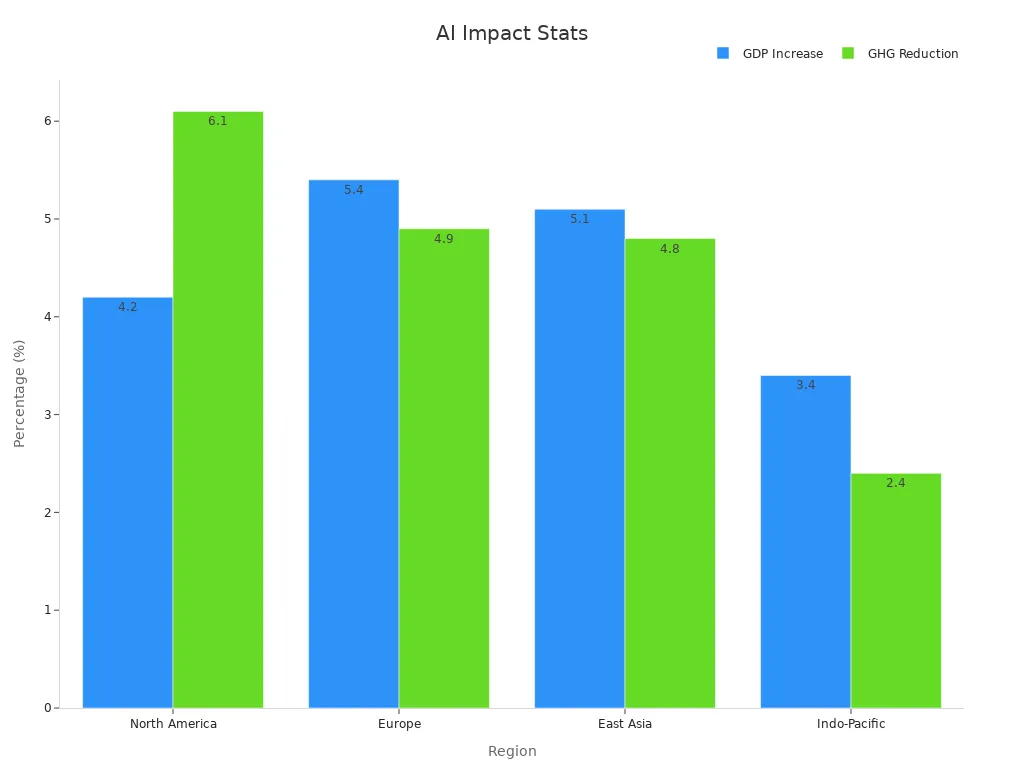
A balanced strategy ensures AI’s growth aligns with sustainability goals. By prioritizing innovation and environmental stewardship, societies can harness AI’s potential without compromising the planet’s future. The journey toward sustainable AI adoption is not just a technological challenge but a collective responsibility.
FAQ
What makes AI energy consumption a sustainability challenge?
AI systems require immense computational power, leading to high energy consumption. This demand strains global energy resources and contributes to carbon emissions. Data centers supporting AI operations often rely on non-renewable energy sources, amplifying their environmental impact. Addressing this challenge requires energy-efficient technologies and renewable energy integration.
How does AI affect water resources?
AI operations, especially data centers, consume significant water for cooling systems. This usage impacts regions with water scarcity. For example, AI-related water consumption could reach 1.7 trillion gallons by 2027. Sustainable cooling technologies and better water management practices can help mitigate these effects.
Why is rare earth metal extraction a concern for AI hardware?
AI hardware production depends on rare earth metals like cobalt and palladium. Mining these materials causes deforestation, water pollution, and soil degradation. It also generates greenhouse gas emissions. Sustainable mining practices and alternative materials are essential to reduce the ecological toll of AI hardware.
Can AI contribute to sustainability despite its environmental impact?
Yes, AI can drive sustainability solutions. It optimizes energy use, improves waste management, and enhances renewable energy efficiency. For instance, AI systems can predict extreme weather patterns, helping communities adapt to climate change. Its potential to balance innovation with environmental stewardship makes it a valuable tool for sustainability.
What steps can companies take to reduce AI’s environmental impact?
Companies can adopt energy-efficient AI technologies, integrate renewable energy into operations, and follow regulatory guidelines. Initiatives like Google’s carbon-free energy commitment by 2030 demonstrate how corporate efforts can align AI growth with sustainability goals. Transparent reporting and collaboration with regulators further support these efforts.
Nurturing Wealth: Strategies for Sustainable, Long-Term Success
Building lasting wealth is like tending a garden, it takes patience, strategy, and a keen eye for the conditions that foster growth. At VASRO, we believe that smart investing starts with understanding the forces shaping markets, from the energy demands of AI to the rise of sustainable technologies. By focusing on long-term growth, you can cultivate a portfolio that thrives through market cycles. This means prioritizing diversified, high-quality assets, staying informed with precise equity analysis, and aligning your investments with emerging trends, like renewable energy or resource-efficient innovations, that promise both profitability and resilience. With thoughtful planning and a commitment to staying ahead of the curve, you’re not just chasing returns; you’re planting the seeds for financial success that endures.
Disclaimer: The information provided on www.vasro.de is for general informational purposes only and does not constitute investment advice or a recommendation to invest in any particular asset or market. VASRO GmbH does not offer personalized investment advice, and the content on this website should not be relied upon as such. Visitors are encouraged to seek independent financial advice tailored to their specific circumstances before making any investment decisions. VASRO GmbH disclaims any liability for investment decisions made based on the information presented on this website.