


You see a surge in demand for AI infrastructure stocks as artificial intelligence reshapes industries at a rapid pace. The most promising stocks stand out because they support the backbone of AI, from GPUs to cloud and edge solutions. Financial analysts highlight companies like Vertiv, Asetek, and nVent for their strong revenue growth, market leadership, and role in powering AI-capable data centers. You notice that the AI market growth is remarkable:
The global AI hardware market could reach $66.8 billion in 2025, with an 18% CAGR.
The GPU server market may exceed $171 billion in 2025, expanding at a 33.6% CAGR.
Edge computing is expected to hit $564.56 billion in 2025, growing at a 28% CAGR.
You can approach investing in AI stocks through individual companies or diversify with ETFs and funds. A thoughtful framework helps you balance opportunity and risk in this evolving market.
Table of Contents
Key Takeaways
AI infrastructure stocks are essential as AI reshapes industries, with GPUs, cloud, and edge computing as key components.
Nvidia dominates the GPU market with nearly 90% share, driving significant revenue growth and innovation in AI infrastructure.
Investors can diversify their portfolios by considering both established companies and emerging players in AI infrastructure.
Cloud platforms like Microsoft Azure and AWS provide scalable solutions for AI workloads, enhancing performance and efficiency.
Edge computing reduces latency and enables real-time decision-making, expanding AI’s applications across various industries.
Monitoring valuation metrics like P/E ratios and cash flow is crucial for evaluating AI infrastructure stocks.
Investing in AI infrastructure ETFs can help manage risk while gaining exposure to a broad range of companies in the sector.
Staying informed through earnings calls and industry reports is vital for understanding market trends and making informed investment decisions.
Top AI Infrastructure Stocks & Key Players
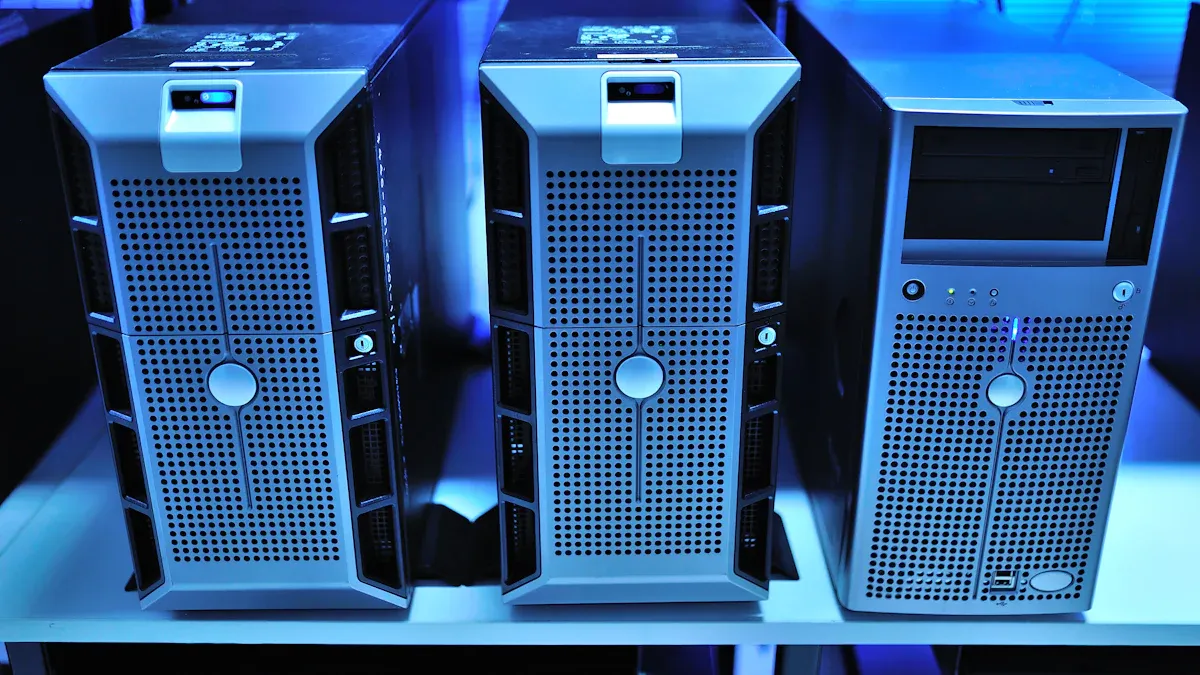
You see the ai infrastructure market shaped by three pillars: gpus, cloud, and edge computing. Each pillar supports the rapid expansion of ai, driving innovation and creating new opportunities for investors. You can identify the most promising ai infrastructure stocks by examining the leaders and emerging players in each segment.
GPU Leaders in AI Infrastructure
The demand for gpus continues to surge as ai model training and inference require immense compute power. You notice that ai supercomputers and ai-optimized servers rely on advanced gpu hosting to deliver performance and scalability.
Nvidia—Market Dominance
Nvidia stands at the forefront of ai infrastructure. You see its gpus powering most ai servers and supercomputers worldwide. Nvidia holds nearly 90% market share in ai chip design, making it the dominant force in the sector.
Metric | Nvidia |
|---|---|
Market Share | Nearly 90% |
Annual Revenue (2024) | $61bn (up 126% YoY) |
Stock Price Increase | Over 1,400% in 5 years |
Company Valuation | First to reach $5trn |
Nvidia’s Blackwell Ultra systems promise major improvements in inference performance and energy efficiency. You benefit from faster model training and lower operational costs. Together AI’s Instant Clusters platform lets engineers deploy Nvidia gpus in minutes, automating infrastructure and accelerating ai compute. As ai demand grows, you see Nvidia’s innovation driving the next wave of artificial intelligence.
AMD—Competitive Edge
AMD challenges Nvidia with its Radeon graphics cards and expanding ai server offerings. You observe AMD’s rising revenues, though they remain lower than Nvidia’s. AMD trails in market share but continues to invest in ai-optimized servers and custom chips.
Company | Financial Performance |
|---|---|
Nvidia | |
AMD | Rising revenues, but lower than Nvidia |
AMD’s focus on cost-efficient, inference-customized chips helps reduce energy consumption and operational costs. You see AMD’s adaptability as a key strength, allowing it to capture new segments in the ai infrastructure market.
Nebius Group—Growth Potential
Nebius Group emerges as a promising player in ai infrastructure. You track its investments in gpu hosting and ai compute platforms. Nebius Group aims to support scalable ai workloads, positioning itself for future growth. You recognize its potential to disrupt the market as ai adoption accelerates.
Cloud AI Infrastructure Stocks
Cloud platforms form the backbone of scalable ai services. You rely on cloud providers to deliver flexible, high-performance compute for ai workloads. The market for cloud ai infrastructure stocks features several key players.
Microsoft Azure—AI Integration
Microsoft Azure integrates ai across its cloud offerings. You benefit from seamless integration with existing processes and toolchains. Azure supports leading deep learning frameworks, making it easy to transition and accelerate time to value. Azure holds 25.3% market share and matches AWS and Google Cloud in revenue growth rate.
Provider | Market Share | Revenue Growth Rate |
|---|---|---|
AWS | 39.2% | 21.2% (2025) |
Microsoft Azure | 25.3% | 21.2% (2025) |
Google Cloud Platform | 16.5% | 21.2% (2025) |
Alibaba Cloud | 11.4% | 21.2% (2025) |
IBM Cloud | 5.1% | 21.2% (2025) |
Oracle Cloud | 2.5% | 21.2% (2025) |

Azure’s adaptable ai solutions support a wide range of model sizes and workloads. You see Microsoft’s commitment to energy efficiency and scalability as essential for meeting future ai demand.
Amazon Web Services—Scale & Innovation
Amazon Web Services (AWS) leads the cloud ai infrastructure market with 39.2% share. You rely on AWS for scalable infrastructure that adapts to user growth and diverse workloads. AWS offers flexible open software, compatible with top deep learning frameworks. You benefit from AWS’s focus on energy efficiency and seamless integration, which helps optimize performance and reduce costs.
Google Cloud—AI-First Approach
Google Cloud takes an ai-first approach, leveraging its Tensor Processing Units for machine learning. You see Google Cloud’s platform supporting a broad spectrum of ai workloads, from training to inference. Google Cloud holds 16.5% market share and matches its peers in revenue growth. You appreciate Google’s emphasis on flexible, open software and its ability to accelerate ai adoption across industries.
Edge AI Stocks & Innovators
Edge computing brings ai closer to devices and users, enabling real-time decision-making and reducing latency. You recognize the growing market for edge ai solutions, projected to reach USD 300 billion by 2035 with a CAGR of 14.3% from 2025 to 2035.
Qualcomm—Edge AI Solutions
Qualcomm leads in edge ai, delivering processors that power intelligent devices and IoT applications. You see Qualcomm’s chips enabling ai inference at the edge, supporting rapid response and low energy consumption. Qualcomm’s innovation helps drive the expansion of ai infrastructure beyond traditional data centers.
Cisco—Networking for AI
Cisco provides the networking backbone for ai infrastructure. You rely on Cisco’s solutions to connect ai servers, cloud platforms, and edge devices. Cisco’s focus on secure, scalable networking supports the growth of ai workloads and ensures reliable data flow across the ecosystem.
Other Notable Edge Players
You find several emerging companies advancing edge ai:
Synaptics launched the Astra SL2600 series, enabling multimodal edge ai for IoT devices.
IOTech introduced Edge Central 4.0, an open platform optimized for industrial environments.
Napino & Teksun invested $4M in Rapidise, driving aiot innovation and manufacturing.
These innovators expand the reach of ai infrastructure, supporting new applications and markets. You see their products enhancing real-time analytics and intelligent automation at the edge.
Tip: You can diversify your exposure to ai infrastructure stocks by considering both established leaders and emerging innovators across gpus, cloud, and edge computing. This approach helps you capture growth while managing risk in a dynamic market.
You see the ai infrastructure sector dominated by major players like Nvidia, AMD, Microsoft, Amazon, Google, and Qualcomm. You also notice new entrants such as Nebius Group, Synaptics, and IOTech driving innovation. By understanding each company’s role in the ai ecosystem, you can make informed decisions when investing in ai stocks.
AI Infrastructure Value Chain Overview
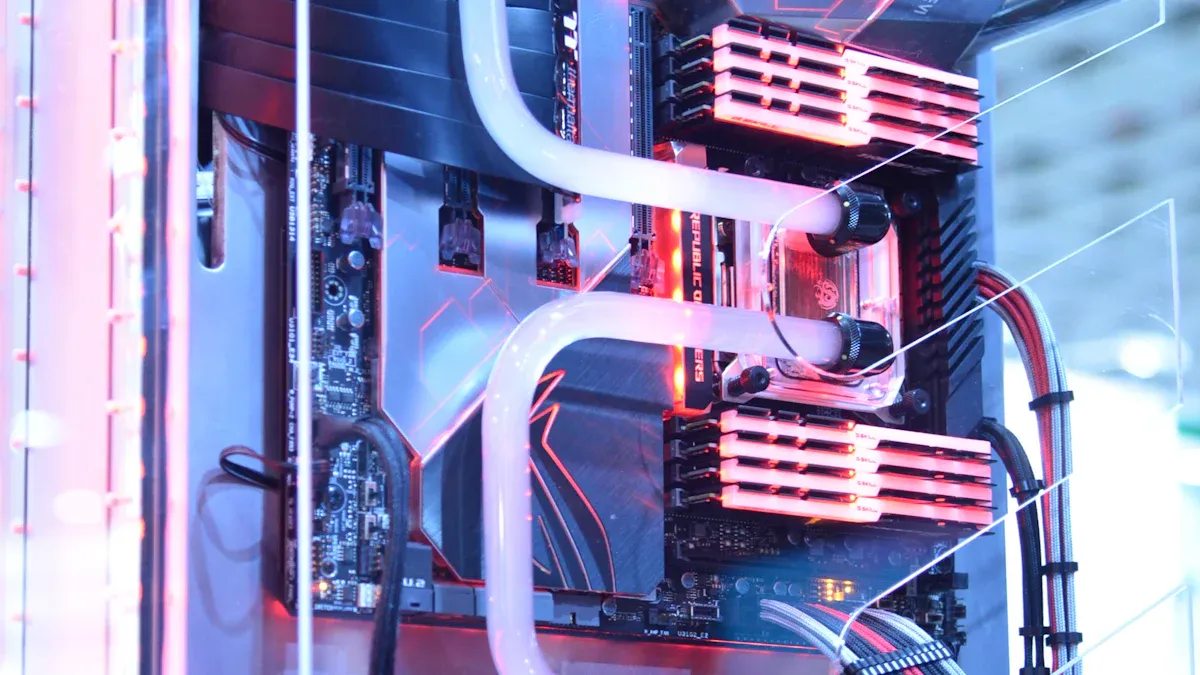
You play a vital role in understanding how the AI infrastructure value chain operates, from the hardware that powers AI data centers to the cloud and edge solutions that deliver real-time intelligence. Each stage in this value chain supports the rapid growth of AI, shaping the future of technology and investment.
Stage | Description |
|---|---|
System Architecture | Utilizes hybrid cloud-edge architectures with containerized AI microservices for effective implementation. |
Edge Infrastructure | Requires specialized hardware, high-speed connectivity, and orchestration platforms for success. |
Model Optimization | Involves techniques like quantization and pruning to create efficient models for resource-constrained environments. |
Security Framework | Focuses on endpoint security and zero-trust architectures to ensure data governance and node verification. |
GPUs—AI Model Training & Inference
You see GPUs at the heart of AI data center infrastructure. These chips drive both model training and inference, enabling AI supercomputers and AI-optimized servers to process massive datasets. GPUs enhance computational density, allowing more operations per second. They also provide high memory bandwidth, which is crucial for handling the large volumes of data that flow through AI data centers. Energy efficiency improvements in GPUs help you reduce operational costs and environmental impact. The architecture of GPUs, such as NVIDIA’s Blackwell, sets new standards for performance, letting you train and deploy AI models faster.
Training vs. Inference
You use GPUs for two main tasks: training and inference. Training involves teaching AI models to recognize patterns using vast datasets. Inference applies these trained models to new data, making predictions in real time. Both processes require powerful compute resources, but training often demands more time and energy.
Supply Chain & Scalability
You face challenges in scaling GPU production. Supply chain constraints and export controls create scarcity, especially for startups. Larger firms can stockpile advanced GPUs, leading to a compute divide. High global prices for GPUs make it harder for smaller players to compete. Companies like Nvidia invest in domestic chip production to address these issues, but building advanced chip facilities requires significant capital and long lead times.
Cloud Platforms—Scalable AI Services
Cloud platforms form the backbone of scalable AI services. You rely on data centers equipped with powerful servers to deliver flexible compute for AI workloads. Cloud providers use custom chips and unified systems to minimize hardware costs and manual oversight. This approach reduces your total cost of ownership and simplifies management. Automated updates and support for multiple workloads help you maximize resource utilization. You can deploy AI applications in hours instead of weeks, unlocking new opportunities for innovation.
Advantage | Description |
|---|---|
Unified systems minimize hardware and manual oversight, leading to lower costs. | |
Improved Performance | Edge AI can match or exceed the performance of pure-cloud models while maintaining cost control. |
Simplified Management | Automated updates and multi-workload support reduce complexity and enhance resource utilization. |
Rapid Application Deployment | Applications can be deployed in hours instead of weeks, unlocking new AI opportunities. |
Data Centers & Custom Chips
You see data centers evolving with custom chips designed for AI workloads. These chips boost performance and energy efficiency, supporting the growing demands of AI data centers. Providers invest in AI-optimized servers to handle diverse compute needs.
Multi-Cloud Strategies
You benefit from multi-cloud strategies that let you balance workloads across different providers. This flexibility helps you avoid vendor lock-in and ensures continuous access to compute resources, even during peak demand.
Edge Computing—Real-Time AI
Edge computing brings AI closer to where data is generated. You deploy AI models on servers at the edge, enabling real-time decision-making in industries like healthcare, transportation, retail, and agriculture. In manufacturing, edge AI lets systems act instantly on the factory floor. In healthcare, it helps identify critical anomalies in patient data. Industrial settings use edge AI to detect faults in machinery, preventing costly downtimes.
IoT Integration
You integrate AI with IoT devices to collect and analyze data at the source. This approach reduces the need to send all data to the cloud, saving bandwidth and improving response times.
Latency & Security
You address latency by processing data locally, which ensures faster results. Security frameworks, such as zero-trust architectures, protect endpoints and maintain data governance. You verify each node in the network, reducing risks and building trust in your AI infrastructure.
Note: Nearly half of organizations now dedicate budgets to AI projects, with an average of 23% of IT spending allocated to AI initiatives. However, IT integration, governance, and security remain key hurdles for many.
You see the AI infrastructure value chain as a dynamic ecosystem. Each segment—GPUs, cloud platforms, and edge computing—supports AI growth and innovation, offering unique investment opportunities and challenges.
Evaluating AI Infrastructure Stocks
Valuation Metrics for AI Stocks
When you evaluate ai infrastructure stocks, you need to look beyond traditional metrics. The current race to build ai data centers has led to massive capital investments, with over $560 billion spent and only $35 billion in revenue generated so far. This signals a different landscape compared to older tech stocks, which often have more predictable revenue streams. You see fewer than 10% of corporate ai pilot programs delivering measurable gains, yet companies like Nvidia have seen revenue soar by 262% to $26 billion, showing strong demand for gpus and ai servers.
Price/Earnings & Growth
You often start with the price/earnings (P/E) ratio to compare ai stocks. High P/E ratios can reflect optimism about future growth, but you must check if earnings are keeping pace with market expectations. In ai infrastructure, rapid growth sometimes leads to elevated valuations. Howard Marks from Oaktree Capital points out that while valuations are high, the real focus should be on cash flow generation. You want to see companies that turn investment in ai data centers and servers into real profits.
EV/EBITDA & Cash Flow
You also use enterprise value to EBITDA (EV/EBITDA) to measure how expensive a company is relative to its earnings before interest, taxes, depreciation, and amortization. This helps you compare ai infrastructure stocks with different capital structures. Strong cash flow is essential, especially as companies pour billions into ai data centers, cloud platforms, and compute infrastructure. You should watch for signs of indiscriminate funding, which can signal bubble risks in ai stocks.
R&D & Innovation Pipeline
You know that innovation drives the ai infrastructure market. Companies invest heavily in research and development to stay ahead. When you analyze ai stocks, look at their patent portfolios and product roadmaps. These show how well a company can adapt to new trends in artificial intelligence and maintain a competitive edge.
Patents & Product Roadmaps
You see that leading firms allocate significant resources to R&D, which fuels breakthroughs across sectors. The table below highlights how ai infrastructure investment impacts different industries:
Sector | Impact of AI Infrastructure Investment |
|---|---|
Healthcare | Accelerates breakthroughs in drug discovery and personalized medicine, optimizes diagnostics and patient care. |
Energy | Enhances renewable energy systems, improves grid efficiency, and reduces costs. |
Manufacturing | Revolutionizes production processes with smarter, predictive maintenance and optimized supply chains. |
Finance | Improves fraud detection, real-time risk analysis, and personalized financial services. |
Retail | Enables hyper-personalized experiences and dynamic pricing strategies through AI-driven customer insights. |
You should check if a company’s product roadmap includes new ai data centers, cloud services, or edge compute solutions. This signals a commitment to long-term growth and adaptability.
Total Addressable Market (TAM)
You want to understand the size and potential of the ai infrastructure market before investing. The total addressable market (TAM) gives you a sense of how much room there is for growth in ai data centers, servers, and cloud platforms.
AI Adoption Trends
You notice that ai adoption continues to rise, but only a small percentage of pilot programs deliver measurable revenue. This means you must look for companies that can turn ai innovation into real business value.
Sector Expansion
The ai infrastructure market is projected to grow rapidly over the next few years. The table below shows the projected market value:
Year | Projected Market Value |
|---|---|
2025 | $407 billion |
2026 | $320.14 billion |
2027 | $415.61 billion |
You see that demand for ai data centers, servers, and cloud compute will keep rising as artificial intelligence becomes more integrated into daily life. This creates opportunities for investors who can identify the right ai stocks and monitor market trends closely.
Tip: When evaluating ai infrastructure stocks, focus on companies with strong cash flow, robust R&D, and a clear path to capturing market growth in ai data centers and cloud compute.
Profit Margins & Scalability
When you evaluate ai infrastructure stocks, you need to look closely at profit margins and scalability. These factors help you understand how well a company can turn innovation into sustainable growth. You see that strong margins often signal operational efficiency and smart resource management. Scalability shows you how a business can expand its ai offerings without losing profitability.
Gross vs. Operating Margins
You start by comparing gross margins and operating margins. Gross margin measures the difference between revenue and the direct costs of producing ai hardware or services. High gross margins suggest that a company can create value from its ai products with efficient production. Operating margin goes further, showing you how much profit remains after accounting for all operating expenses, including research, development, and marketing.
Margin Type | What It Shows | Why It Matters for AI Stocks |
|---|---|---|
Gross Margin | Efficiency in producing ai products | Indicates cost control and pricing power |
Operating Margin | Profit after all operating expenses | Reveals overall business health and growth |
You notice that ai companies with high gross margins can invest more in research and development. This investment fuels new breakthroughs and keeps them ahead in the fast-moving ai sector. Operating margins help you spot firms that manage their costs well, even as they scale up ai infrastructure.
Tip: You should track margin trends over time. Rising margins often point to improving efficiency or successful scaling of ai operations.
Capex Needs
You also need to consider capital expenditures (capex) when analyzing ai infrastructure stocks. Capex refers to the money companies spend on physical assets like data centers, servers, and specialized ai chips. These investments support future growth but can impact short-term profitability.
You see that ai leaders often invest heavily in new facilities and advanced hardware. This spending helps them meet rising demand for ai compute and storage. However, high capex can strain cash flow if not managed carefully. You want to find companies that balance innovation with financial discipline.
Companies with efficient capex strategies:
Upgrade ai infrastructure without overspending
Maintain strong liquidity for ongoing operations
Adapt quickly to new ai technologies and market shifts
You recognize that scalable ai infrastructure requires ongoing investment. Firms that plan capex wisely can expand their reach and capture new opportunities. You should watch for signs of overextension, such as declining margins or rising debt, which may signal risk.
Note: You can use capex trends to gauge a company’s commitment to long-term ai growth. Steady investment in infrastructure often supports innovation and market leadership.
You see that profit margins and scalability form the backbone of successful ai infrastructure investing. By tracking these metrics, you gain insight into which companies can sustain growth and adapt to the evolving ai landscape.
Diversification & Risk in AI Infrastructure
AI Infrastructure ETFs & Funds
You can diversify your exposure to ai infrastructure stocks by considering exchange-traded funds (ETFs) and specialized funds. These investment vehicles give you access to a broad range of companies involved in ai, data center hardware, cloud platforms, and edge computing. ETFs often use criteria such as patent filings, sector balance, and disruptive innovation to select stocks. The table below highlights some of the most popular ai infrastructure ETFs and their selection methods:
ETF Name | Stock Selection Criteria | Assets Under Management | Annualized Performance | Management Fee |
|---|---|---|---|---|
Xtrackers Artificial Intelligence & Big Data UCITS ETF (XAIX) | Analyzes AI-related patent filings | €4.3 billion | +23.05% over 3 years | 0.35% TER |
Global X Artificial Intelligence UCITS ETF (AIQU) | Balanced exposure across semiconductors, software, and cloud | $7 million | N/A | 0.40% TER |
L&G Artificial Intelligence UCITS ETF (AIAI) | Tracks companies applying AI in various sectors | N/A | N/A | N/A |
WisdomTree Artificial Intelligence UCITS ETF (WTAI) | Access to AI through multiple verticals | N/A | N/A | 0.40% TER |
ARK Artificial Intelligence & Robotics UCITS ETF (ARKI) | Focuses on disruptive companies in AI and robotics | N/A | +62% in 2024 | 0.75% fee |
Popular AI ETFs
You see that ETFs like XAIX and ARKI have delivered strong performance, reflecting the rapid growth in ai infrastructure. These funds analyze patent activity and sector innovation, helping you capture market trends without picking individual ai stocks.
Pros & Cons
You benefit from diversification and professional management when you invest in ai infrastructure ETFs. You reduce risk by spreading your investment across many companies. However, you may face higher management fees and less control over specific stock selection. ETFs can also lag behind the fastest-growing individual stocks during periods of rapid market expansion.
Tip: You can use ETFs to balance your portfolio, especially if you want exposure to ai infrastructure without deep sector expertise.
Sector Risks & Volatility
You must understand the risks and volatility that affect ai infrastructure. The market faces challenges from supply chain disruptions, regulatory changes, and geopolitical tensions. Brands that prioritize resilience in their strategies can better navigate these uncertainties.
Supply Chain Disruptions
You see that global supply chains remain vulnerable to climate-related events and trade tensions. AI systems can monitor supplier data and market conditions, giving you early warnings about potential disruptions. Data center construction and chip manufacturing often experience delays due to these factors.
Regulatory & Geopolitical Risks
You track evolving ai regulations, such as the European Union AI Act, which shape compliance standards for companies. Geopolitical tensions, especially between the US and China, have impacted investor sentiment and led to significant declines in some ai stocks. Trade protectionism and tariffs create uncertainty, affecting the perceived value of technology companies. Despite these challenges, the ai infrastructure sector has shown resilience, with many companies playing a key role in market recovery.
AI-related companies help drive market recovery.
The technology sector demonstrates resilience amid volatility.
Avoiding Bubbles in AI Stocks
You need to watch for signs of speculative bubbles in ai infrastructure stocks. Rapid price increases without corresponding earnings growth can signal risk. You can use several indicators to help identify and avoid bubbles:
Indicator | Description |
|---|---|
Shifts in market sentiment | Sudden changes in investor sentiment can indicate potential corrections and asset repricing. |
Changes in interest rate policy | Interest rate trends impact tech valuations, with surprises leading to immediate valuation drops. |
Earnings vs. valuation divergence | A gap between price growth and actual earnings can signal a bubble. |
Diversification as a risk management tool | Spreading investments across sectors protects against losses during corrections. |
Valuation Discipline
You maintain discipline by comparing earnings growth to stock price increases. You avoid chasing ai stocks with stretched valuations and focus on companies with strong fundamentals.
Hype Cycle Monitoring
You monitor shifts in market sentiment and interest rate policy. You stay alert for periods when excitement about ai outpaces real business performance. Diversification helps you manage risk, especially during volatile market cycles.
Note: You can balance individual stock selection with diversified funds to protect your portfolio from sudden market corrections. Staying informed about regulatory changes and supply chain risks helps you adapt your investing strategy as the ai infrastructure sector evolves.
Actionable Steps for AI Investors
You can start building your ai infrastructure portfolio by following a structured approach that balances opportunity and risk. This process helps you capture growth while protecting your investments from market volatility.
Building an AI Infrastructure Portfolio
Stock Selection Criteria
When you select stocks for your ai portfolio, focus on companies that play a critical role in the ai ecosystem. Look for businesses involved in:
Cloud infrastructure, supporting scalable ai workloads.
Data management, enabling efficient handling and analysis of information.
Networking, ensuring secure and rapid data transfer for ai applications.
These criteria help you identify firms with strong positions in the ai value chain and potential for long-term growth.
Allocation Strategies
To manage risk and maximize returns, diversify your ai investments across several dimensions:
Diversify by sector. Spread your investments among different industries that benefit from ai, such as healthcare, finance, and manufacturing.
Diversify by location. Include companies from various regions to capture global ai growth and reduce exposure to local downturns.
Diversify by risk level. Combine high-growth ai innovators with more stable, established firms.
Diversify by tax efficiency. Use tax-advantaged accounts to enhance your overall returns.
Tip: A well-diversified portfolio can help you weather market swings and benefit from multiple ai trends.
Staying Informed on AI Trends
Earnings Calls & Analyst Reports
You gain valuable insights by listening to earnings calls and reading analyst reports. These sources reveal how ai companies perform and what strategies they pursue. For example, you can learn about quarterly results, new ai initiatives, and management’s outlook during events like:
Event Type | Date | Significance |
|---|---|---|
Earnings Call | October 30, 2025 | Discussion of quarterly results and ai initiatives, providing insights into company performance. |
Wells Fargo TMT Summit | November 19, 2025 | Deep dives into sector trends and positioning in ai infrastructure. |
Bank of America Conference | December 2, 2025 | Management discusses strategies and the competitive landscape in ai-driven networking. |
Industry Conferences
Industry conferences and specialized reports keep you updated on the latest ai infrastructure developments. You can explore curated resources, strategic trends, and market dynamics through:
Source | Description |
|---|---|
Knowledge Hub | Curated articles and white papers on global infrastructure policy. |
AI Report Highlights | Summaries of how ai shapes the infrastructure sector. |
AI M&A Trends | Analysis of acquisitions and market shifts in ai. |
Timing Your Entry in AI Stocks
Technical vs. Fundamental Analysis
You can use both technical and fundamental analysis to decide when to invest in ai stocks. Technical analysis tools, such as TrendSpider, help you spot price trends and market signals. Fundamental analysis lets you evaluate a company’s financial health, innovation pipeline, and position in the ai stack, including data centers and chipmakers.
Dollar-Cost Averaging
You may choose dollar-cost averaging to reduce the impact of short-term volatility. By investing a fixed amount in ai stocks at regular intervals, you smooth out price fluctuations and build your position over time.
Note: Combining research, diversification, and disciplined timing gives you a strong foundation for investing in the fast-evolving ai infrastructure sector.
You see ai infrastructure stocks shaping the future as ai becomes a general-purpose technology, driving efficiency and innovation across the market. Key players in the ai infrastructure value chain offer unique opportunities, but you must stay alert to risks and volatility. Sustainable investment approaches help you navigate market changes and create lasting value.
Key Insight | Description |
|---|---|
Long-term Themes | Trillions moving into energy and hundreds of billions into ai reflect conviction rather than hype. |
Capital Flows | Together, energy and ai represent influential capital flows shaping the global economy this decade. |
Growth Rate | ai is expected to grow at a 160% rate from 2025 to 2030, indicating rising adoption and innovation. |
ai can drive market growth and new opportunities.
Investing in companies leveraging ai infrastructure supports strategic market positioning.
You should review your portfolio and stay informed as the market evolves.
You can apply the evaluation framework and risk management strategies to adapt as ai infrastructure transforms industries. Stay curious and keep learning to capture future returns.
FAQ
What makes AI infrastructure stocks different from other tech stocks?
You invest in AI infrastructure stocks to support the backbone of artificial intelligence. These companies focus on hardware, cloud, and edge solutions. They drive innovation and enable AI adoption across industries, which sets them apart from general tech stocks.
How do I evaluate the growth potential of an AI infrastructure company?
You look at revenue growth, R&D spending, and product innovation. Strong companies show leadership in GPUs, cloud, or edge computing. You also check their ability to scale and adapt to new AI trends.
Are AI infrastructure ETFs a good way to diversify?
You use AI infrastructure ETFs to spread your investment across many companies. This approach helps you manage risk and capture sector growth. ETFs offer exposure to both established leaders and emerging innovators.
What risks should I watch for when investing in AI infrastructure?
You monitor supply chain disruptions, regulatory changes, and market volatility. Geopolitical tensions and rapid shifts in technology can also impact your investments. Staying informed helps you manage these risks.
How important is R&D for AI infrastructure companies?
You see R&D as essential for staying ahead in AI. Companies that invest in research create new products and improve existing ones. This focus on innovation supports long-term growth and market leadership.
Can small companies compete with giants like Nvidia or Microsoft?
You notice that smaller firms often drive niche innovation or specialize in unique solutions. While they face challenges, they can grow quickly if they address unmet needs or partner with larger players.
What role does edge computing play in AI infrastructure?
You rely on edge computing to process data closer to where it is generated. This reduces latency and improves real-time decision-making. Edge solutions expand AI’s reach into new industries and applications.
How do I stay updated on AI infrastructure trends?
You follow earnings calls, analyst reports, and industry conferences. Trusted sources and expert commentary help you track market shifts, new technologies, and strategic moves by leading companies.
Making Sense of Markets Through Clear, Objective Analysis
Markets are intricate systems shaped as much by perception and context as by numbers on a screen, and making sense of them demands more than surface-level observation. Objective equity research brings clarity to this complexity by grounding analysis in verifiable data, examining historical and structural context, and maintaining transparency in both assumptions and methodology. At its best, such work transforms information into understanding—revealing how sentiment, fundamentals, and external forces interact within the broader market landscape. VASRO approaches this task with a disciplined curiosity and a commitment to precision, aiming to illuminate how markets function rather than to forecast what they will do. This article is for general information only and does not constitute financial, investment, legal, or tax advice; readers should consult a licensed professional for advice tailored to their situation.
Disclaimer: The information on www.vasro.de is for general informational purposes only and does not constitute investment advice or a recommendation. VASRO GmbH does not provide personalized investment advice; visitors should seek independent financial guidance before making decisions. Some content may rely on third-party sources considered reliable, but VASRO GmbH does not guarantee accuracy, completeness, or timeliness. All information is provided “as is,” may change without notice, and VASRO GmbH has no obligation to update, correct, or continue publishing it. VASRO GmbH accepts no liability for losses arising from reliance on this information. Past performance is not a reliable indicator of future results.