


The leading pharma disruptors are currently characterized by a strong concentration of value creation. Almost 60% of the value growth among 50 analyzed companies is accounted for by just two players. However, compared to the S&P 500, the total return of the PwC Pharma Index lags behind. The valuation appears more cautious, with the median EV/EBITDA multiple dropping from 13.6x (2018) to 11.5x (2024).
Metric / Aspect | Value / Description |
|---|---|
PwC Pharma Index Performance (2018-2024) | 7.6% total return compared to >15% for the S&P 500 |
PwC Pharma Index Performance (last year) | 13.9% compared to 28.7% for the S&P 500 |
Share of Top 2 Pharma Companies in Value Growth | Almost 60% of the value growth among 50 analyzed pharma companies |
Median EV/EBITDA Multiple (2018) | 13.6x |
Median EV/EBITDA Multiple (2024) | 11.5x |
Industry Development | Entire sector underperforms, only a few companies drive positive returns |
Strategic Models for Disruption | Four models, including “R&D Disruptor” with a focus on AI and new technologies to reshape research |
Pharma disruptors use innovative strategies to exploit market potential with new technologies and R&D models. Investors find exciting opportunities here as the next generation of drug developers sets new standards.
- Contents Overview
- Key Insights
- Pharma Disruptors
- Characteristics
- Innovations
- Stock Valuation
- Key Metrics
- Market Potential
- Rankings
- Top Companies
- Analysis
- Opportunities and Risks
- Potentials
- Challenges
- Tips
- FAQ
- What distinguishes pharma disruptors from traditional pharma companies?
- Which metrics are particularly important when evaluating pharma disruptors?
- How do partnerships influence the innovativeness of disruptive companies?
- What risks should investors consider when investing in pharma disruptors?
- Pharma Disruptors: Focus on Innovation
Key Insights
Pharma disruptors are changing the industry with new technologies and rapid innovation, especially through AI, personalized medicine, and digital therapies.
The market potential for innovative drugs is growing rapidly, especially in areas such as biologics, cell therapies, and AI-powered drug development.
Key metrics such as Return on Research Capital (RORC) and Price-to-Research Ratio (PRR) help assess the innovativeness and value of pharma disruptors.
Partnerships and strategic alliances accelerate the development of new drugs and strengthen the competitiveness of disruptive companies.
Investors should carefully weigh opportunities and risks, focus on diversification, and think long-term to benefit from the dynamics of pharma disruptors.
Pharma Disruptors

Characteristics
Pharma disruptors are transforming the healthcare industry through their ability to challenge established structures and explore new paths. They often operate as smaller, agile companies that specifically target neglected or new market segments. Unlike traditional pharma companies, they rely on rapid innovation in business models, especially in emerging markets where less rigid structures encourage experimentation.
Pharma disruptors use novel regulatory approaches, such as conditional approvals and real-world evidence, to overcome market entry barriers.
They build local partnerships, such as joint ventures or licensing, to strengthen their presence in new markets.
Digital technologies and digital therapeutics are integrated early on, giving them an edge over established companies.
Many of these companies start as national champions with generics and evolve into global innovators.
Disruptors often gain market share through cheaper offerings and by targeting underserved patient groups.
Note: Disruptive innovations are often only recognized in hindsight, as they fundamentally change existing business models and market mechanisms.
Innovations
The innovative power of pharma disruptors is evident in a wide range of technological and strategic approaches that go far beyond classic drug development.
AI-powered drug discovery: Companies like Insilico Medicine use artificial intelligence to identify new drugs in record time.
Genomics and personalized medicine: Providers like 23andMe develop therapies tailored to individual genetic profiles.
Nanotechnology: Companies such as Nanobiotix use nanoparticles to specifically enhance the effectiveness of cancer therapies.
Wearables and digital therapeutics: Devices like Fitbit enable continuous monitoring of patient data and open up new avenues for the treatment of chronic diseases.
Telemedicine: Platforms like Teladoc facilitate access to medical care, regardless of the patient’s location.
Blockchain technology: Startups secure clinical trial data and drug supply chains through transparent, immutable data structures.
Strategic alliances: Collaborations with established pharma companies accelerate the development and market launch of innovative therapies.
Innovation Field | Example Company | Benefit for Patients and Industry |
|---|---|---|
AI-powered Development | Insilico Medicine | Faster identification of new active ingredients |
Genomics & Personalized Medicine | 23andMe, Foundation Medicine | Individually tailored therapies |
Nanotechnology | Nanobiotix | Improved effectiveness in cancer therapies |
Wearables & Digital Therapeutics | Fitbit, Evidation Health | Real-time monitoring and therapy adjustment |
Telemedicine | Teladoc | Better access to care |
Blockchain | Cost Plus Drug Co. | Secure, transparent drug tracking |
With these innovations, pharma disruptors are not only advancing the development of new therapies but also changing patient expectations and the dynamics of entire healthcare systems. Those who recognize the signs of the times can benefit from this dynamic and actively shape the future of medicine.
Stock Valuation
Key Metrics
Financial analysts consider a variety of metrics when valuing pharma companies to objectively assess economic performance and growth potential. Certain metrics are gaining importance, especially for pharma disruptors, as they reflect innovativeness and value creation capability. The most important valuation standards can be clearly displayed in the following table:
Financial Metric | Description | Formula / Calculation |
|---|---|---|
Return on Research Capital (RORC) | Measures the gross profit generated from R&D expenditures. Important due to high R&D costs. | RORC = Current year’s gross profit / previous year’s R&D expenditures |
Operating Margin | Shows profitability before interest and taxes, after deduction of variable production costs. | Operating Margin = Operating income / Revenue |
Net Margin | Net profit margin after all costs, taxes, and interest. | Net Margin = Net profit / Revenue |
Quick Ratio | Measures short-term liquidity without inventory. | Quick Ratio = (Current assets – Inventory) / Current liabilities |
Debt Ratio | Shows the proportion of assets financed by debt. | Debt Ratio = Total debt / Total assets |
Return on Equity (ROE) | Indicates how effectively equity is used to generate profit. | ROE = Net profit / Equity |
Price-to-Research Ratio (PRR) | Compares market capitalization to R&D expenditures, important for forward-looking valuation. | PRR = Market capitalization / R&D expenditures of the last 12 months |
Price-to-Earnings (P/E) Ratio | Classic valuation metric, shows the ratio of share price to earnings. | P/E = Share price / Earnings per share |
Price-to-Sales (P/S) Ratio | Values share price relative to revenue. | P/S = Share price / Revenue per share |
Enterprise Value to EBITDA (EV/EBITDA) | Values enterprise value relative to operating profit before depreciation and amortization. | EV/EBITDA = Enterprise value / EBITDA |
These metrics provide a differentiated view of a company’s financial health and operational efficiency. Particularly, Return on Research Capital (RORC) and the Price-to-Research Ratio (PRR) are becoming more important for pharma disruptors as they directly reflect the ability to monetize research spending and innovativeness. Analysts also pay attention to margin development and liquidity position to assess resilience to market fluctuations.
Tip: A high RORC indicates that a company efficiently converts its research investments into marketable products—a crucial success factor in the disruptive pharma sector.
The importance of innovation and competitive advantages is also reflected in valuation. Companies that tap into new market segments through technological breakthroughs such as AI-driven drug discovery, gene therapies, or digital platforms often achieve higher valuation multiples. Competitive advantages arise from patents, regulatory expertise, and strategic alliances. These factors shorten market entry times and increase investor confidence.
Analysts also monitor how companies overcome regulatory hurdles, establish compliance cultures, and use venture capital partnerships to access know-how and capital. Successful IPOs and acquisitions confirm that innovation and competitive advantages significantly increase market value potential.
Market Potential
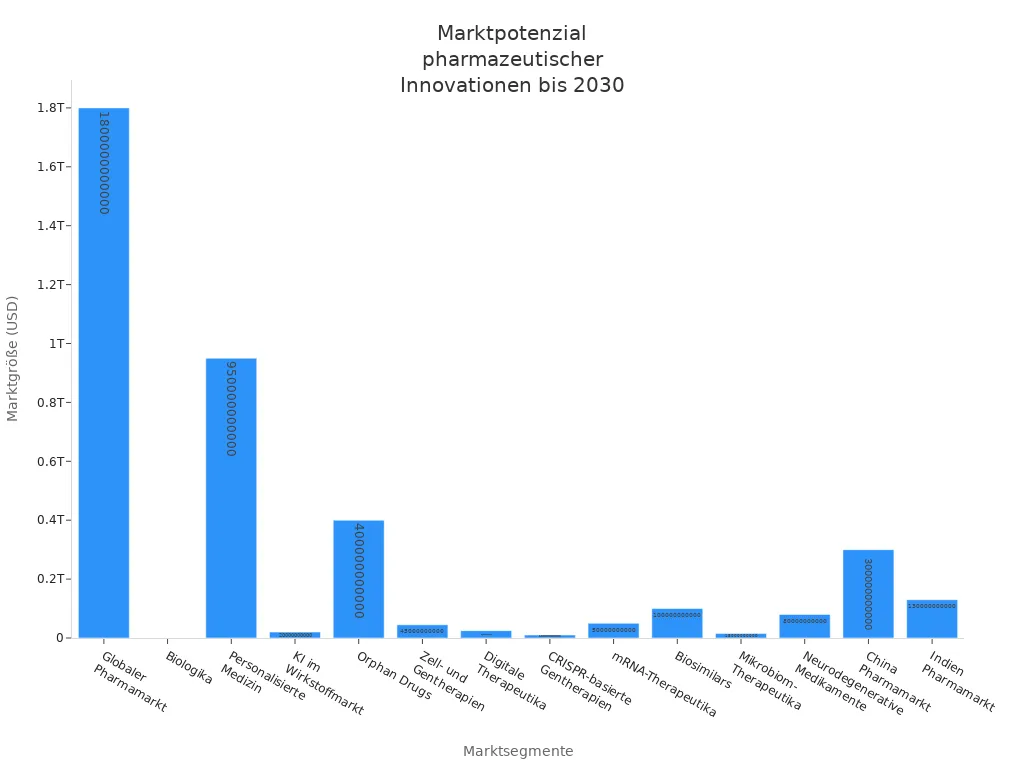
The market potential for the next generation of pharmaceutical products is growing rapidly, creating new opportunities for innovative companies. Forecasts show that the global pharma market will grow to USD 1.8 trillion by 2030. Segments such as biologics, personalized medicine, AI-driven drug discovery, and cell and gene therapies are developing particularly dynamically. The following table provides an overview of the most important market areas and their expected development:
Segment / Market Area | Projected Market Size by 2030 | CAGR / Growth Drivers / Notes |
|---|---|---|
Global Pharma Market | USD 1.8 trillion | Growth at 5-6% CAGR, driven by aging, chronic diseases, technological innovation |
Biologics | 45-50% of total sales | Rapid growth, important for complex diseases like cancer and autoimmune diseases |
Personalized Medicine | > USD 950 billion | Advances in genomics and AI drive growth |
AI in Drug Discovery Market | > USD 20 billion | AI is revolutionizing all phases of drug development |
Orphan Drugs (Rare Diseases) | USD 400 billion | CAGR 11-12%, high growth rate due to regulatory incentives and scientific breakthroughs |
Cell and Gene Therapies | > USD 45 billion | New therapies with curative potential, e.g., CAR-T |
Digital Therapeutics | > USD 25 billion | Software-based treatments, increasing acceptance and integration into healthcare systems |
CRISPR-based Gene Therapies | > USD 10 billion | Growing importance in genome editing |
mRNA Therapeutics | > USD 50 billion | Expansion beyond vaccines, e.g., cancer immunotherapy |
Biosimilars | > USD 100 billion | Expansion due to patent expirations on biologics |
Microbiome Therapeutics | USD 15 billion | New therapy approaches for various diseases |
Neurodegenerative Drugs | > USD 80 billion | Progress in Alzheimer’s, Parkinson’s, etc. |
China Pharma Market | > USD 300 billion | Strong growth driven by government support and R&D investment |
India Pharma Market | > USD 130 billion | Growth driven by generics and biosimilars |
According to current analyses, the global pharmaceuticals market will grow to around USD 1.9 trillion by 2027. The annual growth rate is between 3 and 6 percent. New product launches and the broader use of innovative drugs are driving this growth, even as payers increasingly impose budget restrictions. New growth markets are emerging, particularly in Latin America, Asia, and Africa, while North America and Europe are experiencing more moderate growth. The oncology sector is expected to reach around USD 370 billion by 2027, and biotechnology products will account for around 35 percent of expenditures.
Pharma disruptors benefit from these developments as they use innovative approaches to specifically address the needs of growing market segments. Analysts assess the long-term growth potential of such companies by continuously monitoring approval timelines, price trends, partnerships, and regulatory trends. They also analyze how companies respond to geopolitical risks, supply chain disruptions, and the entry of new competitors.
Note: Understanding the dynamics of markets and the innovativeness of disruptive companies enables better assessment of opportunities and risks in the pharma sector and a more targeted response to future developments.
Valuing pharma disruptors therefore requires not only an understanding of traditional financial metrics but also a feel for technological trends, regulatory changes, and the ability to thrive in a global, highly dynamic environment. Those who keep these factors in mind can identify early which companies have the potential to lead the next wave of medical innovation.
Rankings
Top Companies
The current landscape of pharma disruptors shows remarkable dynamism, with some companies standing out in particular for their innovative strength and patent activity. The following table provides an overview of the leading players in nanoparticle-based drug delivery, based on the number of patents filed between 2021 and 2023:
Company | Number of Patents (2021 – 2023) |
|---|---|
Bristol-Myers Squibb | 97 |
Ipsen | 84 |
Insmed | 40 |
Laboratory Skin Care | 37 |
Marinus Pharmaceuticals | 37 |
Yuhan | 33 |
SN BioScience | 28 |
Midatech Pharma | 22 |
Leading Edge Innovations | 21 |
Intezyne | 20 |
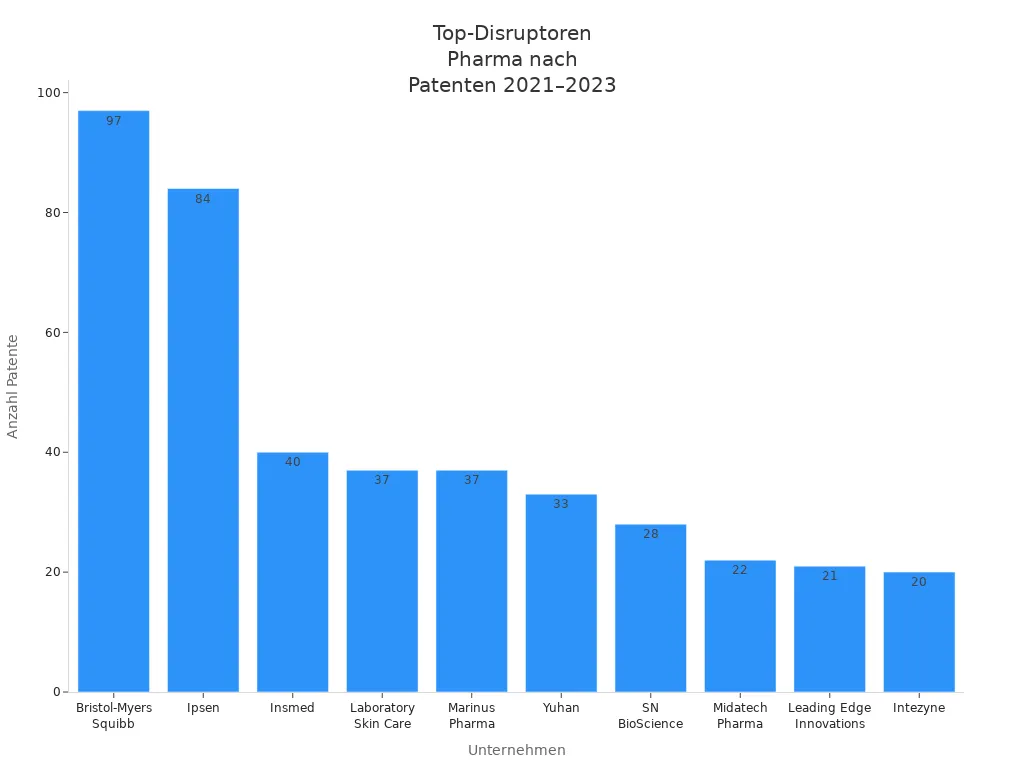
Bristol-Myers Squibb and Ipsen lead the field by a wide margin. Their high patent activity signals not only a strong innovation pipeline but also the ability to quickly translate new technologies into marketable products. Companies such as Insmed, Laboratory Skin Care, and Marinus Pharmaceuticals follow with impressive innovation performance, making them relevant players in the disruptive competition.
Analysis
The evaluation and ranking of pharma disruptors is based on a variety of criteria that go far beyond classic financial metrics. Analysts particularly consider the following aspects:
Technological advances, such as the use of AI, automation, and CRISPR gene editing, are major drivers of innovation dynamics.
The market size and growth potential determine how much impact a company can have on the market.
Financial investments, especially venture capital, boost development power and growth.
Legal frameworks and political changes directly impact market influence and performance.
Corporate strategies, such as partnerships and a diversified product portfolio, ensure competitiveness.
Challenges such as regulatory uncertainty and reimbursement pressure affect valuation and risk.
Partnerships and collaborations play a central role in innovation. When companies like Sumitomo Dainippon Pharma partner with AI specialists like Exscientia, the development time for new drugs drops dramatically. Such alliances not only enable faster market launches but also significantly reduce costs. The number of partnerships in AI-driven drug discovery has increased exponentially in recent years, underlining the strategic importance of collaborations.
The leading companies use disruptive strategies to specifically strengthen their market position. They digitize their supply chains, eliminate middlemen, and speed up processes from research to market launch. Targeted cancer therapies, innovative drug delivery systems, and AI-powered platforms are central to their activities. Startups also bring in fresh technologies such as non-destructive cell analysis and organoid models, further transforming drug development.
The valuation of these companies reflects their ability to spot technological trends early and turn them into sustainable competitive advantages. Analysts observe how consistently companies pursue their innovation strategies, overcome regulatory hurdles, and expand their reach through partnerships. Companies that successfully combine these factors not only secure a top spot in the rankings but also shape the future of the industry.
Those who closely follow the development of disruptive players can identify early which companies have the potential to fundamentally change the pharma market. The ability to combine innovation, market intelligence, and strategic partnerships determines long-term success—and offers valuable insights for both investors and industry observers.
Opportunities and Risks

Potentials
The world of pharma disruptors offers investors a wide range of opportunities that go far beyond classic investment possibilities. The strong growth in the pharmaceutical and biotechnology sectors, driven by annually increasing spending on prescription drugs, provides an attractive environment. Companies driving innovation and digitalization in the MedTech sector benefit from increased demand for modern therapies and diagnostics. Expansion in distribution and logistics, such as the challenges of global vaccine distribution, also creates new investment opportunities.
Strong growth potential through innovation and digitalization.
Opportunities in emerging markets such as China, India, and Brazil.
Stability through managed healthcare and healthcare real estate.
Integration of artificial intelligence into research and development.
Sustainable initiatives and expansion into new regions.
Those who demonstrate strategic agility and innovation focus can benefit from the positive market development, which is further fueled by demographic change and rising prosperity.
Challenges
Despite the attractive prospects, the environment remains challenging for investors. The development of new drugs is costly and time-consuming, with high risks in clinical trials and complex regulatory requirements. Only a fraction of drug candidates actually reach market approval. Patent expirations lead to revenue losses, while market entry for small and medium-sized companies is made more difficult by financial and technical hurdles.
Biotech and pharma stocks exhibit high volatility, especially among small firms with limited product pipelines.
Regulatory uncertainties, such as new guidelines for AI/ML, require continuous adaptation.
Patent cliffs and generic competition threaten profitability.
Market volatility can lead to sharp price swings, as seen with Moderna and Pfizer in 2023.
Company | Performance 2023 | Main Reason for Decline |
|---|---|---|
Moderna | Underperformance | Declining vaccine demand, competition |
Pfizer | Price decline | Patent expirations, competitive pressure |
Tips
Those wishing to invest in pharma disruptors should take a structured approach. Focusing on biotech companies with innovative technologies such as CRISPR or immunotherapies can be worthwhile. Disciplined research, trend analysis, and the use of industry reports help identify long-term patterns. Diversification remains key to cushion fluctuations. Thematic ETFs or funds provide access to a broad spectrum of disruptive companies.
Careful due diligence and use of integrative data sources.
Build a diversified portfolio to spread risks.
Take a long-term perspective and remain calm in the face of short-term market movements.
Engage with industry experts and pursue continuous education.
Strong patent portfolios and innovative business models as selection criteria.
A reflective, knowledge-based approach helps identify opportunities and manage risks. Those who understand the dynamics of the industry can actively shape the future of medicine and remain able to act even in volatile times.
Analysis shows that pharma disruptors such as Amazon, CVS Health, and Google are reshaping the healthcare industry with innovative technologies and strategic partnerships.
They focus on digital transformation, AI, and telemedicine to improve care and the patient experience.
The market for attenuated vaccines is growing dynamically, driven by government initiatives and biotechnological advances.
Successful investors pay attention to transparency, regulatory compliance, and experienced leadership.
Valid clinical data and transparent studies form the basis for trust and acceptance.
Predictive analytics and social media analysis help spot trends early and seize new opportunities.
Those who stay continuously informed and use data-driven methods remain able to act in the dynamic environment of pharma disruptors. A reflective view of innovation and market trends opens up new long-term perspectives.
FAQ
What distinguishes pharma disruptors from traditional pharma companies?
Pharma disruptors consistently rely on new technologies, flexible business models, and rapid innovation cycles. They respond agilely to market changes and specifically target niche markets. Traditional companies usually pursue more conservative strategies and invest more in established product lines.
Which metrics are particularly important when evaluating pharma disruptors?
Analysts focus on Return on Research Capital (RORC), Price-to-Research Ratio (PRR), and the innovation pipeline. These metrics reflect the ability to efficiently turn research into marketable products and achieve sustainable growth.
How do partnerships influence the innovativeness of disruptive companies?
Partnerships with technology providers, research institutions, or established pharma companies accelerate the development of new therapies. They enable access to know-how, capital, and markets. Companies that strategically form alliances strengthen their competitive position and increase their market reach.
What risks should investors consider when investing in pharma disruptors?
Clinical setbacks, regulatory uncertainties, and high volatility characterize the sector. Investors should consider diversification, strong patent portfolios, and transparent business models. A long-term investment horizon helps weather short-term fluctuations.
Practical note:
Those who understand the dynamics of disruptive innovation can identify opportunities early and manage risks in a targeted manner. A reflective view of market trends and corporate strategies remains essential for long-term success.
Pharma Disruptors: Focus on Innovation
Navigating the landscape of wealth creation is more than just following trends—it’s about embracing a thoughtful, long-term mindset rooted in curiosity and clarity. The current wave of pharma disruptors demonstrates how innovation, from AI-powered drug discovery to new business models, is changing how value is created in healthcare. With a close eye on key metrics like Return on Research Capital (RORC) and Price-to-Research Ratio (PRR), VASRO provides in-depth analysis showing where innovative strength and entrepreneurial foresight really make an impact. In an environment where almost 60% of value growth is driven by just two companies and traditional valuation standards are constantly shifting, sound market intelligence and precise assessment become valuable companions on the path to long-term financial success. At VASRO, we believe: Those who calmly and curiously embrace new developments not only recognize risks early but also the opportunities that make the difference for sustainable growth.
Disclaimer: The information provided on www.vasro.de is for general informational purposes only and does not constitute investment advice or a recommendation to invest in any particular asset or market. VASRO GmbH does not offer personalized investment advice, and the content on this website should not be relied upon as such. Visitors are encouraged to seek independent financial advice tailored to their specific circumstances before making any investment decisions. VASRO GmbH disclaims any liability for investment decisions made based on the information presented on this website.