


Market volatility refers to the rapid and often unpredictable changes in asset prices within financial markets. These fluctuations can arise from economic events, geopolitical tensions, or shifts in investor sentiment. For investors, volatility often feels like a double-edged sword. On one hand, it can present opportunities to buy undervalued assets. On the other, it may lead to panic-driven decisions that erode portfolio value.
Understanding how to approach volatility with confidence is crucial. For example, the VIX Index, a common measure of market uncertainty, has shown notable shifts over time. In March 2020, it peaked at an average of 20.037, reflecting heightened anxiety during the pandemic. However, informed strategies, such as analyzing market sentiment, can help mitigate these impacts. Research shows that recognizing investor sentiment often leads to better decisions and more stable returns.
Navigating market volatility requires preparation and discipline. By employing thoughtful strategies and leveraging insights from equity research, you can transform uncertainty into an opportunity for growth.
Table of Contents
Key Takeaways
Market ups and downs are normal when investing. Knowing this helps you make smarter choices and find chances to grow.
Spreading your money across different types of investments lowers risk. This protects you if one area loses value.
Investing the same amount regularly is called dollar-cost averaging. It lowers the average price you pay and softens market changes.
Think about the long-term. Stick to your goals and stay calm during market changes.
Use research on stocks to make smart choices. Data can help you spot chances and adjust your investments wisely.
Understanding Market Volatility
Defining Market Volatility
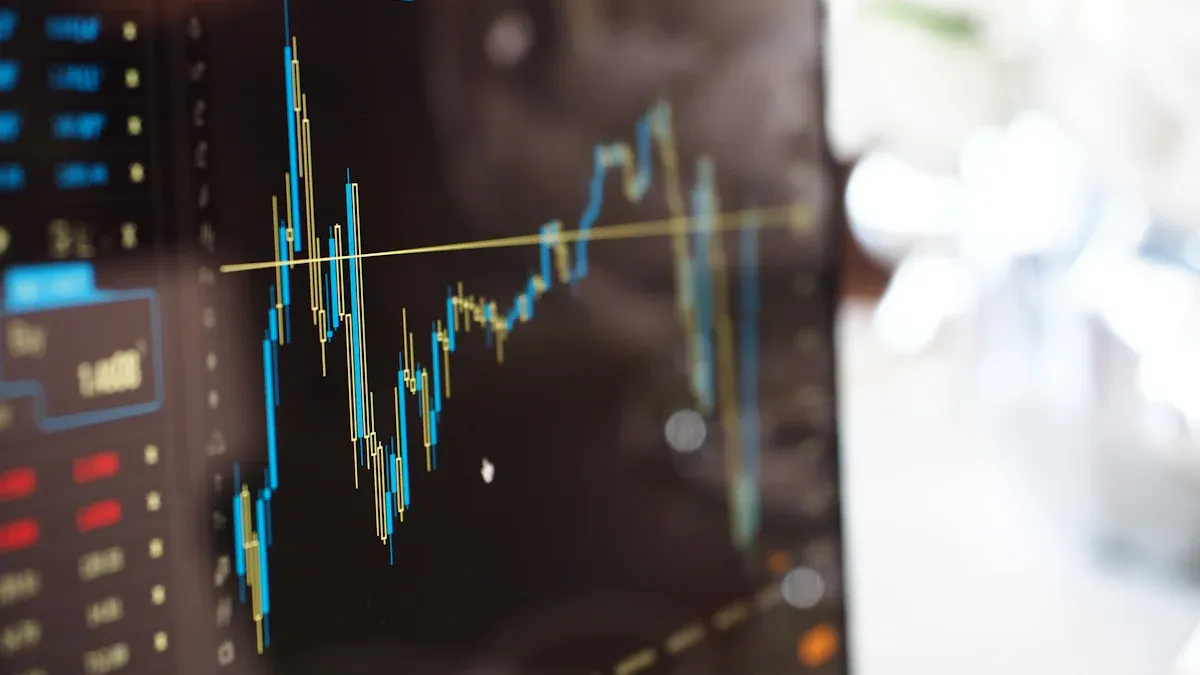
Market volatility refers to the degree of variation in asset prices over time. It reflects how much and how quickly prices move, whether up or down. You can think of it as the pulse of the market, indicating its level of uncertainty or stability. Metrics like standard deviation and implied volatility help quantify these movements. Standard deviation measures the size of price changes, offering a glimpse into potential future fluctuations. Implied volatility, derived from options pricing models like Black-Scholes, predicts future volatility and often spikes during market downturns.
To better understand volatility, consider the following table showcasing key metrics:
Metric | Description |
|---|---|
R.vol (asset 90d) | Realized volatility of the asset over the last 90 days, annualized for comparison. |
R.vol (asset) | Realized volatility of the asset for the entire backtest duration, annualized. |
R.vol (strat 90d) | Realized volatility of the strategy’s equity curve over the last 90 days. |
R.vol (strat) | Realized volatility of the strategy’s equity curve for the entire backtest duration. |
These metrics provide a structured way to assess market fluctuations and make informed decisions.
Why Volatility is Inevitable in Investing
Volatility is an inherent part of investing due to the dynamic nature of financial markets. Factors like economic recessions, geopolitical events, and shifts in investor sentiment contribute to market pullbacks and significant drawdowns. Historical financial models, such as the Black-Scholes model and GARCH, illustrate how volatility arises from these unpredictable influences.
You cannot avoid volatility, but you can prepare for it. For instance, during market corrections, understanding the relationship between risk and reward helps you stay focused on long-term goals. Volatility often signals opportunities for recovery, especially when markets overreact to short-term events.
Lessons from Historical Market Volatility
History offers valuable lessons about market volatility. Events like the 2008 financial crisis and the 2020 pandemic-induced crash highlight how markets experience substantial losses but eventually recover. Statistical tools like ARIMA modeling and regression analysis reveal patterns in market behavior, helping you anticipate future trends.
For example, historical volatility calculations measure the distribution of returns over time, showing how markets react during periods of stress. Data visualization, such as line charts, can also provide intuitive insights into market corrections and drawdowns. By studying these trends, you gain the financial education needed to navigate market fluctuations with confidence.
Investment Strategies for Navigating Market Volatility
Diversification Across Asset Classes
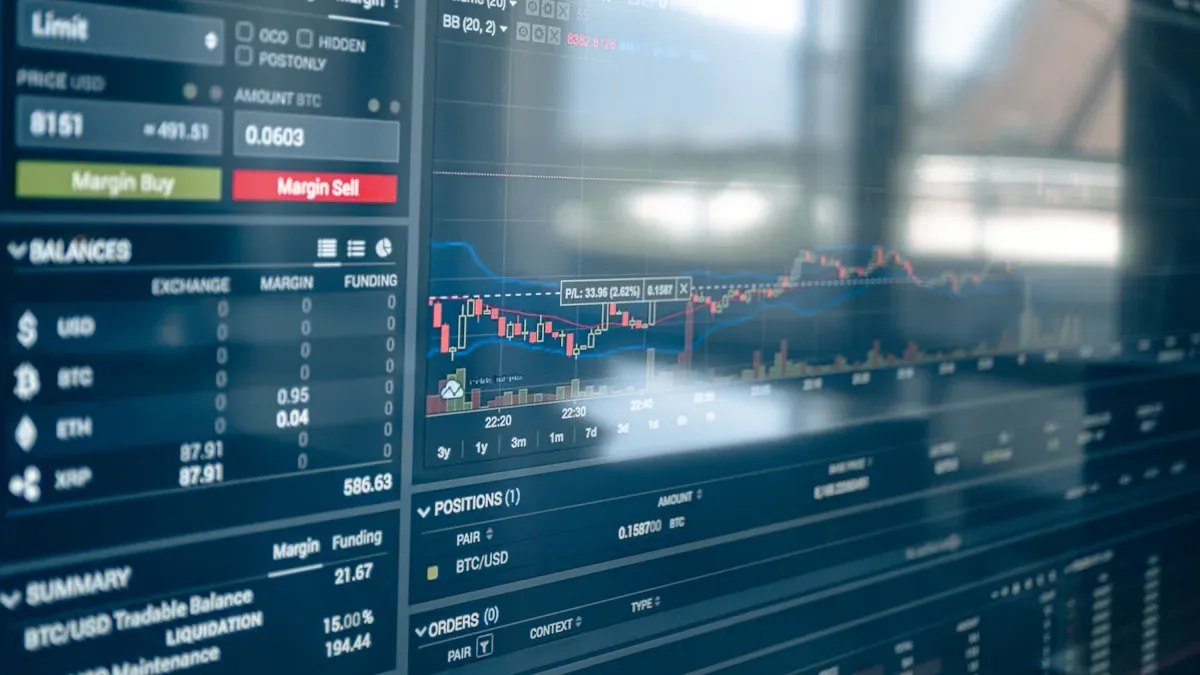
Diversification is one of the most effective strategies for minimizing portfolio risk during market volatility. By spreading your investments across different asset classes, such as stocks, bonds, real estate, and commodities, you reduce the impact of significant drawdowns in any single sector. For example, during the COVID-19 pandemic, investors who held assets in resilient sectors like technology and healthcare experienced fewer losses compared to those with concentrated portfolios. Similarly, during the 2008 financial crisis, diversified portfolios that included bonds and real estate weathered market downturns more effectively.
Diversification works because different asset classes often have low correlations. This means they don’t move in the same direction at the same time, which helps stabilize your portfolio. The table below highlights how diversification reduces risk:
Evidence Type | Description |
|---|---|
Correlation | The average correlation among various asset-backed finance credit factors is only 0.55, indicating diverse risk capture and limited overlap. |
Volatility | High risk factor diversification leads to reduced volatility, contributing to attractive risk-adjusted returns. |
By adopting a dynamic asset allocation approach, you can adjust your portfolio to align with your risk tolerance and market conditions, ensuring better protection against market fluctuations.
Dollar-Cost Averaging for Consistent Investing
Dollar-cost averaging (DCA) is a simple yet powerful investment strategy that helps you navigate market volatility. With DCA, you invest a fixed amount of money at regular intervals, regardless of market conditions. This approach allows you to buy more shares when prices are low and fewer shares when prices are high, effectively lowering the average cost per share over time.
Research shows that DCA reduces the impact of market fluctuations and improves risk-adjusted returns, making it ideal for risk-averse investors. While it may result in slightly lower overall returns compared to lump-sum investing, it significantly reduces volatility. For instance, studies reveal that DCA lowers the standard deviation of returns by 2.21%, enhancing portfolio stability. This strategy also eliminates the need to time the market, which can be challenging even for experienced investors.
By consistently investing through DCA, you can take advantage of investment opportunities during market downturns while maintaining a disciplined approach to building wealth.
Maintaining a Long-Term Investment Perspective
Maintaining a long-term investment perspective is crucial for navigating market volatility. Historical data demonstrates that markets recover from downturns and reward patient investors. Over the past 50 years, the S&P 500 Index has experienced double-digit annual losses in only five years. In any rolling five-year period, double-digit losses occurred just three times. Remarkably, stocks have never lost value in any rolling 15-calendar-year period during this time frame.
Long-term investors benefit from the compounding effect and the market’s natural tendency to rebound after drawdowns. By focusing on your investment time horizon and avoiding short-term reactions, you can stay on track toward achieving your financial goals. This approach also helps you avoid emotional decision-making, which often leads to poor outcomes during periods of market volatility.
Adopting a long-term mindset allows you to view market fluctuations as temporary events rather than permanent setbacks. This perspective not only reduces stress but also positions you to achieve high returns over time.
Building a Financial Safety Net
Building a financial safety net is a crucial step in preparing for market volatility. It acts as a buffer, protecting you from the financial strain caused by unexpected events or economic downturns. A well-constructed safety net ensures you can meet essential expenses without liquidating investments during unfavorable market conditions.
Your financial safety net should include an emergency fund. This fund typically covers three to six months of living expenses and provides immediate access to cash when needed. By having this reserve, you reduce the risk of selling assets at a loss during market downturns. For example, if you face a sudden job loss or medical emergency, your emergency fund can help you stay financially stable without disrupting your long-term investment strategy.
The measures taken by the U.S. Treasury and the Federal Reserve during the financial crisis, including lending and asset purchases, are seen as key components of the financial safety net that help stabilize financial markets and mitigate investment risks.
In addition to an emergency fund, consider diversifying your income sources. Passive income streams, such as rental properties or dividend-paying stocks, can provide consistent cash flow. This approach reduces your reliance on a single source of income and enhances your financial resilience.
The belief that a financial institution is too big to fail leads to lower debt financing costs, as creditors perceive reduced risks due to government guarantees, which encourages institutions to take on greater risks.
While a financial safety net offers stability, it’s essential to remain cautious. Over-reliance on safety nets can lead to complacency and risk underpricing. This behavior may amplify financial instability during crises.
The existence of a financial safety net can amplify financial instability by creating incentives for institutions to underprice risks, thereby increasing the likelihood of financial crises.
By proactively building a financial safety net, you can navigate market volatility with greater confidence. This strategy not only protects your financial well-being but also allows you to stay focused on achieving your long-term goals.
Leveraging Equity Research for Smarter Decisions
Identifying Opportunities During Volatile Markets
Equity research serves as a powerful tool for identifying investment opportunities during volatile markets. These reports provide detailed analyses of stock performance, helping you uncover undervalued assets or sectors poised for growth. By understanding market dynamics and company fundamentals, you can make informed decisions that align with your risk tolerance and financial goals.
For example, during periods of significant drawdowns, equity research can highlight companies with strong balance sheets and resilient business models. These insights allow you to capitalize on market fluctuations while minimizing potential losses. Additionally, equity research enhances your financial education by offering a deeper understanding of market trends and potential risks. This knowledge positions you to seize opportunities that others might overlook.
Equity research reports not only guide individual investors but also help companies manage investor relations by providing insights into market perception and financial performance.
Using Equity Research to Rebalance Portfolios
Rebalancing your portfolio during volatile markets is essential for maintaining your desired asset allocation and managing risk. Equity research plays a crucial role in this process by offering data-driven insights into market conditions and asset performance. For instance, studies show that portfolios with higher equity allocations experience greater performance differences between rebalanced and non-rebalanced strategies.
Key Findings | Description |
|---|---|
Impact of Rebalancing | Rebalancing improves portfolio performance and enhances risk management. |
Equity Allocation Levels | Portfolios with 60% and 90% equity allocations show the most significant differences in returns. |
By leveraging equity research, you can identify which assets to buy or sell to restore balance to your portfolio. This approach not only mitigates the impact of drawdowns but also positions you for recovery and high returns over the long term.
Data-Driven Insights for Better Investment Outcomes
Quantitative research methods, supported by equity research, provide actionable insights that improve investment outcomes. For example, predictive analytics and statistical models help you assess risks, identify trends, and optimize your strategies. Case studies across industries demonstrate the transformative impact of data-driven decision-making:
Industry | Outcome Description | Improvement Metrics |
|---|---|---|
Financial Services | A bank adopted quantitative models to assess credit risk, reducing default rates. | Default rate reduction of 15% |
Healthcare Efficiency | A hospital network implemented a scheduling system, decreasing waiting times. | Waiting time reduction of 30% |
Manufacturing | An automotive manufacturer minimized waste through real-time data analysis. | Production efficiency increase of 10% |
Marketing Insights | A tech firm tailored marketing campaigns, resulting in increased engagement. | Customer engagement uplift of 25% and conversion rate increase of 40% |
By integrating these insights into your investment strategies, you can navigate market volatility with confidence. Equity research equips you with the tools to make data-driven decisions, ensuring better portfolio performance and long-term success.
Avoiding Emotional Reactions to Market Swings
The Dangers of Emotional Decision-Making
Emotional decision-making often leads to poor investment outcomes, especially during significant drawdowns. When markets fluctuate, you might feel compelled to act on fear or overconfidence, which can cloud your judgment. Common biases, such as overconfidence, herd behavior, and loss aversion, frequently influence these decisions. For instance:
Overconfidence bias may cause you to believe your success stems from skill rather than luck, leading to excessive trading and reduced portfolio performance.
Herd behavior can push you to follow the crowd, resulting in investments that don’t align with your risk tolerance.
Anchoring bias might make you fixate on specific price points, causing you to hold onto assets longer than necessary.
Loss aversion could prevent you from taking calculated risks, leading to missed opportunities for recovery.
History shows that attempting to time the market often results in losses. Emotional reactions can prompt you to sell during downturns or buy during peaks, both of which harm long-term investors. Instead, focusing on a balanced, logical approach helps you navigate volatility more effectively.
The Value of Professional Financial Guidance
Professional financial guidance can significantly improve your investment outcomes during volatile periods. Advisors provide tailored strategies that align with your financial goals and risk tolerance. They also help you avoid rash decisions by offering objective insights. Research highlights the benefits of expert advice:
Study | Findings | Impact on Investment Outcomes |
|---|---|---|
Blanchett and Kaplan (2013) | Improved financial planning strategies | |
Kinniry et al. (2016) | Value of adviser services | 3% increase in net returns, 150+ bps from behavioral coaching |
Grable and Chatterjee (2014) | Advice during market volatility | 20.89% reduction in wealth volatility, 6% risk-adjusted performance advantage |
By working with a professional, you gain access to data-driven insights and behavioral coaching, which enhance your portfolio performance and reduce emotional decision-making.
Staying Focused on Long-Term Goals
Maintaining focus on long-term goals is essential during market volatility. Longitudinal studies reveal that understanding how variables change over time helps you make informed decisions. For example, markets often recover after downturns, rewarding patient investors. By staying committed to your strategy, you can avoid the pitfalls of short-term thinking.
Adopting a long-term perspective allows you to view market fluctuations as temporary. This mindset reduces stress and positions you for sustained growth. Tools like equity research reports can further support your strategy by identifying trends and opportunities that align with your objectives. Remember, patience and discipline are key to achieving financial success.
Understanding and managing market volatility is essential for navigating the complexities of financial markets. By employing effective risk management strategies, you can turn uncertainty into opportunities for growth. Building a thoughtful wealth strategy and diversifying your portfolio helps mitigate risks and positions you to handle fluctuations with confidence.
Equity research plays a vital role in making informed decisions. It provides data-driven insights that help you identify opportunities, rebalance portfolios, and stay focused on long-term goals. This knowledge empowers you to embrace market changes rather than fear them.
Staying disciplined is key to achieving financial success. Focus on time in the market rather than timing it. Consult financial professionals to create a personalized plan that aligns with your goals. With the right approach, you can control your financial future and thrive in any market environment.
FAQ
What is the best way to start investing during volatile markets?
Start by assessing your financial goals and risk tolerance. Use strategies like dollar-cost averaging to invest consistently. Diversify your portfolio across asset classes to reduce risk. Equity research reports, like those from vasro, can guide you in identifying opportunities and making informed decisions.
How does diversification help during market volatility?
Diversification spreads your investments across different asset classes, reducing the impact of losses in any single sector. For example, combining stocks, bonds, and real estate can stabilize your portfolio. A diversified approach ensures that no single market event significantly affects your overall returns.
Should I sell my investments during a market downturn?
Selling during a downturn often locks in losses. Instead, focus on your long-term goals and avoid emotional decisions. Historical data shows that markets recover over time. Equity research can help you identify undervalued assets and rebalance your portfolio for future growth.
How can equity research improve my investment strategy?
Equity research provides data-driven insights into market trends, company performance, and valuation. It helps you identify opportunities, manage risks, and optimize your portfolio. Vasro’s equity reports offer actionable intelligence to support smarter investment decisions during volatile periods.
What role does a financial advisor play in managing volatility?
A financial advisor offers personalized strategies based on your goals and risk tolerance. They provide objective guidance, helping you avoid emotional decisions. Studies show that professional advice improves portfolio performance and reduces wealth volatility, especially during uncertain times.
Strategic Insights That Move You Forward
In a rapidly shifting financial landscape, staying grounded in data-driven insights is more important than ever. Equity research offers a structured lens through which to view market volatility, not just as a risk, but as a source of strategic opportunity. At VASRO GmbH, we specialize in delivering deep, sector-focused equity analysis and market intelligence that helps investors, analysts, and business leaders make informed decisions with confidence. For those seeking to stay ahead of market trends and sharpen their strategic edge, we invite you to explore more at www.vasro.de or learn about our market intelligence services tailored for dynamic sectors like pharma, biotech, energy, and tech.
Disclaimer: The information provided in this article is for general informational purposes only and does not constitute investment advice or a recommendation to invest in any specific asset or market. VASRO GmbH does not offer personalized investment advice, and the content of this article should not be relied upon as such. We strongly recommend that you seek independent financial guidance tailored to your unique circumstances before making any investment decisions. VASRO GmbH disclaims any liability for decisions made based on the information presented in this article.