


Global tariffs and equity narratives are more interconnected than they might initially appear. While tariffs often create economic hurdles, they also present opportunities for companies to redefine their equity stories. For instance, a 10% increase in U.S. tariffs could reduce U.S. GDP growth by approximately 0.5 percentage points in 2025 and 0.1 percentage points in 2026. This decline stems from trade policy uncertainty, which influences investor sentiment more than direct economic impacts. As a result, companies with strong equity narratives can attract investors seeking stability amid market volatility.
You can leverage global tariffs and equity narratives to highlight your company’s resilience. Nearly half of U.S. imports now face higher costs, slowing growth and fueling inflation. However, equity markets in the U.S., Europe, and emerging economies have shown gains despite initial negative reactions. This demonstrates that strategic positioning and innovative approaches can mitigate the impact of tariffs, turning challenges into growth opportunities.
Key Tariff Impacts | Economic Consequences |
|---|---|
10% rise in U.S. tariffs | 1% reduction in U.S. GDP by 2026 |
Higher costs for 50% of U.S. imports | Slower growth and increased inflation |
Investor focus on risk perception | Volatility in equity markets |
By focusing on regional stability, strategic partnerships, and revenue diversification, you can transform tariff-driven challenges into compelling equity narratives. This approach not only strengthens investor confidence but also positions your company as a leader in navigating global economic shifts.
Table of Contents
Key Takeaways
Global tariffs can be tough, but they also help companies improve their equity stories.
Working on regional stability and smart partnerships can boost investor trust and lower tariff problems.
Changing supply chains to use local suppliers cuts import needs and saves on tariff costs.
Using data insights helps companies make smart choices and create strong stories to attract investors.
Teaming up with equity experts can improve your company’s story, match investor goals, and increase market attention.
Understanding Tariff Impacts on Equity Narratives

Economic Shifts and Investor Behavior
Global tariffs often trigger significant shifts in the economy, influencing how investors perceive financial markets. Tariffs increase operational costs, which can squeeze profit margins or force companies to raise prices. These changes ripple through the trade landscape, creating uncertainty that impacts investor confidence. Historically, tariff announcements have caused immediate market declines. However, businesses tend to adapt over time, leading to eventual recovery in equity markets. This adaptability highlights the importance of crafting a robust investment strategy to navigate tariff-driven challenges.
Tariff-related uncertainty also affects capital investments. Companies may delay or reduce spending on new projects, which can slow economic growth. Supply chain disruptions caused by tariffs often lead to inventory shortages or production delays, further complicating the trade environment. Despite these challenges, the demand for domestic suppliers has surged as companies seek alternatives to mitigate tariff costs. This shift has created opportunities for mergers, acquisitions, and innovation in sourcing strategies, reshaping the global economy.
The Role of Regional Stability in Attracting Investors
Regional stability plays a crucial role in attracting investments during periods of trade policy uncertainty. Investors prioritize markets that demonstrate resilience and predictability. Companies operating in regions with stable trade agreements and minimal tariff impacts often gain a competitive edge. For example, businesses that establish strong local supply chains can reduce their exposure to international trade disruptions. This approach not only minimizes risks but also enhances investor confidence in the company’s long-term growth potential.
Moreover, regional stability fosters an environment conducive to innovation and expansion. Companies can focus on exploring international market opportunities without the constant threat of tariff-related disruptions. By aligning their operations with stable trade policies, businesses can position themselves as reliable players in the global economy, appealing to both investors and consumers.
Strategic Positioning Amid Tariff-Driven Markets
Strategic positioning is essential for companies navigating tariff-driven markets. Businesses must adapt their operations to minimize the impact of tariffs while capitalizing on emerging opportunities. For instance, companies can restructure their supply chains to prioritize domestic suppliers, reducing reliance on imported goods. This strategy not only mitigates tariff costs but also supports local economies.
In addition, companies can leverage trade policy changes to explore new markets. By identifying regions with favorable trade agreements, businesses can diversify their revenue streams and reduce dependency on a single market. This approach enhances resilience and positions the company as a leader in adapting to global trade dynamics.
Effective strategic positioning also involves clear communication with stakeholders. Companies must articulate how their strategies address tariff impacts and align with broader market trends. This transparency builds trust and strengthens the company’s equity narrative, making it more appealing to investors seeking stability in volatile financial markets.
Strategies for Leveraging Global Tariffs
Crafting Compelling Equity Narratives
Crafting a strong equity narrative requires you to align your company’s story with the realities of global trade. Investors seek clarity and confidence, especially during periods of tariff-driven volatility. By demonstrating how your business adapts to tariff impacts, you can position yourself as a resilient and forward-thinking leader in the markets.
One effective approach involves leveraging tools that provide actionable insights into trade dynamics. For example, a Tariff Intelligence Tool tracks real-time tariff changes and their economic effects, while PSICS breaks down revenues by product groups to assess tariff exposure. These tools enable you to quantify the impact of tariffs on your operations and communicate this data effectively to stakeholders. Additionally, understanding the Price Elasticity of Demand (PED) for your products can help you evaluate potential revenue shifts, further strengthening your narrative strategy.
Feature | Description |
|---|---|
Tariff Intelligence Tool | Tracks real-time tariff changes and economic effects |
PSICS | Analyzes revenue exposure to tariffs by product group |
Price Elasticity of Demand (PED) | Evaluates revenue impacts for 350+ product groups |
Key Components: Regional Stability, Strategic Positioning, and Revenue Diversification
To thrive in tariff-driven markets, you must focus on three critical components: regional stability, strategic positioning, and the ability to diversify revenue streams. Regional stability ensures that your operations remain predictable, even as global trade policies shift. For instance, Salik, a toll operator in Dubai, has capitalized on its stable environment by forming partnerships with technology leaders and diversifying revenue streams beyond traditional toll revenues. This approach has allowed Salik to mitigate tariff costs while attracting investor confidence.
Strategic positioning involves adapting your supply chain and exploring new markets. Companies adopting strategies like the “China Plus One” model or nearshoring production have successfully reduced their exposure to tariff risks. Diversifying supply chains not only minimizes costs but also enhances operational resilience. Additionally, pricing optimization and customer retention strategies, such as loyalty programs, can help you maintain competitiveness in volatile markets.
The Importance of Equity Specialists in Narrative Development
Equity specialists play a vital role in amplifying your company’s narrative. Their expertise in analyzing trade data and market trends allows them to craft compelling stories that resonate with investors. Specialists can also identify opportunities for cost efficiency, such as renegotiating supplier contracts or leveraging favorable trade agreements. By integrating these insights into your equity narrative, you can enhance your appeal to investors and strengthen your market position.
Moreover, equity specialists can streamline your sales processes through digital tools, aligning actions with clear KPIs. This approach not only protects margins but also ensures that your narrative remains consistent across all communication channels. Collaborating with specialists ensures that your company’s story reflects its adaptability and resilience in the face of global trade challenges.
Real-World Applications of Tariff Strategies
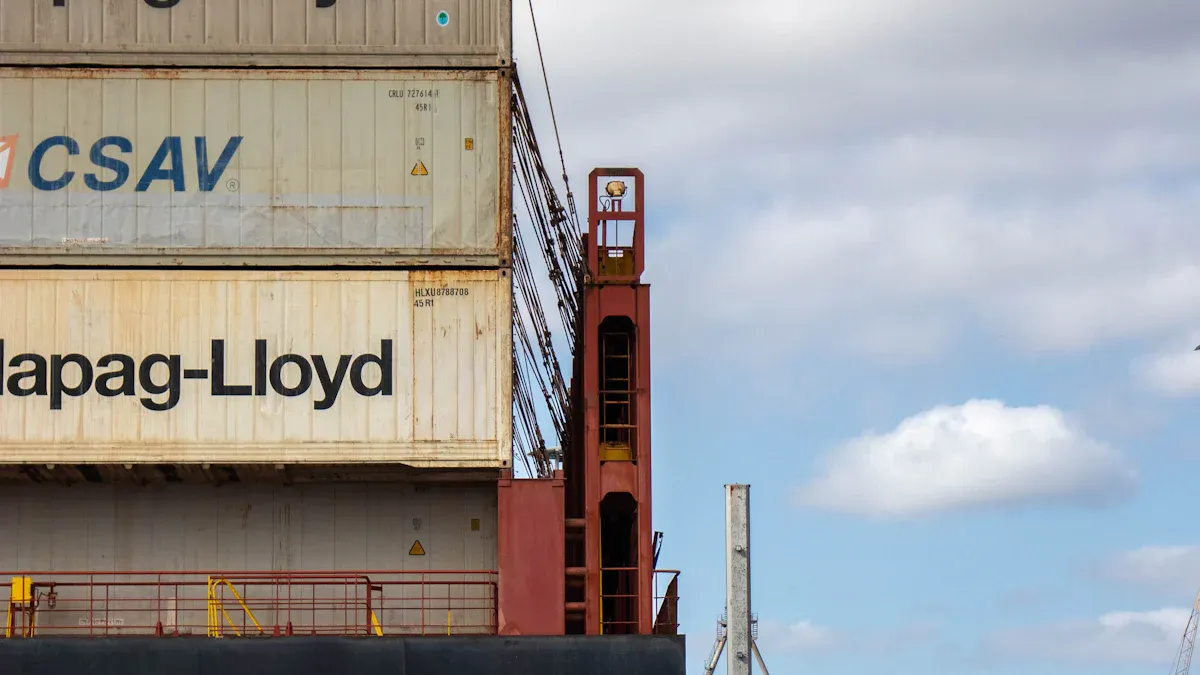
Salik’s Success Through Regional Stability and Revenue Diversification
Salik, a toll operator based in Dubai, demonstrates how regional stability and revenue diversification can mitigate tariff impacts. By operating in a region with predictable trade policies, Salik has built a foundation of trust with investors. Its ability to maintain consistent operations despite global trade disruptions highlights the importance of stability in volatile markets.
Salik has also diversified its revenue streams beyond traditional toll collection. By forming partnerships with technology providers, the company has introduced innovative solutions like automated payment systems. These advancements not only reduce operational costs but also enhance customer satisfaction. This dual focus on stability and innovation has enabled Salik to achieve robust revenue growth, even in tariff-impacted markets.
Dubai’s Strategic Positioning as a Growth Enabler
Dubai’s strategic positioning in global trade has made it a hub for businesses navigating tariff-driven challenges. Its location at the crossroads of Europe, Asia, and Africa provides unparalleled access to diverse markets. This geographic advantage allows companies to optimize trade routes and reduce transportation costs.
Dubai’s success also stems from its business-friendly environment. The city consistently ranks high in global indices for its infrastructure and regulations. Public-private partnerships have further strengthened its economic climate, fostering growth and innovation. The table below highlights key metrics that showcase Dubai’s strategic positioning:
Evidence Description | Type of Evidence |
|---|---|
Dubai’s strategic location at the crossroads of Europe, Asia, and Africa supports efficient trade routes and provides easy access to diverse global markets. | Strategic Location |
Dubai consistently ranks high in global indices for its business-friendly regulations and infrastructure. | Global Business Indices |
Public-private partnerships have fostered a favorable economic climate supported by world-class infrastructure and pro-business regulations. | Economic Climate and Infrastructure |
By leveraging these advantages, Dubai has positioned itself as a growth enabler for companies seeking to navigate tariff impacts effectively.
VASRO GmbH’s Role in Enhancing Equity Narratives
VASRO GmbH, a European manufacturing firm, exemplifies how companies can enhance equity narratives through strategic trade adaptations. The company has restructured its supply chain to prioritize domestic suppliers, reducing exposure to tariff costs. This approach not only minimizes risks but also supports local economies, aligning with investor priorities.
VASRO GmbH has also embraced digital tools to streamline operations. By using data analytics, the company identifies opportunities for cost efficiency and revenue diversification. These insights allow VASRO GmbH to communicate a compelling equity narrative that resonates with investors. Its ability to adapt to trade challenges while maintaining growth underscores the value of strategic positioning in tariff-driven markets.
The Role of Equity Specialists in Amplifying Narratives
Benefits of Collaborating with Equity Specialists
Collaborating with equity specialists provides you with a strategic advantage in navigating the complexities of global trade and tariffs. These professionals possess the expertise to craft investor-focused equity reports that highlight your company’s resilience and adaptability. By analyzing market trends and trade data, they help you identify opportunities to enhance corporate profitability while mitigating risks.
Equity specialists also streamline your communication with investors. They ensure that your equity narrative aligns with the expectations of financial markets, making your company more appealing to potential stakeholders. Their insights into the economy and trade policies enable you to position your business as a leader in profitability and innovation. This collaboration not only strengthens your equity narrative but also builds trust with investors seeking stability in volatile markets.
How Data-Driven Insights Enhance Investor Appeal
Data-driven insights play a pivotal role in enhancing your appeal to investors. By leveraging advanced analytics, you can make informed decisions that boost profitability and demonstrate your company’s adaptability. For example:
A mid-budget thriller succeeded after data analysis identified a strong potential audience, turning it into a sleeper hit.
A major studio used analytics to select an optimal release date for a franchise film, achieving a record-breaking opening weekend.
An independent drama improved its marketability by casting an emerging actor with significant audience appeal, based on talent valuation tools.
A production company reallocated resources effectively after identifying budget savings through detailed cost projections.
These examples illustrate how data-driven strategies can transform challenges into opportunities, enhancing your company’s narrative and attracting investments.
Amplifying Visibility on Global Platforms
Amplifying your visibility on global platforms is essential for maintaining a competitive edge in today’s economy. Strategic initiatives, such as optimizing your online presence and leveraging digital tools, can significantly boost your brand’s exposure. The following metrics demonstrate the effectiveness of such efforts:
Metric | Description |
|---|---|
Website traffic | Reflects the number of visitors to your website, showcasing brand exposure. |
Search engine rankings | Indicates your website’s position in search results, impacting visibility to potential investors. |
Keywords | Measures performance for relevant keywords, enhancing your likelihood of appearing in searches. |
Social media reach | Estimates the audience size for your content, highlighting potential brand exposure. |
Volume of mentions | Tracks how often your brand is discussed across platforms, reflecting active visibility efforts. |
Presence Score | Summarizes online visibility and popularity, offering a snapshot of brand awareness. |
Share of voice | Compares your brand visibility to competitors, expressed as a percentage of market conversation. |
By focusing on these metrics, you can position your company as a leader in the global economy. Equity specialists can further amplify your visibility by integrating these insights into your equity narrative, ensuring that your brand resonates with investors worldwide.
Companies can turn global tariffs into opportunities by focusing on three key areas: strategic positioning, regional stability, and revenue diversification. These strategies allow you to adapt to market needs, foster innovation, and establish a strong presence. For example:
Leveraging tariff challenges encourages collaboration and innovation.
Building local partnerships helps navigate regulatory barriers and promotes sustainable growth.
Emphasizing cultural sensitivity strengthens your connection with regional markets.
Equity specialists play a pivotal role in amplifying your narrative. They humanize your business, align it with investor priorities like innovation and growth, and foster emotional engagement. By adopting these strategies, you can thrive amid economic shifts and attract investor confidence.
FAQ
What are global tariffs, and how do they impact businesses?
Global tariffs are taxes imposed on imported goods. They increase costs for businesses relying on international supply chains. These higher costs can reduce profit margins or lead to price hikes, affecting competitiveness. However, strategic adjustments can help you mitigate these impacts and uncover growth opportunities.
How can companies turn tariff challenges into opportunities?
You can adapt by diversifying revenue streams, restructuring supply chains, and exploring new markets. For example, focusing on domestic suppliers reduces tariff exposure. Additionally, leveraging data-driven tools helps you identify cost-saving opportunities and craft compelling equity narratives that attract investors.
Why is regional stability important for equity narratives?
Regional stability ensures predictable operations, even during global trade disruptions. Investors value companies operating in stable regions because they demonstrate resilience and reliability. By aligning with stable trade policies, you can enhance your appeal to investors and position your business as a trustworthy market leader.
What role do equity specialists play in navigating tariffs?
Equity specialists analyze trade data and market trends to craft narratives that resonate with investors. They help you identify cost efficiencies, optimize supply chains, and align your strategies with investor priorities. Their expertise amplifies your visibility and strengthens your equity narrative in competitive markets.
How can data-driven insights improve your equity narrative?
Data-driven insights provide actionable information about tariff impacts, market trends, and operational efficiencies. Tools like Tariff Intelligence or PSICS help you quantify risks and opportunities. By integrating these insights into your narrative, you can demonstrate adaptability and attract investor confidence.
Staying Ahead with Strategic Intelligence and Equity Insight
In a world shaped by shifting trade policies and unpredictable economic signals, understanding the broader implications of global tariffs is only part of the equation. Translating those shifts into meaningful, data-backed insights is where true value emerges. At VASRO GmbH, we believe strategic equity analysis and deep market intelligence are essential tools for decision-makers navigating today’s complex environment. Whether you’re an investor assessing geopolitical risk, or a business leader refining your market positioning, our research helps illuminate opportunities that might otherwise go unnoticed. Explore more insights at www.vasro.de, or consider joining our market intelligence service to stay ahead of the curve—grounded in data, guided by clarity.
Disclaimer: The information provided in this article is for general informational purposes only and does not constitute investment advice or a recommendation to invest in any specific asset or market. VASRO GmbH does not offer personalized investment advice, and the content of this article should not be relied upon as such. We strongly recommend that you seek independent financial guidance tailored to your unique circumstances before making any investment decisions. VASRO GmbH disclaims any liability for decisions made based on the information presented in this article.