

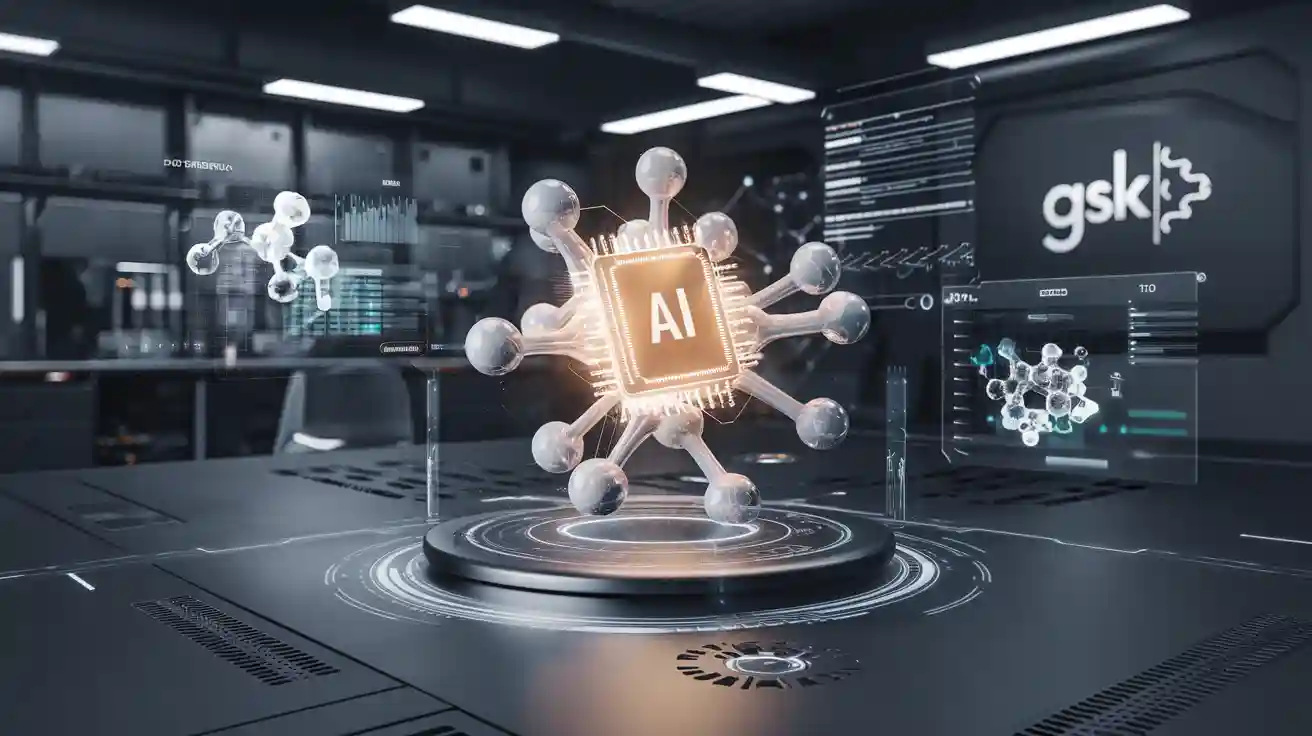
AI in pharmaceutical industry is transforming the way drugs are discovered and developed, bringing unprecedented advancements to the field. With its capability to analyze massive datasets and predict outcomes, AI in pharmaceutical industry has already proven to deliver remarkable benefits. For example:
AI-enabled workflows in the pharmaceutical industry can cut drug development costs by 30% and reduce timelines by up to 40%.
The global market for AI in pharmaceutical industry, particularly in drug discovery, is expected to expand from $1.5 billion in 2023 to $13 billion by 2032.
A notable example of this transformation is GSK’s $300 million partnership with Relation Therapeutics. This collaboration leverages AI in pharmaceutical industry to create groundbreaking treatments for osteoarthritis and fibrotic diseases, addressing critical unmet medical needs. Such partnerships highlight the pivotal role of AI in pharmaceutical industry, driving innovation and accelerating the development of life-changing therapies.
Table of Contents
Key Takeaways
AI can lower drug-making costs by 30% and save time by 40%. This makes the process quicker and better.
GSK is spending $300 million with Relation Therapeutics to create new treatments for joint pain and scar-like diseases using AI.
AI makes drugs work better, with AI-found drugs succeeding 80% to 90% in early tests. Regular methods only succeed 40% to 65%.
AI finds new drug ideas by studying hard-to-understand biological data. This helps discover cures for tough diseases.
Drug companies are using AI more and more. Spending on AI is growing fast, bringing new ideas and helping patients feel better.
The Challenges of Traditional Drug Discovery
Drug discovery has historically been a lengthy and expensive process, often fraught with uncertainty. Despite advancements in science, traditional methods face significant challenges that hinder the development of new treatments.
Time and Cost Constraints in Drug Discovery
Developing a new drug can take over a decade and cost billions of dollars. Researchers must navigate multiple stages, including target identification, preclinical testing, and clinical trials. Each stage requires extensive resources and time. For example, preclinical studies alone can take several years to complete. These delays not only increase costs but also slow down the availability of life-saving treatments. The pharmaceutical industry is now turning to ai to address these inefficiencies. By analyzing vast datasets and predicting outcomes, ai can streamline processes, reducing both time and expenses.
High Failure Rates in Clinical Trials
Clinical trials, a critical phase in drug development, often experience high failure rates. Several factors contribute to this issue:
Challenges in recruiting and retaining participants compromise the validity of trials.
Financial constraints frequently result in early terminations.
Non-compliance with regulatory and ethical standards causes delays or shutdowns.
Safety concerns, such as adverse events, can halt progress.
These challenges highlight the need for innovative solutions. Ai offers a promising alternative by predicting drug efficacy and safety earlier in the process, potentially reducing trial failures.
Limited Understanding of Complex Diseases
Many diseases, such as osteoarthritis and fibrotic conditions, involve intricate biological mechanisms that remain poorly understood. Traditional methods struggle to unravel these complexities, limiting the development of effective treatments. Ai excels in processing large-scale genomic and biological data, uncovering patterns that humans might miss. This capability enables researchers to identify novel drug targets and gain deeper insights into disease mechanisms, paving the way for groundbreaking therapies.
The Role of AI in Pharmaceutical Industry

Processing Large-Scale Data for Drug Discovery
AI in pharmaceutical industry has revolutionized the way researchers process large-scale data. Traditional methods often rely on manual techniques like surveys and focus groups, which are time-consuming and less scalable. In contrast, AI employs advanced algorithms and machine learning to analyze massive datasets. This approach identifies complex patterns and trends that traditional methods frequently overlook. For example:
AI delivers real-time insights, enabling researchers to make faster decisions.
It predicts future behaviors with greater accuracy, improving the efficiency of drug discovery.
The benefits of AI extend beyond speed and accuracy. AI accelerates the identification of drug candidates, optimizes clinical testing, and reduces costs. Drugs discovered using AI also show higher success rates in clinical trials, with phase 1 trials achieving an 80% to 90% success rate compared to 40% to 65% for traditional methods. These advancements highlight the transformative potential of AI in pharmaceutical industry.
Predicting Drug Efficacy and Safety with AI
Predicting drug efficacy and safety is a critical step in drug development. AI tools have emerged as powerful allies in this process. They analyze biological data to forecast how a drug will perform in humans, reducing the likelihood of failure in clinical trials. Several AI tools are leading the way in this domain:
AI Tool | Functionality |
|---|---|
Atomwise | Prediction of small molecules for drug discovery using target structure analysis. |
BenevolentAI | Drug discovery with the ability to provide prediction rationales. |
Insilico Medicine | Target identification and clinical trial outcome predictions. |
Exscientia | Target selection and enhancement of clinical assessment. |
These tools not only enhance the accuracy of predictions but also streamline the drug development process. By leveraging AI, researchers can address safety concerns earlier, ensuring that only the most promising candidates proceed to clinical trials.
Identifying Novel Drug Targets Using AI
Identifying novel drug targets is one of the most significant contributions of AI in pharmaceutical industry. AI algorithms analyze complex biological datasets to uncover disease-causing targets, significantly speeding up the validation process. High-performance computing enables rapid genome analysis, which enhances the identification of potential drug candidates. Notable successes include:
Discovery of halicin, an antibiotic effective against resistant bacterial strains.
Identification of a new target for pancreatic cancer, leading to a drug candidate in clinical trials.
Development of a drug candidate for Niemann-Pick disease type C, showing promising preclinical results.
These breakthroughs demonstrate how AI excels in identifying novel drug targets, paving the way for innovative treatments. By uncovering patterns that humans might miss, AI continues to push the boundaries of pharmaceutical research.
Relation Therapeutics: A Leader in AI-Driven Drug Development
Expertise in AI-Driven Biotech
Relation Therapeutics has established itself as a pioneer in ai-driven drug development. The company’s patient-centric discovery platform stands out as a key strength. By integrating human genetics with single-cell multi-omics, Relation Therapeutics uncovers insights that traditional methods often miss. Its advanced data analysis capabilities, combined with functional assays and machine learning, enable precise identification of drug targets. This expertise is particularly valuable in addressing complex conditions like fibrotic diseases and osteoarthritis. The company’s focus on these areas aligns with GSK’s mission to tackle unmet medical needs through innovative solutions.
Capabilities in Genomics and Computational Biology
Relation Therapeutics excels in merging computational and experimental methods for drug discovery. Its unique ‘lab-in-the-loop’ capability reduces the gene search space from 22,000 to a few hundred, significantly accelerating research. This approach has proven effective in areas such as osteoporosis, where narrowing the focus enhances the efficiency of drug development. The adaptability of Relation’s AI models allows them to be applied across diverse disease areas, including neurosciences and immunology. An interdisciplinary team of experts further strengthens the company’s research capabilities, ensuring a robust foundation for groundbreaking discoveries.
Role in GSK’s AI Partnership
Relation Therapeutics plays a pivotal role in GSK’s $300 million partnership, leveraging its expertise in ai-driven drug development to advance research in osteoarthritis and fibrotic diseases. By combining its cutting-edge technologies with GSK’s resources, Relation Therapeutics accelerates the identification of novel drug targets. This collaboration exemplifies how ai can transform pharmaceutical research, making it faster and more efficient. The partnership not only addresses critical medical challenges but also sets a benchmark for future collaborations in the industry.
GSK’s $300 Million Partnership with Relation Therapeutics

Focus on Osteoarthritis and Fibrotic Diseases
GSK’s partnership worth up to $300 million with Relation Therapeutics focuses on accelerating treatments for osteoarthritis and fibrotic diseases. These conditions represent significant challenges in modern medicine, as current treatment options remain inadequate. Osteoarthritis, a degenerative joint disease, affects millions worldwide, causing chronic pain and reduced mobility. Similarly, fibrotic diseases, characterized by excessive tissue scarring, impact vital organs like the lungs and liver, often leading to life-threatening complications.
Relation Therapeutics brings its advanced AI-driven discovery platform to this collaboration. By integrating human genetics and single-cell multi-omics, the company generates unique functional disease datasets. These datasets enable a deeper understanding of the biological mechanisms underlying these complex conditions. This approach aligns with GSK’s mission to develop innovative therapies targeting the root causes of diseases.
Strategic Goals and Investment Details
The partnership aims to identify and validate novel therapeutic targets for osteoarthritis and fibrotic diseases. GSK and Relation Therapeutics share a vision of leveraging AI to transform drug discovery and address unmet medical needs. According to GSK, “Working with Relation enables us to gain deep and precise insights into human causal biology and apply these to therapeutic discovery through a data-driven approach.”
The financial structure of this collaboration reflects its ambitious goals. GSK has committed a total investment of $300 million, which includes:
Detail | Amount |
|---|---|
Total Investment | $300 million |
Upfront Payment | $45 million |
Success-based Collaboration Payments | Up to $63 million |
Potential Milestone Payments | Up to $200 million per target |
Tiered Royalties on Net Sales | Yes |
Relation Therapeutics will use these funds to conduct observational studies and analyze data through its Lab-in-the-Loop platform. This innovative approach combines machine learning with experimental methods to accelerate drug discovery.
Addressing Unmet Medical Needs with AI
This partnership addresses critical gaps in the treatment of osteoarthritis and fibrotic diseases. By combining Relation’s patient-centric discovery platform with GSK’s global expertise, the collaboration aims to develop therapies that target the root causes of these conditions. AI plays a central role in this effort, enabling the discovery of novel therapeutic targets and enhancing the efficiency of drug development.
The focus on these diseases reflects their significant unmet medical needs. Osteoarthritis and fibrotic diseases currently lack effective therapies that address their underlying mechanisms. Through this partnership, GSK and Relation Therapeutics aim to change that narrative, offering hope to millions of patients worldwide.
Broader Implications of AI in Pharmaceutical R&D
Reducing R&D Costs with AI
AI could cut R&D costs significantly by streamlining processes across pharmaceutical R&D. Traditional drug discovery involves lengthy and resource-intensive steps, but AI optimizes these through automation and data-driven insights. For example, AI accelerates drug-target interaction predictions and identifies promising compounds faster. It also enhances clinical trial efficiency by improving patient recruitment and trial design. Beyond discovery, AI optimizes supply chain management by predicting demand and reducing waste, which lowers procurement costs.
The broader cost-saving implications of AI in pharmaceutical R&D are evident across multiple areas:
Application Area | Cost-Saving Implications |
|---|---|
Drug Discovery | Faster, more accurate predictions of drug-target interactions and identification of promising compounds. |
Clinical Trials | Streamlined patient recruitment and improved trial efficacy, saving time and money. |
Supply Chain Management | Optimized inventory levels and demand prediction, leading to reduced waste and procurement costs. |
Operational Efficiency | Automation of processes and improved resource allocation, reducing operational inefficiencies. |
Safety Monitoring | Early detection of safety signals, reducing costs associated with quality control and compliance issues. |
Insight Generation | Identification of new drug development opportunities, focusing on promising areas to minimize R&D costs. |
These advancements demonstrate how AI transforms pharmaceutical R&D into a more cost-effective and efficient process.
Improving Drug Success Rates Through AI
AI improves drug success rates by enhancing the precision of drug development. It enables better patient stratification, ensuring that clinical trials target the right populations. This leads to improved outcomes and higher approval rates. AI-discovered drugs in phase 1 clinical trials have an 80% to 90% success rate, compared to 40% to 65% for traditionally discovered drugs. This significant improvement highlights AI’s potential to revolutionize the industry.
AI also reduces trial failures by predicting drug efficacy and safety earlier in the process. By analyzing biological data, AI identifies potential risks before clinical trials begin. This proactive approach minimizes costly setbacks and ensures that only the most promising candidates advance. As a result, AI not only increases the likelihood of success but also accelerates the timeline for bringing new treatments to market.
Regulatory Acceptance of AI-Driven Drug Development
Regulatory acceptance of AI-driven drug development is evolving as agencies adapt to new technologies. Organizations like the FDA and EMA are introducing initiatives to address the challenges posed by AI. For instance, the FDA’s Software Pre-Certification Program facilitates the approval of AI-driven drugs and devices. However, AI models often function as “black boxes,” making their decision-making processes difficult to understand. This raises concerns about transparency and accountability.
Regulatory bodies emphasize the need for AI systems to be clear, explainable, and fair. They are working to balance innovation with safety by developing flexible frameworks. The U.S. Drug Supply Chain Security Act (DSCSA) demonstrates how AI enhances drug safety through improved traceability. These efforts ensure that AI technologies are used ethically and effectively in pharmaceutical R&D.
Industry Trends and Competitor Investments in AI
The pharmaceutical industry has witnessed a surge in AI adoption, driven by its potential to revolutionize drug discovery and development. Companies are increasingly investing in AI technologies to gain a competitive edge and accelerate innovation. This trend reflects a broader shift toward data-driven approaches in healthcare.
Growing AI Investments Across the Industry
Major pharmaceutical companies have recognized the value of AI in reducing costs and improving efficiency. According to a report by GlobalData, the pharmaceutical sector’s AI investments are projected to grow at a compound annual growth rate (CAGR) of 29.4% from 2023 to 2030. This rapid growth highlights the industry’s commitment to leveraging AI for transformative outcomes.
Competitors like Pfizer, Novartis, and Roche have made significant strides in AI-driven drug discovery. Pfizer partnered with IBM Watson to analyze clinical trial data and identify potential drug candidates. Novartis collaborated with Microsoft to develop AI tools for personalized medicine. Roche invested in AI startups like Flatiron Health to enhance oncology research. These initiatives demonstrate how leading companies are integrating AI into their R&D pipelines.
AI Startups Driving Innovation
AI-focused startups play a crucial role in advancing pharmaceutical research. Companies like Insilico Medicine and Exscientia have developed platforms that use machine learning to identify novel drug targets. Insilico Medicine recently announced the discovery of a drug candidate for idiopathic pulmonary fibrosis, achieved in less than 18 months—a fraction of the time required by traditional methods. Exscientia, on the other hand, has multiple AI-designed drugs in clinical trials, showcasing the efficiency of AI-driven approaches.
“AI is not just a tool; it’s a paradigm shift in how we approach drug discovery,” said Andrew Hopkins, CEO of Exscientia.
The Competitive Landscape
The race to integrate AI into pharmaceutical R&D has intensified. Companies are not only competing to develop new drugs but also to establish themselves as leaders in AI innovation. This competitive environment fosters collaboration between pharmaceutical giants and AI startups, as seen in GSK’s partnership with Relation Therapeutics. Such collaborations highlight the industry’s focus on addressing unmet medical needs through cutting-edge technology.
The growing adoption of AI underscores its transformative potential in the pharmaceutical industry. As investments continue to rise, the sector is poised for unprecedented advancements in drug discovery and development.
GSK’s Leadership in AI-Driven Innovation
Previous Collaborations with AI Leaders
GSK has consistently demonstrated its commitment to innovation by collaborating with leading AI organizations. These partnerships have enabled the company to integrate cutting-edge technologies into its drug discovery processes. A notable example is GSK’s collaboration with Google DeepMind, which focuses on protein folding predictions. This partnership has significantly advanced the understanding of protein structures, a critical aspect of drug development. Similarly, GSK has worked with BenevolentAI to accelerate small-molecule drug discovery. By leveraging AI, these collaborations have enhanced efficiency and reduced the time required to identify promising drug candidates.
These partnerships highlight GSK’s proactive approach to adopting AI as a transformative tool in pharmaceutical research. By aligning with AI pioneers, GSK has positioned itself as a leader in the integration of technology and medicine.
Internal AI Initiatives in Drug Discovery
GSK’s internal AI-driven R&D initiatives reflect its dedication to harnessing technology for innovation. The company has implemented several projects aimed at improving drug discovery and development. These initiatives focus on diverse areas, as shown in the table below:
Initiative | Partner | Focus Area |
|---|---|---|
Protein Folding Predictions | Google DeepMind | Drug Development |
Small-Molecule Drug Discovery | BenevolentAI | Accelerating Discovery |
Internal R&D Initiatives | N/A | Clinical Trial Efficiencies |
These efforts demonstrate GSK’s ability to combine external expertise with internal resources. By focusing on protein folding, small-molecule discovery, and clinical trial optimization, GSK continues to push the boundaries of pharmaceutical innovation.
Vision for the Future of AI in Pharmaceutical R&D
GSK envisions a future where AI plays a central role in transforming pharmaceutical R&D. The company is investing heavily in AI-driven drug development to enhance efficiency, reduce costs, and improve success rates. Its partnership with Relation Therapeutics underscores this commitment, showcasing AI as a cornerstone of future innovation. Previous collaborations with Google DeepMind and BenevolentAI further emphasize GSK’s dedication to integrating AI into its processes.
The broader pharmaceutical industry is also witnessing promising AI-driven projects. For instance, Relay Therapeutics is advancing breast cancer treatments, while Atomwise focuses on small-molecule drug discovery. These developments highlight the growing impact of AI on drug development. GSK’s strategic investments and collaborations position it as a leader in this transformative era, paving the way for groundbreaking therapies.
“AI is not just a tool; it’s a paradigm shift in how we approach drug discovery,” said Andrew Hopkins, CEO of Exscientia. This perspective aligns with GSK’s vision of leveraging AI to address unmet medical needs and shape the future of medicine.
GSK’s $300 million partnership with Relation Therapeutics highlights the transformative potential of AI in pharmaceutical R&D. By leveraging AI, the collaboration aims to reduce drug development timelines by up to 40% and cut costs by 30%. These advancements not only enhance efficiency but also drive innovation in creating treatments for complex conditions like osteoarthritis and fibrotic diseases. AI-powered tools enable faster target identification, optimize trial designs, and even repurpose existing molecules, showcasing their versatility in addressing unmet medical needs.
The future of medicine increasingly relies on AI-driven innovations to tackle challenges such as accurate diagnosis and tailored treatment. For instance, AI systems have demonstrated higher sensitivity in diagnosing diseases like breast cancer and pneumonia compared to traditional methods. These breakthroughs underline the growing role of AI in revolutionizing healthcare. As pharmaceutical companies adopt AI to streamline processes and enhance outcomes, it is evident that AI will soon become a standard in R&D, shaping the next era of medical advancements.
FAQ
What is the role of AI in drug discovery?
AI accelerates drug discovery by analyzing large datasets to identify potential drug candidates. It uncovers patterns in biological data that traditional methods often miss. This approach reduces the time and cost of research, making the process more efficient and precise.
How does AI improve drug development success rates?
AI enhances drug development success rates by predicting drug efficacy and safety early in the process. It identifies risks before clinical trials, ensuring only promising candidates advance. This reduces failures and accelerates the timeline for bringing treatments to market.
Why is GSK investing in AI-driven drug research?
GSK recognizes the transformative potential of AI in pharmaceutical research. By making a substantial investment in AI, the company aims to address unmet medical needs, reduce costs, and improve efficiency in drug development. This aligns with its mission to innovate and deliver groundbreaking treatments.
What makes Relation Therapeutics a key partner for GSK?
Relation Therapeutics specializes in AI-driven drug discovery. Its expertise in genomics and computational biology complements GSK’s resources. Together, they focus on developing treatments for complex conditions like osteoarthritis and fibrotic diseases, leveraging AI to uncover novel therapeutic targets.
How does AI reduce costs in pharmaceutical R&D?
AI streamlines processes across pharmaceutical R&D by automating tasks and providing data-driven insights. It accelerates drug-target interaction predictions, optimizes clinical trials, and improves supply chain management. These efficiencies significantly lower the overall cost of drug development.
Unlock the Market Edge with Vasro.de
Staying ahead in biotech, pharma, tech, and energy isn’t just about following the news—it’s about understanding what’s next before it happens. That’s where Vasro.de’s Market Intelligence Reports come in. We cut through the noise, giving you sharp, data-backed insights that help you make bold, informed moves in your industry. No fluff, no guesswork—just real intelligence that keeps you ahead of the curve.
Want to outthink the market? Get the edge now at Vasro.de
Disclaimer: The information provided in this article is for general informational purposes only and does not constitute investment advice or a recommendation to invest in any particular asset or market. VASRO GmbH does not offer personalized investment advice, and the content of this article should not be relied upon as such. Readers are encouraged to seek independent financial advice tailored to their specific circumstances before making any investment decisions. VASRO GmbH disclaims any liability for investment decisions made based on the information presented in this article.