


Investors and industry professionals see clear momentum in mRNA and gene editing, with rapid equity growth marking this sector as a focal point for the Pharma Innovation Spotlight.
Prime Medicine shares soared 340% in six months.
Beam Therapeutics gained 53%.
CRISPR Therapeutics jumped 83%.
Advancements in mRNA therapeutics now reach beyond vaccines, driving targeted cancer therapies and protein replacement strategies. This shift enhances clinical outcomes and strengthens market competition.
These breakthroughs signal a new era of opportunity and strategic decision-making in pharmaceuticals.
Table of Contents
Key Takeaways
mRNA and gene editing technologies are rapidly growing, attracting significant investment and interest from the pharmaceutical industry.
Recent advancements in mRNA therapies extend beyond vaccines, offering new treatments for cancer and genetic disorders.
Gene editing tools like CRISPR-Cas9 enable precise modifications to DNA, providing potential cures for inherited diseases.
The market for gene editing is projected to grow significantly, with estimates reaching over $40 billion by 2034.
Strategic partnerships and funding are crucial for driving innovation in mRNA and gene editing sectors.
Personalized medicine is becoming a reality, with treatments tailored to individual genetic profiles improving patient outcomes.
Investors should focus on companies with strong clinical data and innovative technologies in gene editing and mRNA therapeutics.
Ongoing challenges in delivery and regulation highlight the need for continued innovation and collaboration in the field.
Pharma Innovation Spotlight
mRNA and Gene Editing Overview
mRNA Basics
The pharma innovation spotlight shines brightly on mRNA technology, which has emerged as a transformative force in medicine. mRNA therapies offer a unique advantage because their transient nature reduces immune responses and allows for persistent expression of therapeutic proteins. This property makes mRNA an ideal vehicle for delivering gene editing tools, such as CRISPR-Cas9, which can precisely modify DNA and potentially cure genetic diseases. The rapid evolution of mRNA vaccines and other RNA-based treatments signals a shift in how scientists approach diseases like cancer and rare genetic disorders. These advances position mRNA at the forefront of precision healthcare, where targeted therapies can address specific patient needs.
Gene Editing Fundamentals
Gene editing stands at the core of the pharma innovation spotlight, enabling scientists to alter DNA sequences with remarkable accuracy. Technologies like CRISPR-Cas9 have revolutionized the field by allowing precise modifications to the genome. This approach holds promise for permanent cures, especially for inherited conditions. The use of mRNA to deliver gene editing components further enhances safety and efficiency, reducing the risk of unwanted immune reactions. Despite ongoing challenges in manufacturing and regulation, synthetic biology and innovative delivery systems continue to expand the therapeutic potential of gene editing.
Cell and Gene Therapy Advances
Clinical Applications
Cell and gene therapies have advanced rapidly, bringing new hope to patients with previously untreatable conditions. The pharma innovation spotlight highlights several notable breakthroughs:
Modified viral vectors now deliver genetic material with low immunogenicity and long-term expression.
Adeno-associated viruses (AAVs) can target both dividing and non-dividing cells, while lentiviral vectors ensure stable gene expression in dividing cells.
CRISPR-Cas9 technology enables precise gene modifications, with clinical trials targeting diseases such as sickle cell disease and beta-thalassemia.
In cancer therapy, genetic alterations enhance antitumor activity, especially in aggressive B-cell lymphomas.
Investigational tools like VERVE-201 aim to treat lipid metabolism disorders by editing genes in liver cells.
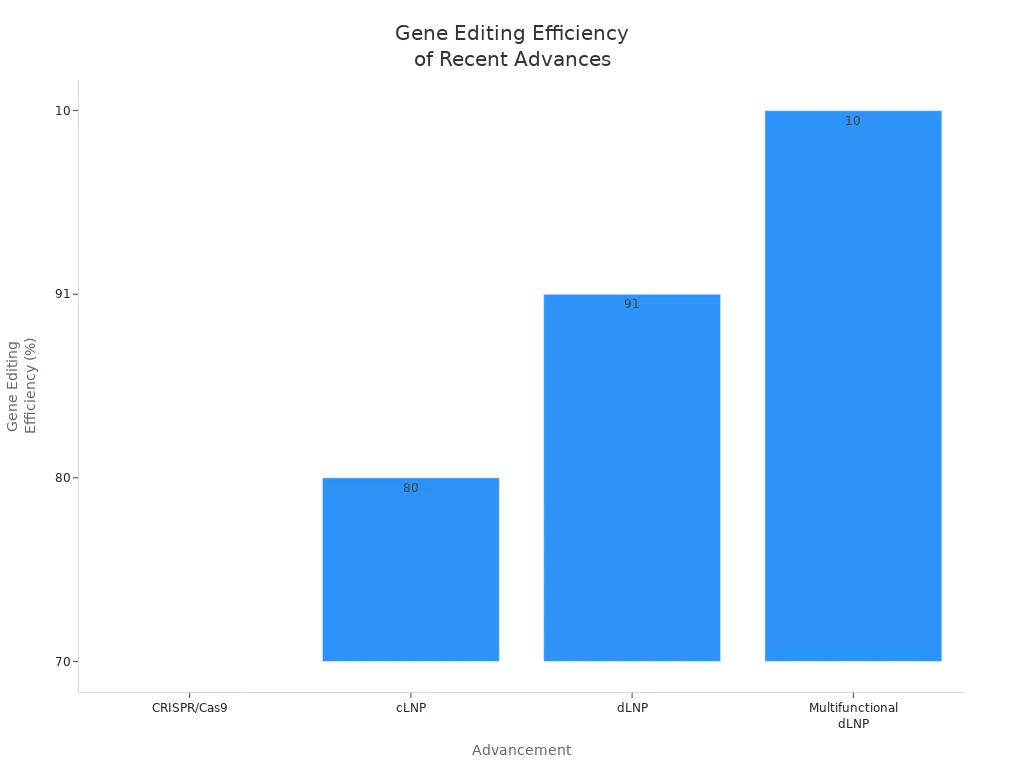
Recent studies show significant results in these areas, including improved survival rates and reduced tumor growth. The table below summarizes some of the most impactful advances:
Advancement | Description | Impact |
|---|---|---|
CRISPR/Cas9 | High efficiency and versatility in gene editing | |
cLNP | Targets ovarian tumors for selective gene editing | ≈80% gene editing in ovarian tumors |
dLNP | Encapsulates Cas9 mRNA, sgRNA, and DNA template | >91% editing efficiency, >20% HDR efficiency in vivo |
Multifunctional dLNP | Co-delivers FAK siRNA, Cas9 mRNA, and sgRNA | >10-fold enhanced gene editing in tumors |
Personalized Medicine
Personalized medicine represents a key theme in the pharma innovation spotlight. mRNA and gene editing technologies enable tailored treatments that match each patient’s genetic profile. For example, gene editing now targets beta-haemoglobinopathies, offering new options for sickle cell disease and β-thalassemia. In oncology, therapies can modify immune cells to recognize and attack specific cancer types. Lipid metabolism disorders also benefit from gene editing tools that adjust cholesterol and triglyceride levels. These advances support a future where treatments adapt to individual needs, improving outcomes and reducing side effects. The pharma innovation spotlight continues to illuminate these breakthroughs, guiding investors and industry leaders toward the next wave of medical innovation.
Equity Trends

Market Growth
Valuation Trends
The market for gene editing and genome editing technologies has expanded rapidly in recent years. Investors and industry leaders track these trends closely, as they signal both innovation and opportunity. Several key figures highlight the scale and pace of this growth:
The global gene editing market size reached $9.30 billion in 2024.
Projections show this market could exceed $40.10 billion by 2034, with a compound annual growth rate (CAGR) of 15.74% from 2025 to 2034.
The global genome editing market was estimated at $9.78 billion in 2024.
Analysts expect the genome editing market to reach $25.00 billion by 2030, growing at a CAGR of 16.1% from 2025 to 2030.
These numbers reflect strong confidence in the future of gene editing and genome editing, driven by advances in technology and expanding clinical applications. The rapid increase in market capitalization also demonstrates the sector’s resilience and adaptability, even as economic and policy challenges arise.
IPOs and Funding
Recent years have seen a surge in funding rounds and strategic partnerships, further fueling innovation in mRNA and gene editing. Notable developments include:
In February 2023, Moderna formed a partnership with LifeEdit Therapeutics to develop gene editing therapies using mRNA technology.
In August 2025, Kriya Therapeutics raised $313.3 million, marking one of the largest private biotech funding rounds of the year.
Strand Therapeutics secured $153 million in a series B round to advance its programmable mRNA therapy, STX-001.
These investments highlight the willingness of both public and private investors to support companies at the forefront of genome editing and mRNA therapeutics. The influx of capital enables startups and established firms to accelerate research, expand clinical trials, and bring new therapies closer to market.
Investment Landscape
Public vs. Private
The investment landscape for gene editing and genome editing technologies features a dynamic interplay between public and private entities. Each group brings unique strengths and priorities to the table. The following table summarizes key differences:
Aspect | Public Companies | Private Companies |
|---|---|---|
Focus | Long-term scientific questions and basic research | Commercialization and profitability |
Role in Development | Incubate technologies until clinical promise | Provide funding and expertise for further development |
Relationship with Research | Seen as a necessary collaborator for translation | View public sector as a source of long incubation |
Selection Criteria | Broader notions of equity and social good | Emphasizes return on investment |
Publicly funded researchers often hand off their research to the private sector for clinical development. Collaborations between academic scientists and private companies have increased, as both sides recognize the need for funding, expertise, and efficient translation of discoveries into therapies. The private sector views pressures from public research as opportunities for innovation, while public institutions see private partners as essential for bringing new treatments to patients.
Major Stakeholders
Major stakeholders continue to shape the direction and pace of investment in gene editing and mRNA technologies. The landscape includes governments, pharmaceutical companies, biotech firms, and manufacturing partners. Recent activities illustrate the breadth of engagement:
Beam Therapeutics collaborated with Orbital Therapeutics in September 2022 to license non-viral delivery technology.
Caribou Biosciences raised $134.6 million through a secondary offering in Q3 2023.
Century Therapeutics is developing the first allogeneic cell therapy candidate with six precision gene edits.
Note: The U.S. government invested approximately $31.9 billion in mRNA COVID-19 vaccine development from 1985 to 2022, while the Government of Canada provided $11 million for two research projects on mRNA vaccine technology.
The following table highlights additional stakeholder activities:
Stakeholder | Activity Description |
|---|---|
BioNTech | Acquired CureVac in June 2025 to enhance mRNA-based cancer immunotherapy development |
Quantoom Biosciences | Invested $13.9 million in 2023 to expand mRNA production capabilities in Belgium |
Kaneka Eurogentec | Invested $15 million in 2023 to support mRNA vaccine and therapeutic development |
Key players such as Catalent, Inc., Aldevron, and Thermo Fisher Scientific drive the mRNA therapeutics market, while companies like Providence Therapeutics, Moderna, and ME Therapeutics, Inc. play major roles in mRNA vaccine production. Although the investment climate for gene therapy faces challenges, new clinical trial data and ongoing interest from pharmaceutical companies suggest that the sector remains vibrant and poised for further growth.
Market Leaders
mRNA Innovators
Leading Companies
The mRNA field features several companies recognized for their leadership and innovation. These organizations have shaped the direction of mRNA therapeutics and vaccines, driving both scientific and commercial progress.
CureVac
Translate Bio
BioNTech
Sangamo Therapeutics
Argos Therapeutics
In-Cell-Art
eTheRNA
Ethris
Tiba Biotechnology
Moderna stands out as a leader in mRNA delivery using lipid nanoparticles. The company maintains a diverse pipeline that includes vaccines for infectious diseases, immuno-oncology candidates, and localized therapeutics. Moderna’s approach to rapid product development has set new standards for the industry, enabling faster responses to emerging health threats.
BioNTech has achieved critical advancements in vaccine technology and personalized medicine. CureVac has focused on innovations in mRNA sequence design and stability, which lay the groundwork for future therapeutic applications. Translate Bio, now part of Sanofi, has developed highly purified mRNA products and reduced manufacturing times. Arcturus Therapeutics has pioneered self-amplifying RNA vaccines, which offer enhanced potency and require lower doses.
The table below highlights recent breakthroughs by these leading companies:
Company | Breakthroughs |
|---|---|
BioNTech | Critical advancements in vaccine technology and personalized medicine. |
CureVac | Innovations in mRNA sequence design and stability, laying groundwork for future therapeutic applications. |
Translate Bio | Development of highly purified mRNA products and reduced manufacturing times. |
Arcturus | Development of self-amplifying RNA vaccines for enhanced potency and lower doses. |
Moderna | Drastically reduced time-to-market for new products, enabling rapid response to health threats. |
General | Accelerated capital investments and new avenues for patient-specific treatments in cancer immunotherapy. |
Emerging Startups
The mRNA sector continues to attract new entrants, with startups bringing fresh ideas and approaches. Many of these companies target a wide range of diseases, expanding the reach of mRNA technology beyond infectious diseases.
BioNTech SE (BNT111, BNT116)
ModernaTX (mRNA-4157, mRNA-4359)
Sanofi (SAR441000)
Abogen Biosciences
Arcturus Therapeutics
Averna Therapeutics
Cartesion Therapeutics
Etherna
Nutcracker Therapeutics
Orbital Therapeutics
Radar Therapeutics
Startups like Nutcracker Therapeutics and Orbital Therapeutics focus on improving the efficiency and scalability of mRNA manufacturing. Others, such as Abogen Biosciences, explore new delivery systems and disease targets. The sector’s momentum reflects the success of COVID-19 vaccines and the growing belief that mRNA can address a broad spectrum of medical needs.
The mRNA sector is witnessing a surge in innovation, with both established leaders and emerging startups driving the next wave of therapeutic breakthroughs.
Gene Editing Pioneers
CRISPR Innovators
Gene editing has entered a new era, with several companies leading the way in translating scientific discoveries into clinical therapies. The most prominent players have advanced product candidates into clinical trials for diseases such as sickle cell disease and beta thalassemia.
Company | |
|---|---|
CRISPR Therapeutics | Advanced product candidates into clinical trials for sickle cell disease and beta thalassemia. |
Intellia Therapeutics | Engaged in clinical trials for various cancers. |
Beam Therapeutics | Pioneering precision medicine approaches. |
Companies like Editas Medicine, CRISPR Therapeutics, and Intellia Therapeutics hold extensive patent portfolios. These assets provide a competitive edge and create barriers for new entrants. Metagenomi has gained recognition for its innovative approaches, while large pharmaceutical companies continue to form strategic alliances with gene editing firms. These partnerships validate the scientific foundation of gene editing platforms and accelerate the translation of these tools into marketable therapies.
Recent achievements in the field include the approval of the first-ever CRISPR-based therapy for patients with sickle cell disease or transfusion-dependent beta thalassemia in some countries. CRISPR-Cas9 has enabled the removal of disease-causing mutations and restoration of protein activity more effectively than previous methods. The technology allows for the systematic introduction of genetic sequences at specific sites in the human genome, supporting anti-tumoral and anti-infectious functions. Innovations such as base and prime editors now permit precise nucleotide changes without harmful double-strand breaks. CRISPR fusion systems with various enzymes have expanded the size limitations for edited sequences, enhancing therapeutic development. Emerging technologies, including mobile genetic elements and epigenetic editors, provide alternatives for stable gene manipulation.
The approval of CRISPR-based therapies marks a significant milestone, demonstrating the real-world impact of gene editing on patient care.
Synthetic Biology Players
Synthetic biology companies play a crucial role in advancing gene editing. These organizations develop new tools and platforms that make genome editing more precise, scalable, and accessible.
Company | |
|---|---|
Asimov | Focuses on mammalian synthetic biology and gene circuit engineering, developing programmable cell therapies. |
Sherlock Biosciences | Develops CRISPR-based molecular diagnostics for rapid detection of pathogens and genetic disorders. |
Synthego | Provides synthetic RNA and CRISPR reagents, facilitating precise and scalable genome editing. |
Inscripta | Develops automated genome editing technology for precise DNA modifications at scale. |
Asimov engineers gene circuits for programmable cell therapies, while Sherlock Biosciences leverages CRISPR for rapid diagnostics. Synthego supplies synthetic RNA and CRISPR reagents, supporting research and clinical applications. Inscripta’s automated genome editing technology enables precise DNA modifications at scale, making gene editing more efficient.
The gene editing landscape continues to evolve with the introduction of next-generation crispr technology. These advances promise greater accuracy, fewer off-target effects, and broader therapeutic potential. Companies at the forefront of synthetic biology and gene editing are shaping the future of medicine, offering new hope for patients and new opportunities for investors.
Gene Editing & mRNA Tool Kits

Modern pharmaceutical research relies on advanced tool kits that accelerate the pace of discovery and development. These platforms enable scientists to perform highly targeted genetic modifications, streamline experimental workflows, and improve the predictability of new therapies. The integration of artificial intelligence and next-generation editing technologies has transformed the landscape, making it possible to address complex diseases with greater precision and safety.
Technology Platforms
CRISPR and gRNA
CRISPR technology stands at the forefront of genome editing. Scientists use CRISPR and guide RNA (gRNA) systems to target specific genes that influence disease progression. This approach allows for precise genome modifications, supporting the development of therapies for genetic disorders. Recent advancements, such as CRISPR-Cas12a, enable researchers to assess multiple genetic interactions at once, which improves disease modeling and therapeutic design. The CRISPR-Cas systems now offer a broader range of targets, higher efficiency, and greater specificity. These improvements extend the capabilities of gene editing beyond simple DNA cuts, allowing for gene expression control and epigenetic changes. Prime editing, a newer technique, further enhances the accuracy of genome modifications by enabling single-base changes without double-strand breaks. Researchers now use prime editing to correct mutations that cause inherited diseases, making it a valuable addition to the gene editing toolkit.
Technology | Description | Applications |
|---|---|---|
ZFNs | Zinc Finger Nucleases are engineered to target specific DNA sequences and are used in therapeutic applications. | Clinical trials for hemophilia and sickle cell anemia. |
TALENs | Transcription Activator-Like Effector Nucleases are designed to cut specific DNA sequences and are widely used in regenerative medicine. | Engineering stem cells for therapeutic purposes. |
FANA ASO | FANA Antisense Oligonucleotide technology silences or regulates RNA without the need for delivery agents. | Targeting neurodegenerative diseases like ALS and Alzheimer’s. |
mRNA Ecosystem
The mRNA ecosystem supports a wide range of drug development activities. It includes advancements in mRNA synthesis and delivery systems, which target genetic, oncological, and infectious diseases. Key applications involve immunotherapy, protein replacement therapy, and regenerative medicine. The ecosystem operates across three main stages:
Upstream preparation of raw materials.
Midstream development and production by biopharmaceutical companies.
Downstream commercialization of products for patients.
Researchers continue to optimize mRNA sequences for stability and expression efficiency. Delivery systems, such as liposomal nanoparticles, have improved but still require further refinement to minimize side effects and maximize therapeutic benefit.
Drug Discovery Tools
AI Integration
Artificial intelligence plays a pivotal role in the development and application of gene editing and mRNA tool kits. AI enhances the efficiency of research, allowing scientists to design experiments and analyze data more quickly. Machine learning models, such as DeepCRISPR, help design optimal guide RNAs, improving the targeting accuracy of CRISPR-based edits. AI also predicts potential off-target effects, which increases the safety of genetic modifications. Jennifer Doudna, a leader in the field, notes that AI accelerates the discovery of new CRISPR-associated proteins, expanding the toolkit available for genome editing. In vaccine development, AI analyzes genomic data, predicts epitopes, and optimizes RNA structures, which leads to more effective and safer mRNA vaccines.
Aspect | Description |
|---|---|
Efficiency | AI enhances the efficiency of gene editing tools, allowing for faster and more effective research. |
Accuracy | AI improves the precision of editing, reducing the likelihood of off-target effects. |
Safety | AI contributes to the safety of genetic modifications by predicting potential adverse outcomes. |
Research Applications
Recent advancements in gene editing and mRNA tool kits have expanded research applications. Scientists now perform targeted gene regulation, epigenetic editing, and chromatin manipulation. Large-scale genetic screenings identify genes that influence specific phenotypes, while base editing and prime editing allow for precise changes without double-strand breaks. These tools support therapeutic development by enabling the manipulation of chromatin structures and the engineering of chromatin loop structures. The integration of multi-omics technologies and computational methods accelerates drug discovery, reduces costs, and supports the evaluation of personalized medicine and gene therapy for complex diseases.
The evolution of gene editing and mRNA tool kits, powered by AI and prime editing, continues to drive innovation in pharmaceutical research, offering new hope for patients and new opportunities for industry growth.
Market Drivers and Challenges
Growth Drivers
Unmet Needs
Unmet medical needs continue to shape the direction of mRNA and gene editing innovation. Many rare genetic diseases lack effective treatments, creating a strong demand for new solutions. Recent advances in mRNA therapies now target these conditions by providing direct genetic instructions, which opens new possibilities for patients who previously had limited options. Companies such as Ultragenyx Gene Therapy and Ultragenyx Pharmaceuticals focus on diseases like glycogen storage disease and Duchenne muscular dystrophy, where traditional therapies fall short. In Asia, the push for equitable access to life-saving treatments has led firms like Moderna to develop vaccines and therapies for preventable diseases, addressing public health challenges across the region.
The drive to address high unmet medical needs not only accelerates research but also ensures that innovation reaches those who need it most.
Platform Improvements
Continuous improvements in technology platforms have fueled the growth of mRNA and gene editing markets. Advances in delivery systems, such as new adeno-associated virus (AAV) capsids and antisense oligonucleotide (ASO) modifications, have enhanced tissue targeting and reduced side effects. Improved guide RNA (gRNA) discovery and design now allow for more precise RNA editing, while a deeper understanding of ADAR and gRNA structure supports sophisticated editing strategies, including multiplexing and editing multiple transcripts. Collaboration between industry leaders and academic institutes, such as Danaher Corporation and the Innovative Genomics Institute, has produced scalable platforms for CRISPR therapies and standardized approaches that lower costs and speed up development timelines.
Growth Driver | Description |
|---|---|
Novel RNA Editing Capabilities | New RNA editing methods offer safer alternatives to DNA editing, reducing permanent risks. |
Precision Medicine Demand | Personalized medicine increases the need for advanced gene editing technologies. |
Therapeutic Development Advances | Ongoing improvements boost the effectiveness of mRNA and gene editing applications. |
R&D Investments | Rising funding, especially in North America, supports rapid market expansion. |
Challenges
Technical Barriers
Despite remarkable progress, technical barriers remain a significant challenge. Non-viral gene therapy often struggles with delivery, as naked mRNA degrades quickly and cannot easily cross cell membranes. Encapsulation in lipid nanoparticles has improved mRNA stability and transport, but long-term expression control still proves difficult. Uncontrolled or prolonged expression can lead to side effects, while plasmid DNA therapies face hurdles such as the need to cross the nuclear membrane and concerns about antibiotic resistance genes. These obstacles highlight the need for ongoing innovation in delivery and expression control.
Non-viral delivery methods show limited success due to biological barriers.
mRNA degrades rapidly in the body, reducing its effectiveness.
Lipid nanoparticles improve delivery but do not fully solve long-term expression issues.
Plasmid DNA therapies face safety and control challenges.
Regulatory Issues
Regulatory frameworks play a crucial role in the development and commercialization of mRNA and gene editing therapies. The U.S. Food and Drug Administration (FDA) established the Center for Biologics Evaluation and Research (CBER) to oversee gene therapy products, ensuring safety and efficacy. CBER provides guidance to researchers and manufacturers, which helps align development with regulatory expectations. Internationally, the need for consensus on technical standards for mRNA vaccines remains important, as organizations like the World Health Organization (WHO) facilitate prequalification and emergency assessments. Traditional regulatory paradigms sometimes do not fit the unique needs of rare disease gene therapies, prompting calls for innovative clinical trial designs and evaluation strategies.
Regulatory clarity and global alignment will be essential for translating scientific breakthroughs into accessible therapies for patients worldwide.
Future Outlook
Market Forecast
Short-Term Trends
The mRNA and gene editing sectors continue to capture the attention of investors and researchers, with short-term trends pointing to robust expansion. Analysts expect the global mRNA therapeutics market to grow from $6.0 billion in 2025 to $21.4 billion by 2032, reflecting a compound annual growth rate of 20.0%. The Asia Pacific region stands out as the fastest-growing market, with a CAGR exceeding 18.0% through 2032. Therapeutic mRNA vaccines, driven by the success of COVID-19 vaccines, are projected to hold a 55.0% market share in 2025. Companies focus on cell and gene therapy platforms that leverage grna technology for rapid drug discovery and precision medicine applications. The industry sees a surge in clinical trials for cancer treatments, rare diseases, and personalized cell and gene therapies, with innovation accelerating the pace of discovery.
Long-Term Projections
Long-term projections suggest that innovation will remain the cornerstone of growth in these markets. Precision medicine will shape the future of drug discovery, as grna-based editing tools become more sophisticated and widely adopted. The integration of artificial intelligence into drug discovery workflows will enhance the accuracy and speed of grna design, supporting the development of therapies for cancer and other complex diseases. The market expects sustained investment in cell and gene therapy, with companies expanding their portfolios to include next-generation grna platforms. Discovery of new delivery systems and editing techniques will drive the evolution of precision medicine, making treatments more effective and accessible. The industry anticipates that innovation in grna technology will unlock new possibilities for drug discovery, especially in oncology and rare genetic disorders.
Strategic Insights
Investment Opportunities
Investors seeking opportunities in mRNA and gene editing should consider several strategic factors. Mergers and acquisitions play a crucial role for large pharmaceutical companies facing patent cliffs, making innovative biotech firms attractive targets. Companies with strong clinical data and differentiated products, particularly in cancer and rare diseases, are likely to attract significant investment and become acquisition candidates. The adoption of AI in drug discovery and grna design provides a competitive edge, enabling faster discovery and improved precision medicine outcomes. Investors may benefit from monitoring biotech firms that excel in cell and gene therapy, grna innovation, and personalized medicine approaches.
Tip: Focus on companies that demonstrate leadership in grna technology, robust drug discovery pipelines, and a commitment to precision medicine. These attributes often signal resilience and adaptability in a rapidly evolving market.
Risk Mitigation
Risk mitigation remains essential for stakeholders navigating the dynamic landscape of cell and gene therapy. Investors should evaluate the regulatory environment, as evolving standards impact the approval and commercialization of new therapies. Companies that invest in scalable grna platforms and maintain strong clinical data can better manage risks associated with drug discovery and innovation. Monitoring M&A trends and the adoption of AI technologies in grna design helps stakeholders anticipate shifts in market dynamics. The ability to adapt to changes in precision medicine and discovery processes will determine long-term success in the mRNA and gene editing sectors.
Risk Factor | Mitigation Strategy |
|---|---|
Regulatory changes | Invest in compliance and robust clinical data |
Technology evolution | Adopt scalable grna platforms and AI integration |
Market competition | Focus on innovation and differentiated therapies |
The future outlook for mRNA and gene editing remains bright, with precision medicine, grna innovation, and drug discovery driving sustained growth and opportunity.
Key takeaways for investors and industry stakeholders include:
mRNA and gene editing technologies continue to attract substantial private investment and regulatory confidence.
Strategic partnerships and data-driven insights enhance credibility and resource access.
Clinical validations and approvals, especially in oncology and rare diseases, support robust market growth.
The versatility of mRNA and advances in nucleoside chemistry expand therapeutic possibilities.
Ongoing monitoring of these sectors remains essential, as innovation and adaptability will shape future opportunities in pharmaceutical equity and patient care.
FAQ
What makes mrna technology important in modern drug discovery & development?
mrna technology enables rapid design and testing of new drug candidates. Scientists use mrna to instruct cells to produce therapeutic proteins. This approach accelerates drug discovery & development, especially for diseases that require personalized therapy. mrna also supports the creation of gene editing & mrna tool kits for precise interventions.
How do gene editing & mrna tool kits improve therapy outcomes?
Gene editing & mrna tool kits allow researchers to target specific genes. These tools help correct genetic errors, leading to more effective therapy. The integration of mrna with gene editing & mrna tool kits enhances the precision of therapy, making treatments safer and more reliable for patients.
Why do investors focus on the genome editing space and mrna therapeutics?
The genome editing space and mrna therapeutics offer high growth potential. Companies develop innovative therapy options using mrna and gene editing & mrna tool kits. Investors see opportunities in drug discovery & development, as these technologies address unmet medical needs and drive advances in biopharmaceuticals.
What role does the crispr-cas system play in gene editing & mrna tool kits?
The crispr-cas system provides a powerful method for editing genes. Scientists combine crispr-cas with mrna to deliver precise therapy. This combination forms the backbone of many gene editing & mrna tool kits, enabling targeted changes that improve therapy effectiveness and safety.
How do mrna and gene editing & mrna tool kits support personalized therapy?
mrna and gene editing & mrna tool kits enable the customization of therapy for individual patients. By analyzing genetic information, researchers design mrna-based therapy that matches each patient’s needs. This approach increases the success rate of therapy and reduces unwanted side effects.
What challenges exist in using mrna and gene editing & mrna tool kits for therapy?
Researchers face challenges such as delivery, stability, and immune response. mrna can degrade quickly, and gene editing & mrna tool kits must reach target cells efficiently. Scientists continue to improve these technologies to ensure therapy remains safe, effective, and accessible for all patients.
How does biotechnology influence the development of mrna and gene editing & mrna tool kits?
Biotechnology drives innovation in mrna and gene editing & mrna tool kits. Advances in biotechnology allow for better design, production, and delivery of mrna-based therapy. This progress supports the creation of new drug candidates and expands the possibilities for therapy in many disease areas.
Can mrna and gene editing & mrna tool kits be used together in therapy?
Yes, researchers often combine mrna and gene editing & mrna tool kits to enhance therapy. mrna delivers instructions for gene editing tools, allowing precise changes in cells. This synergy improves therapy outcomes and opens new avenues for drug discovery & development.
Making Sense of Markets: The Role of Objective Equity Research
Understanding how markets reflect information, sentiment, and structural change requires more than tracking prices—it demands disciplined observation grounded in verifiable evidence. Objective equity research brings order to this complexity by combining careful data gathering with context-rich interpretation, ensuring that numbers are not read in isolation but through the lens of economic, sectoral, and behavioral forces. Transparency in sourcing and methodology allows patterns to be tested rather than assumed, while rigor in analysis distinguishes genuine signals from noise. At VASRO, this commitment to clarity and precision shapes a perspective that values curiosity as much as accuracy, offering insight into how companies and markets interact without embellishment or bias. This article is for general information only and does not constitute financial, investment, legal, or tax advice; readers should consult a licensed professional for advice tailored to their situation.
Disclaimer: The information on www.vasro.de is for general informational purposes only and does not constitute investment advice or a recommendation. VASRO GmbH does not provide personalized investment advice; visitors should seek independent financial guidance before making decisions. Some content may rely on third-party sources considered reliable, but VASRO GmbH does not guarantee accuracy, completeness, or timeliness. All information is provided “as is,” may change without notice, and VASRO GmbH has no obligation to update, correct, or continue publishing it. VASRO GmbH accepts no liability for losses arising from reliance on this information. Past performance is not a reliable indicator of future results.